Who's Talking? How Smart Glasses Identify Speakers in Group Conversations
Speaker identification is harder than transcription: the best systems post 11.2% diarization error rates. How smart glasses label who said what in groups.
By Nirbhay Narang · Published 2026-08-04 · 21 min read
Who's Talking? Why Speaker Identification Is the Hard Part
Table of Contents
Why Is Knowing Who Spoke Harder Than Knowing What Was Said?
How Does Speaker Identification Actually Work?
Why Does Overlapping Speech Break Speaker Labels?
How Many Speakers Can Smart Glasses Track at Once?
What Do Speaker Labels Change for People With Hearing Loss?
Why Attribution Matters More in Meetings Than in Transcripts
Does Speaker Identification Work Across Languages?
Who Owns Your Voiceprint?
Where Speaker Identification Still Falls Short
What Comes Next for Speaker Identification?
Frequently Asked Questions
What is speaker identification in smart glasses?
How accurate is speaker identification?
Why do captions sometimes label the wrong person?
Does speaker identification need to learn my voice first?
Is my voiceprint stored, and is that legal?
Does speaker identification work in noisy restaurants?
Does it work in languages other than English?

Technology
Who's Talking? How Smart Glasses Identify Speakers in Group Conversations

Nirbhay Narang
·
August 4, 2026
·
21 min read

On this page
Table of Contents
▼
Editorial disclosure: AirCaps makes smart glasses with speaker identification for up to 15 voices. This article uses AirCaps specifications as reference points and cites independent research where it contradicts or complicates the marketing story. Where the technology falls short, we say so.
Who's Talking? Why Speaker Identification Is the Hard Part
Speaker identification — labeling which person said which words — is measurably harder than transcribing the words themselves. The best commercial system in a September 2025 academic benchmark posted an 11.2% diarization error rate across test datasets, while modern speech recognition routinely hits 3-5% word error rates on the same audio (arXiv, 2025). One problem is roughly solved. The other isn't.
That gap matters more than it sounds. A caption that reads "we should push the deadline" is useless if you don't know whether your boss said it or the intern did. For anyone reading conversation instead of hearing it, attribution isn't a nice extra — it's the difference between a transcript and a conversation.
Key Takeaways
- The best diarization system in a 2025 arXiv benchmark scored 11.2% diarization error rate; the worst commercial add-on tested by Picovoice scored 50.2%
- Speaker identification works by converting short slices of audio into numerical voiceprints, then clustering slices that sound like the same person
- Overlapping speech is the main failure mode — the AMI meeting corpus contains 15.94% overlapped speech, and missed speech is the dominant error across every model tested
- Conversational turns arrive fast: most transitions between speakers happen within 0-200ms across 10 languages studied (PNAS, 2009)
- AirCaps labels up to 15 distinct speakers in real time using 4-mic beamforming, 97% caption accuracy, and 300ms latency at $599 (HSA/FSA eligible)
Table of Contents
- Why Is Knowing Who Spoke Harder Than Knowing What Was Said?
- How Does Speaker Identification Actually Work?
- Why Does Overlapping Speech Break Speaker Labels?
- How Many Speakers Can Smart Glasses Track at Once?
- What Do Speaker Labels Change for People With Hearing Loss?
- Why Attribution Matters More in Meetings Than in Transcripts
- Does Speaker Identification Work Across Languages?
- Who Owns Your Voiceprint?
- Where Speaker Identification Still Falls Short
- What Comes Next for Speaker Identification?
- Frequently Asked Questions
Why Is Knowing Who Spoke Harder Than Knowing What Was Said?
Transcription and attribution are different computational problems, and the harder one gets far less attention. Speech recognition maps sound to words, a task with billions of hours of labeled training data behind it. Speaker identification has to answer a question with no fixed answer key: how many distinct people are in this room, and which of them is talking right now? A 2025 arXiv benchmark of current diarization models found the strongest system at 11.2% diarization error rate, with one model reaching 20.4% on meeting audio (arXiv, 2025).
Diarization error rate, or DER, adds up three kinds of mistakes: speech the system missed entirely, non-speech it mistook for speech, and words it assigned to the wrong person. That third category is the one users actually notice. A 10% DER doesn't feel like 90% correctness when the errors cluster at the exact moments a conversation gets interesting — interruptions, jokes, disagreements.
Independent benchmarking shows how wide the spread is. Picovoice measured pyannote at 9.0% DER and its own Falcon engine at 10.3% on the VoxConverse dataset, while diarization features bolted onto big-tech speech-to-text APIs ranged from 11.1% for Amazon to 50.2% for Google (Picovoice, 2026). A 50% DER means roughly half the speech time is attributed to the wrong person. Any product shipping that would be worse than no labels at all, because wrong labels are confidently wrong.
Here's the part that surprises people who assume this is a solved AI problem: the difficulty isn't the model. It's that conversation is a physical event happening in a room with reflections, cross-talk, and people who lean, turn away, and talk over each other. The audio itself is ambiguous. For more on how the transcription half of the pipeline works, see our breakdown of 97% accuracy in 300ms.
How Does Speaker Identification Actually Work?
Speaker identification converts voices into numbers, then groups the numbers. Research systems typically extract a speaker embedding — a fixed-length numerical fingerprint, commonly 512 dimensions — from short overlapping windows of audio, often 1.5 seconds long extracted every 0.75 seconds. Those embeddings get clustered so that slices from the same voice land together. The whole approach is called diarization, and it's what turns a wall of text into a labeled dialogue.
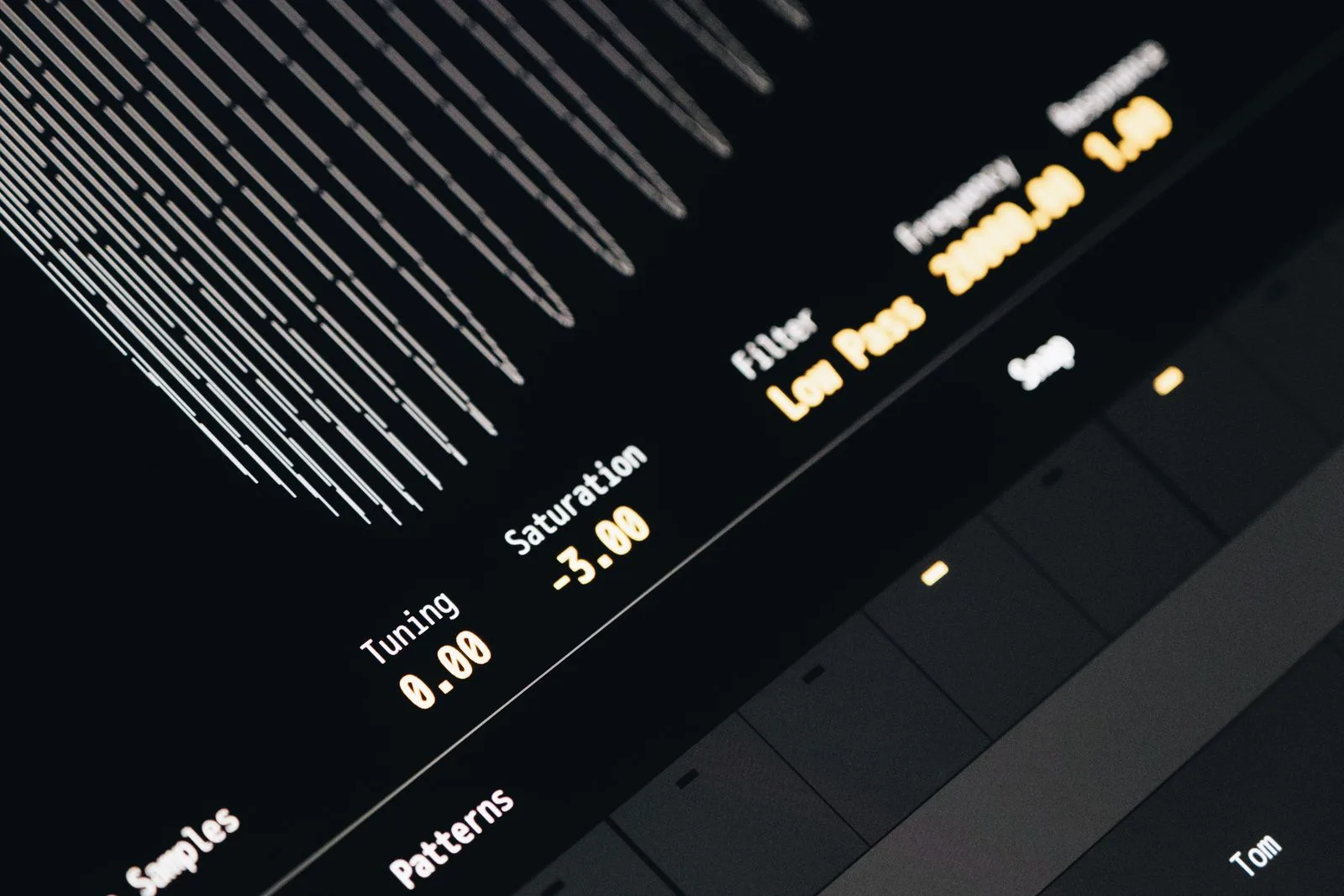
The pipeline runs in four stages:
-
Voice activity detection finds the parts of the audio that contain speech at all. Silence, clattering plates, and background music get stripped out before anything else happens. On glasses, this stage benefits enormously from clean input — which is where 4-mic beamforming earns its keep, isolating the person in front of you before the model ever sees the signal.
-
Segmentation splits the remaining speech into short chunks at likely speaker-change points. Get this wrong and a single chunk contains two people, which poisons everything downstream.
-
Embedding extraction runs each chunk through a neural network that outputs a vector capturing vocal characteristics — pitch, timbre, resonance, speaking rate. Two chunks from the same person produce vectors that sit close together in that 512-dimensional space. Two different people produce vectors that sit far apart. Usually.
-
Clustering groups the vectors into speakers and assigns labels. Agglomerative hierarchical clustering and spectral clustering are the standard approaches. Critically, the system doesn't know in advance how many speakers exist — it has to infer the count from the data, and getting that count wrong cascades into every label.
Notice what's missing from that list: names. Diarization produces anonymous labels — Speaker 1, Speaker 2, Speaker 3. Attaching a real name requires either enrollment (you record someone once and the system remembers their voiceprint) or inference from context, like catching someone say "thanks, Maria" and mapping it backward. AirCaps handles the anonymous case in real time for up to 15 voices, so captions stay attributed even in a room where nobody has been enrolled.
Why Does Overlapping Speech Break Speaker Labels?
Overlap is the single biggest source of diarization error, and real conversation is full of it. The AMI meeting corpus — a standard research benchmark of recorded multi-party meetings — contains 15.94% overlapped speech with sessions of exactly four participants (arXiv, 2025). The same benchmark found that missed speech, not mislabeling, is the dominant failure across every model tested, and that meeting audio is where it gets worst. When two people talk at once, one of them tends to vanish from the transcript entirely.

Why is overlap so common? Because human turn-taking is engineered for speed, not for machines. A study of 10 languages published in PNAS found that speakers universally minimize silence and avoid overlap, with most speaker transitions landing in a window between 0 and 200 milliseconds (PNAS, 2009). That's the gap. Two hundred milliseconds is roughly the time it takes to blink. People aim for that gap and frequently overshoot into each other's speech — and the more comfortable the group, the more they overshoot.
| Conversation Type | Typical Overlap Characteristics | Effect on Speaker Labels |
|---|---|---|
| One-on-one, quiet room | Minimal overlap, clear turn boundaries | Highest label accuracy |
| Structured meeting (4 speakers) | 15.94% overlapped speech in AMI corpus | Missed speech becomes dominant error |
| Family dinner or social group | Frequent cross-talk, side conversations | Speaker count often overestimated |
| Restaurant at 78 dBA | Overlap plus non-target voices from other tables | Requires directional mics to stay usable |
There's a design lesson here that gets lost in accuracy percentages. Adding a fifth or sixth voice to a conversation doesn't just add another cluster to sort — it multiplies the number of possible two-way overlaps. Three speakers have three possible pairs. Six speakers have fifteen. The failure rate climbs faster than the speaker count does, which is why a system that handles a coffee-shop chat cleanly can fall apart at a Thanksgiving table.
How Many Speakers Can Smart Glasses Track at Once?
Practical ceilings sit well below theoretical ones. Research diarization systems can be pointed at recordings with dozens of speakers given enough compute and no deadline, but a wearable running at 300ms end-to-end latency has neither. AirCaps labels up to 15 distinct speakers in real time, which covers essentially every conversation a person has outside a lecture hall — a board meeting, a family gathering, a dinner party, a classroom discussion group.
The number that matters isn't the maximum, though. It's how gracefully the system degrades as speakers accumulate.
| Speakers in Conversation | Main Technical Challenge | What Users Notice |
|---|---|---|
| 2 | Turn boundary detection at 200ms gaps | Labels feel essentially perfect |
| 3-4 | Pairwise overlap, similar-sounding voices | Occasional swapped label during interruptions |
| 5-8 | Speaker count estimation, side conversations | A speaker may split into two labels |
| 9-15 | Cluster separation in embedding space | Distant or quiet speakers may merge |
| 15+ | Beyond real-time wearable design targets | Falls back to unlabeled captions |
Two failure modes dominate at the high end, and they're opposites. Over-clustering splits one person into several labels — usually when someone's voice changes because they turned away, laughed, or raised their volume. Under-clustering merges two people into one label, which happens most often with similar voices, quiet speakers, or people sitting at the far edge of the microphone array's useful range.
Which failure is worse? Over-clustering looks messy but stays honest — you see Speaker 3 and Speaker 6 and can tell they're the same person from context. Under-clustering is dangerous, because two people's words get stitched into one attributed block and the transcript reads as if one person said all of it. Any team building this should tune toward over-clustering, and it's worth asking vendors which direction they've chosen.
What Do Speaker Labels Change for People With Hearing Loss?
For the 1.5 billion people worldwide living with some degree of hearing loss (WHO, 2024), group conversation is where existing solutions break down first. Hearing aids amplify everything, including the four other conversations in the room. Research published in Communications Engineering in April 2025 found that a brain-inspired algorithm improved word recognition by up to 40 percentage points over current hearing aid processing for young adults with sensorineural hearing loss (Nature, 2025) — a gain that large tells you how far short conventional amplification falls in competing-talker situations.

Captions solve part of that problem by bypassing the ear entirely. But unlabeled captions solve it only halfway. Picture a family dinner as a wall of text with no attribution: someone asks a question, someone else answers, a third person makes a joke, and you're reading a monologue assembled from six people. You can follow the words and still have no idea when the question was directed at you.
Speaker labels restore the thing hearing people get for free — the social geometry of a conversation. Who's agreeing with whom. Who just changed the subject. Whether that question was rhetorical or aimed at you. AirCaps customer reviews return to group settings again and again as the scenario where hearing aids failed them: Joseph Davidson describes losing the conversation entirely when seated around a table, and Mike Miller describes sitting quietly through dinners, "smiling but not really connecting."
This is why captioning glasses treat attribution as a core feature rather than a transcript nicety. The 4-mic beamforming array isolates the person you're facing, the speech engine runs at 97% accuracy in noise, and the labels tell you which of the fifteen possible voices at the table just spoke. Restaurants average 78 dBA and bars reach 81 dBA (NIDCD) — loud enough that a single-microphone device can't reliably tell one speaker from another, let alone label them. For a fuller picture of that scenario, see our guide to why restaurants are the hardest hearing environment.
Why Attribution Matters More in Meetings Than in Transcripts
In professional settings, speaker attribution isn't a comprehension aid — it's the entire value of the record. An action item without an owner is a note. With an owner, it's a commitment. This is the reason meeting intelligence tools invest heavily in diarization despite error rates that would be unacceptable in transcription: a 2025 arXiv benchmark found meeting audio to be the hardest category for every model tested, with missed speech as the dominant failure (arXiv, 2025).

Consider what downstream AI can and can't do with each version of the same meeting. Given an unlabeled transcript, a summarizer can extract "prepare the revised proposal by Friday" as a task. Given a labeled one, it can extract "the CFO asked Priya to prepare the revised proposal by Friday" — which is a decision with an owner, a requester, and a deadline. Every layer built on top of the transcript inherits the quality of the attribution underneath it.
There's a second-order effect that only shows up in live use. When labels appear in your field of view during the meeting rather than in a summary afterward, they change how you participate. You can see that the person who raised the pricing objection twenty minutes ago is the same person now agreeing with your proposal. You can tell whether the quiet person on the far side of the table has said anything at all. That's situational awareness, and it doesn't survive being deferred to a post-meeting email.
AirCaps builds meeting intelligence on top of real-time speaker labels: continuous transcription with attribution, automatic summaries with action items assigned to the person who committed to them, and searchable history across past conversations. For deaf and hard-of-hearing professionals, this collapses two separate accessibility problems — following the meeting and documenting it — into one device. Our post on deaf professionals in meetings covers that workplace dimension in more depth.
Does Speaker Identification Work Across Languages?
Speaker embeddings are largely language-independent, which is the useful surprise in this technology. A voiceprint captures physical characteristics of a person's vocal tract — pitch range, timbre, resonance — not the words they're producing. The same clustering that separates two English speakers separates two Japanese speakers, and it separates an English speaker from a Japanese speaker without knowing either language. AirCaps supports 60+ languages with automatic detection, switching in under 100 milliseconds without manual selection.
The genuinely hard case is code-switching, where one person moves between languages mid-sentence. Spanglish and Franglais aren't edge cases in multilingual families — they're the default register. This creates a subtle trap for diarization: a person's voice characteristics stay constant across the switch, but their prosody and rhythm can shift noticeably, which is enough to nudge the embedding and trigger over-clustering. The system decides one person is two.
There's an additional wrinkle worth naming honestly. Accent carries information about ethnic origin, which European regulators treat as special category data under GDPR. A system that clusters voices is, incidentally, a system that encodes accent. That's a reason for on-device processing and short retention windows rather than a reason to avoid the feature — but it belongs in the design conversation. Our guide to real-time translation covers the language pipeline that sits alongside the speaker one, and the translation feature page details the language support.
Who Owns Your Voiceprint?
Speaker identification creates biometric data, and the legal exposure is no longer hypothetical. As of 2026, three US states have stand-alone biometric privacy statutes: Illinois, Texas, and Washington. Illinois BIPA treats voiceprints as biometric identifiers requiring informed written consent, published retention schedules, and documented destruction. A December 2025 Illinois class action alleged that an AI meeting assistant violated BIPA specifically by using speaker recognition to distinguish meeting participants (American Bar Association, 2026).
Read that carefully, because it's the part the industry has mostly ignored: some courts have found that diarization alone — creating a voice embedding to tell speakers apart, with no attempt to identify anyone by name — is enough to trigger BIPA. Anonymous labels don't necessarily mean anonymous data. The 512-dimensional vector that distinguishes Speaker 2 from Speaker 3 is, arguably, a biometric identifier for both of them.
This puts wearables in an awkward spot that meeting-room software doesn't share. When a laptop app joins a video call, everyone can see it. When someone wears captioning glasses to dinner, the people across the table generally have no idea their voices are being embedded and clustered. The consent asymmetry is structural.
Three design choices actually reduce the exposure, and they're worth asking any vendor about. First, ephemeral embeddings: cluster within the session and discard the vectors afterward rather than building a persistent voiceprint library. Second, on-device or short-retention processing so voice data isn't accumulating on someone's servers indefinitely. Third, plain-language disclosure that a wearer can actually say out loud at a table. AirCaps operates under SOC 2 Type 2, GDPR, and HIPAA compliance frameworks, and the honest guidance for wearers is the low-tech one: tell people. It takes one sentence, and it's the difference between an assistive device and a hidden recorder.
Where Speaker Identification Still Falls Short
Nobody has solved this, and claims otherwise should be treated skeptically. The strongest system in the September 2025 arXiv benchmark still posted 11.2% DER, and performance degrades predictably in exactly the conditions where captions are needed most (arXiv, 2025). Here's where it breaks, specifically.
Voices that genuinely sound alike defeat embedding-based clustering. Siblings, parents and adult children, and same-gender speakers with similar pitch and regional accent produce embeddings that sit close together. No amount of clustering sophistication separates vectors that overlap.
Sustained simultaneous speech is worse than brief overlap. Standard diarization assumes one speaker at a time and treats overlap as an exception to handle. When three people argue over each other for fifteen seconds, that assumption collapses and the output becomes a guess.
Distance and direction matter more than people expect. Beamforming focuses on the person you're facing, which is precisely the right trade-off for conversation and precisely the wrong one for a speaker two seats down who is turned away. Someone speaking quietly at the far end of a long table may get merged into another label or missed entirely.
Speaker count estimation remains fragile. Because the system infers how many people are present rather than being told, a burst of laughter or a passing waiter's voice can inflate the count and reshuffle labels mid-conversation. Systems that let you correct labels after the fact are being honest about this limitation rather than hiding it.
Extreme noise pushes everything past its limits. Above roughly 90 dBA — concerts, stadiums, loud bars — even a 4-mic array struggles to hold separation between voices. AirCaps customers report good results at comedy shows and live events, but accuracy in those settings is lower than in restaurant-level noise, and we'd rather say that than pretend otherwise.
What Comes Next for Speaker Identification?
The direction of travel is end-to-end models that handle overlap natively instead of treating it as an exception. Conventional pipelines make a hard assumption — one speaker per moment — and patch overlap afterward. Newer end-to-end neural diarization architectures predict multiple simultaneous speakers directly, which addresses the failure mode that the 2025 arXiv benchmark identified as dominant: missed speech in meeting audio.
Efficiency gains matter as much as accuracy gains for anything worn on your face. Picovoice reports its Falcon engine reaching comparable accuracy to pyannote while using 221 times less compute and 15 times less memory (Picovoice, 2026). Numbers like that are what move diarization from a server-side feature to something running near the device, which improves both latency and the privacy story at the same time.
The prediction we'd make: within two or three product generations, speaker attribution stops being a premium tier and becomes table stakes, the way automatic language detection did. And the differentiator shifts from "can it label speakers" to "can it label speakers correctly when six people are talking over each other at 80 dBA" — which is a much harder question and a much more useful one.
Speaker identification is available on the AirCaps Pro tier, alongside 60+ language support, 97%+ caption accuracy, and AI meeting summaries. The glasses themselves — 49 grams, binocular MicroLED display with under 2% light leakage, 4-mic beamforming, 300ms latency — cost $599 and are HSA/FSA eligible, with a 30-day Pro trial included and unlimited captions in 9 languages on the free tier forever. If you're comparing options across the category, our buyer's guide to captioning glasses walks through what to test before you commit.
Frequently Asked Questions
What is speaker identification in smart glasses?
Speaker identification, technically called diarization, labels which person said which words in a conversation. Smart glasses convert short audio slices into numerical voiceprints, then cluster matching slices into distinct speakers. AirCaps labels up to 15 speakers in real time at 300ms latency, so captions read as attributed dialogue rather than an undifferentiated block of text.
How accurate is speaker identification?
The best system in a September 2025 arXiv benchmark scored 11.2% diarization error rate, with one model reaching 20.4% on meeting audio. Independent testing by Picovoice found pyannote at 9.0% DER on VoxConverse, while diarization add-ons in big-tech speech APIs ranged from 11.1% to 50.2%. Accuracy is highest with 2-4 speakers and degrades as speakers and overlap increase.
Why do captions sometimes label the wrong person?
Two failure modes cause it. Over-clustering splits one person into multiple labels when their voice changes — after laughing, turning away, or raising volume. Under-clustering merges two similar-sounding people into one label, which is the more damaging error. Overlapping speech drives both, and the AMI research corpus contains 15.94% overlapped speech in ordinary four-person meetings.
Does speaker identification need to learn my voice first?
No. Diarization is unsupervised: it separates voices within a conversation without prior enrollment, producing anonymous labels like Speaker 1 and Speaker 2. Attaching actual names requires either voluntary enrollment or context clues from the conversation itself. AirCaps performs real-time separation for up to 15 voices with no setup, which is what makes it usable with strangers.
Is my voiceprint stored, and is that legal?
It depends entirely on the vendor. Illinois BIPA treats voiceprints as biometric identifiers requiring written consent and published retention schedules, and a December 2025 Illinois class action targeted an AI meeting assistant over speaker recognition specifically. Some courts have found diarization alone sufficient to trigger BIPA. Ask any vendor whether embeddings are ephemeral per session or retained persistently.
Does speaker identification work in noisy restaurants?
Yes, with directional microphones. Restaurants average 78 dBA and bars reach 81 dBA (NIDCD), loud enough that single-microphone devices can't separate voices reliably. AirCaps uses 4-mic beamforming to isolate the speaker you're facing before diarization runs, maintaining 97% caption accuracy in noise. Above roughly 90 dBA, separation degrades for every system on the market.
Does it work in languages other than English?
Largely, yes. Voiceprints encode physical vocal characteristics rather than words, so the same clustering separates speakers regardless of language, and it separates speakers of different languages from each other. AirCaps supports 60+ languages with automatic detection in under 100 milliseconds. Code-switching mid-sentence is the hard case, because shifting prosody can nudge one person into two labels.
Sources: Benchmarking Diarization Models — arXiv, 2025. State of Speaker Diarization — Picovoice, 2026. Universals and Cultural Variation in Turn-Taking in Conversation — PNAS, 2009. A Brain-Inspired Algorithm Improves Cocktail Party Listening — Communications Engineering / Nature Portfolio, 2025. WHO — Deafness and Hearing Loss, 2024. NIDCD — Noise Levels in Restaurants, 2025. Voiceprints, AI, and BIPA — American Bar Association, 2026.
On this page
Table of Contents
▼
Written by
Nirbhay Narang
Co-founder & CTO, AirCaps
Co-founder of AirCaps. Cornell-trained engineer with 11+ years building audio AI and smart glasses hardware. Y Combinator alum. Leads the engineering behind AirCaps' 4-microphone beamforming array and real-time speech recognition pipeline.
Related Articles
Technology
Smart Glasses in 2026: Everything You Need to Know
Smart glasses shipments will hit 10 million in 2026 at a 47% CAGR. A complete 2026 guide to how they work, what they cost, and which pair is right for you.
Nirbhay Narang
·
May 17, 2026
·
27 min read
Technology
Prescription Smart Glasses: Everything Your Optician Needs to Know
A practical guide to fitting smart glasses with prescription lenses — diopter ranges, what to tell your optician, bifocal options, and what it costs in 2026. About 75% of US adults need vision correction (Vision Council, 2025).
Nirbhay Narang
·
May 10, 2026
·
18 min read

Technology
Monocular vs. Binocular Smart Glasses: Why Two Displays Matter
Binocular smart glasses use two displays for depth-balanced visuals and lower eye strain. Compare monocular vs. binocular optics, weight, FOV, and use cases.
Nirbhay Narang
·
Jun 2, 2026
·
18 min read
© 2025 AirCaps. All rights reserved.