Smart Glasses in 2026: Everything You Need to Know
Smart glasses shipments will hit 10 million in 2026 at a 47% CAGR. A complete 2026 guide to how they work, what they cost, and which pair is right for you.
By Nirbhay Narang · Published 2026-05-17 · 27 min read
Smart Glasses in 2026: Everything You Need to Know
Table of Contents
What Are Smart Glasses?
How Big Is the Smart Glasses Market in 2026?
How Do Smart Glasses Actually Work?
Audio Capture
AI Processing
Display
Connectivity
What Can Smart Glasses Do in 2026?
Real-Time Captions
Real-Time Translation
AI Meeting Intelligence
Camera Capture and Visual AI
What Are the Main Categories of Smart Glasses?
Camera + AI Glasses
Audio + AI Glasses
Display Glasses
Who Makes Smart Glasses in 2026?
The Tech Giants
The Specialists
The Audio-First Brands
The Accessibility Players
How Much Do Smart Glasses Cost?
What About Privacy, Recording, and Battery?
Recording Indicators
Audio Recording and Consent
Data Handling
Battery Life
Can You Get Smart Glasses with Prescription Lenses?
Who Should Buy Smart Glasses in 2026?
Deaf and Hard-of-Hearing Buyers
International Travelers and Multilingual Families
Sales, Healthcare, and Executive Professionals
Lifestyle and Camera-First Users
People Who Shouldn't Buy Yet
What's Coming Next for Smart Glasses?
Frequently Asked Questions
What are smart glasses?
Are smart glasses worth buying in 2026?
Do smart glasses record everything around you?
How long do smart glasses batteries last?
Can I wear smart glasses with my prescription?
What's the difference between smart glasses and AR glasses?
Are smart glasses safe for everyday use?
Will smart glasses replace phones?
The Honest Verdict for 2026

Technology
Smart Glasses in 2026: Everything You Need to Know

Nirbhay Narang
·
May 17, 2026
·
27 min read
On this page
Table of Contents
▼
Editorial disclosure: AirCaps is a smart glasses company we co-founded — purpose-built for real-time captions, 60+ language translation, and AI meeting intelligence. This guide covers the full smart glasses category in 2026, including Meta, Samsung, Apple, Xreal, Even Realities, Halliday, and our own product. Where another brand owns a specific use case better, we say so. All non-AirCaps specs and prices come from manufacturer newsrooms, CNBC, IDC, Counterpoint Research, Omdia, and verified third-party reporting as of May 2026.
Smart Glasses in 2026: Everything You Need to Know
Smart glasses shipments are forecast to exceed 10 million units in 2026 and reach 35 million by 2030, a 47% compound annual growth rate (Omdia, 2025). The category grew 210% year over year in 2024 and is projected to compound at 60% through 2029 (Counterpoint Research, 2025). The category that started as a 2013 punchline (Google Glass) is now the fastest-growing consumer hardware category that isn't an iPhone.
This guide covers what smart glasses actually are in 2026, what they can do, who's buying them, and how to choose a pair that matches the job you need done. After eleven years of building AI software for smart glasses, we'll be direct about what the technology is ready for — and what it still isn't.
Key Takeaways
- Smart glasses are forecast to ship 10 million units in 2026 (47% CAGR) and the market is projected to grow from $2.46B in 2025 to $14.38B by 2033 (Omdia, 2025; Grand View Research, 2025)
- There are three real categories in 2026: camera + AI glasses (Meta Ray-Ban), audio + AI glasses (Samsung Galaxy Glasses, Solos), and display glasses (Meta Ray-Ban Display, AirCaps, Even Realities, Halliday) — they solve different problems
- Prices range from $199 (Solos audio frames) to $3,499 (Apple Vision Pro), with the mainstream center between $379 and $799
- AirCaps weighs 49 grams, runs 4-microphone beamforming with 97% caption accuracy at 300ms latency, supports 60+ languages with automatic detection, and costs $599 with no required subscription
- The right pair depends entirely on the job — camera and lifestyle, AI assistant in the ear, captions on the lens, real-time translation, or meeting intelligence
Table of Contents
- What Are Smart Glasses?
- How Big Is the Smart Glasses Market in 2026?
- How Do Smart Glasses Actually Work?
- What Can Smart Glasses Do in 2026?
- What Are the Main Categories of Smart Glasses?
- Who Makes Smart Glasses in 2026?
- How Much Do Smart Glasses Cost?
- What About Privacy, Recording, and Battery?
- Can You Get Smart Glasses with Prescription Lenses?
- Who Should Buy Smart Glasses in 2026?
- What's Coming Next for Smart Glasses?
- Frequently Asked Questions
What Are Smart Glasses?
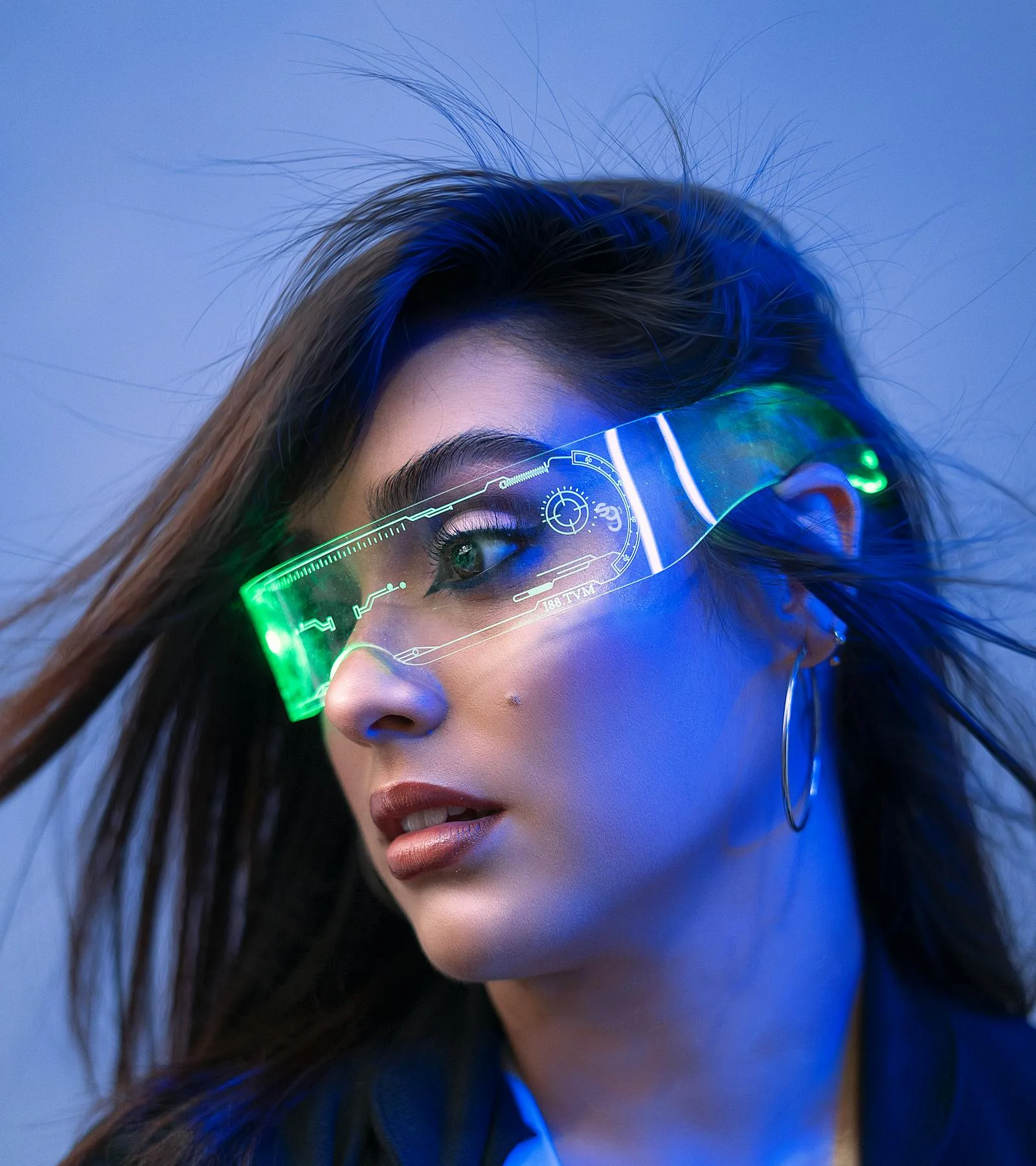
Smart glasses are wearable computers built into eyeglass frames. They combine microphones, speakers, sometimes a camera, sometimes a heads-up display, and an AI software layer that connects to a phone or to the cloud. The point is to give you a useful computing surface without pulling a phone out of your pocket. In 2026, that surface is mostly used for three jobs: capturing audio, talking to an AI assistant, and reading text on the lens.
They aren't VR or mixed-reality headsets. A Meta Quest or Apple Vision Pro is a sealed device that replaces your view of the world. Smart glasses sit on your face like normal eyewear and add a thin layer of information on top of what you already see. The best ones weigh under 60 grams. They look like glasses.
The category covers a wide spectrum. On one end, audio-only frames with no display and no camera, used for music and voice queries. In the middle, camera glasses that capture point-of-view video and answer questions about what they see. At the top end, glasses with a built-in transparent display that shows captions, navigation arrows, notifications, or translations directly in your field of view. AirCaps sits in that last category — purpose-built for real-time captioning and 60+ language translation on a binocular display.
The mental model that helps: smart glasses in 2026 are not one product. They are a category like "phones" was in 2008 — flip phones, BlackBerrys, and the original iPhone all looked similar but did very different jobs. Buyers who confuse a $379 Meta Ray-Ban with a $599 AirCaps end up disappointed, and the disappointment is almost always avoidable by knowing what you actually need the glasses to do.
How Big Is the Smart Glasses Market in 2026?
The numbers are no longer speculative. Counterpoint Research recorded 210% year-over-year growth in 2024 and projects a 60% CAGR through 2029, driven almost entirely by Ray-Ban Meta's adoption curve (Counterpoint Research, 2025). Omdia forecasts AI glasses shipments to cross 10 million units in 2026 and reach 35 million by 2030 (Omdia, 2025). IDC projects worldwide smart glasses shipments to surpass 40 million units by 2029 at a 55.6% five-year CAGR (IDC, 2025).
By revenue, Grand View Research pegs the global smart glasses market at $2.46 billion in 2025, growing to $14.38 billion by 2033 at a 24.2% CAGR (Grand View Research, 2025). The AI meeting assistant market layered on top of those glasses is projected to grow at 25.8% CAGR to $21.48 billion by 2033 (Grand View Research, 2025). IDC's broader XR category — which includes smart glasses, VR, and headsets — grew 44.4% in 2025 and is forecast to grow another 33.5% in 2026 (IDC, 2025).
| Forecast | 2024 | 2026 | 2029-2030 | Source |
|---|---|---|---|---|
| AI glasses shipments (units) | 2.7M | 10M+ | 35M (2030) | Omdia, IDC |
| Global smart glasses revenue | $1.9B | $3.0B (est.) | $8.26B (2030) | Grand View Research |
| YoY shipment growth | 210% | ~60% | 60% CAGR | Counterpoint Research |
| XR category shipments | +44.4% YoY | +33.5% YoY (forecast) | 40M+ units (2029) | IDC |
Citation Capsule: AI glasses shipments are forecast to grow from 2.7 million units in 2024 to over 10 million in 2026, reaching 35 million by 2030 — a 47% CAGR. The smart glasses market is projected to expand from $2.46 billion in 2025 to $14.38 billion by 2033 at a 24.2% CAGR (Omdia, 2025; Grand View Research, 2025).
What changed between 2023 and 2026 wasn't the technology in isolation. Ray-Ban Meta proved that mainstream consumers will wear connected eyewear if it looks like normal glasses. Samsung committed to Android XR. Apple put serious capital behind Vision Pro and the rumored everyday glasses follow-up. And the AI models running behind the scenes — Whisper, Llama 4, Gemini, GPT-5 — got fast enough to keep up with conversation in real time. The combination is what made 2026 the inflection year.
How Do Smart Glasses Actually Work?
Modern smart glasses run a four-stage pipeline that has to feel instant or the experience falls apart. Microphones capture audio. A speech recognition or sensor layer interprets what's happening. An AI model decides what's worth showing. A small display or speaker delivers the output. End-to-end, AirCaps gets live captions onto the lens in 300 milliseconds. Meta and Samsung target similar latency for their voice assistants.
Audio Capture
Most premium smart glasses now ship with arrays of three to four microphones distributed across the temple arms. The array runs a beamforming algorithm that calculates sub-millisecond timing differences between when sound hits each mic and uses that to lock onto the speaker facing you. Peer-reviewed studies on advanced beamforming systems show 3.3 to 13.9 dB of speech-in-noise improvement compared to a single microphone (PubMed, 2018). That's the difference between catching every word at a restaurant table and missing half the conversation. For a deeper walkthrough, see our explainer on why 4 microphones beat 1 in noise.
AI Processing
The clean audio stream goes to a speech recognition model — usually a quantized Whisper variant or a custom transformer — running on-device or in the cloud. The MLPerf benchmark for Whisper-Large-V3 showed word error rates dropping by more than 72% versus the prior baseline, with real-time inference now feasible on consumer hardware (MLCommons, 2025). AirCaps hits 97% caption accuracy on natural conversation; translation across 60+ languages runs around 95% accuracy with automatic language detection in under 100 milliseconds.
Display
Display technology is what divides the smart glasses category in 2026. Three approaches dominate. Waveguide MicroLED systems project monochrome (usually green) text onto a transparent lens — used by AirCaps, Meta Ray-Ban Display, Even Realities G1, and Halliday. Beam-projection systems shine a tiny laser at the eye (Halliday's approach). Wave-guided full-color OLED is emerging in higher-end devices like Xreal One Pro and the rumored Apple glasses. Most consumer glasses choose monochrome for power and weight reasons — color displays drain batteries fast and add bulk.
Connectivity
The glasses themselves are an input-output surface. The heavy lifting happens on a paired smartphone via Bluetooth Low Energy or, in some cases, on a dedicated co-processor in the frame. AirCaps and Even Realities require a phone. Ray-Ban Meta works partially without one. Samsung Galaxy Glasses pair tightly with Galaxy phones running Android XR. Apple's rumored everyday glasses are expected to require an iPhone.
What Can Smart Glasses Do in 2026?
The honest answer depends on which pair. The strongest capabilities across the category in 2026 are: real-time captions, real-time translation, AI voice queries, point-of-view photo and video capture, and turn-by-turn directions in your field of view. The weak capabilities are: full-screen video playback, gaming with controllers, and persistent multi-app multitasking. Smart glasses in 2026 are not a phone replacement. They are a second surface that handles a narrow set of jobs better than a phone ever could.
Real-Time Captions
For deaf and hard-of-hearing users, real-time captions on the lens are the killer feature. Conversation becomes unintelligible above 75 dBA ambient noise (CDC), and the average restaurant runs at 78 dBA (NIDCD). Hearing aids amplify all of that. Captioning glasses convert speech to text and put it directly in front of your eyes. AirCaps delivers 97% accuracy in 300 ms even in restaurant noise. The full breakdown lives in our complete guide to captioning glasses.
Real-Time Translation
For travelers, multilingual families, and international professionals, smart glasses make foreign-language conversation legible. AirCaps supports 60+ languages with automatic detection and handles code-switching mid-sentence — useful when a Spanglish or Franglais conversation flips between languages without warning. Meta Ray-Ban Display currently supports 6 languages for general availability (Meta Help Center, 2025). Samsung Galaxy Glasses translate via Gemini but the 2026 launch model has no on-lens display, so translations are spoken through open-ear speakers. See our translation glasses guide for the full comparison.
AI Meeting Intelligence
Professionals get something different from the same hardware: continuous capture, automatic transcripts, speaker identification, and AI summaries with action items. Sales reps spend only 28% of their week actually selling — the rest goes to admin and note-taking (Salesforce State of Sales, 2024). Smart glasses for meetings eliminate the laptop and keep eye contact intact while the AI captures everything. For the full walkthrough, see smart glasses for professionals.
Camera Capture and Visual AI
Ray-Ban Meta Gen 2 is the category leader here: 12MP camera, 3K video, and a visual AI model that answers questions about what the wearer sees. Useful for hands-free recording, recipe lookup, plant identification, and travel photography. Not what you buy if you need a display.
What Are the Main Categories of Smart Glasses?
There are three real categories of smart glasses in 2026, and they overlap on hardware but diverge on the job they're built to do. Mixing them up is the most common buying mistake.
Camera + AI Glasses
Examples: Ray-Ban Meta Gen 2 ($379), Oakley Meta HSTN ($399). No display. Camera and microphones capture point-of-view content. An AI assistant answers voice queries about what the wearer sees or hears. Best for lifestyle, photography, and casual voice queries. Not a captioning or reading device.
Audio + AI Glasses
Examples: Samsung Galaxy Glasses (launching August 2026 at ~$400), Solos AirGo 3 ($249-$299), upcoming Apple glasses. No display, sometimes no camera. Open-ear speakers, microphones, and AI. The job is "smart earbuds in glasses form." Samsung's first model leans on Gemini, with a Micro-LED display version targeted for 2027 (CNBC, 2026).
Display Glasses
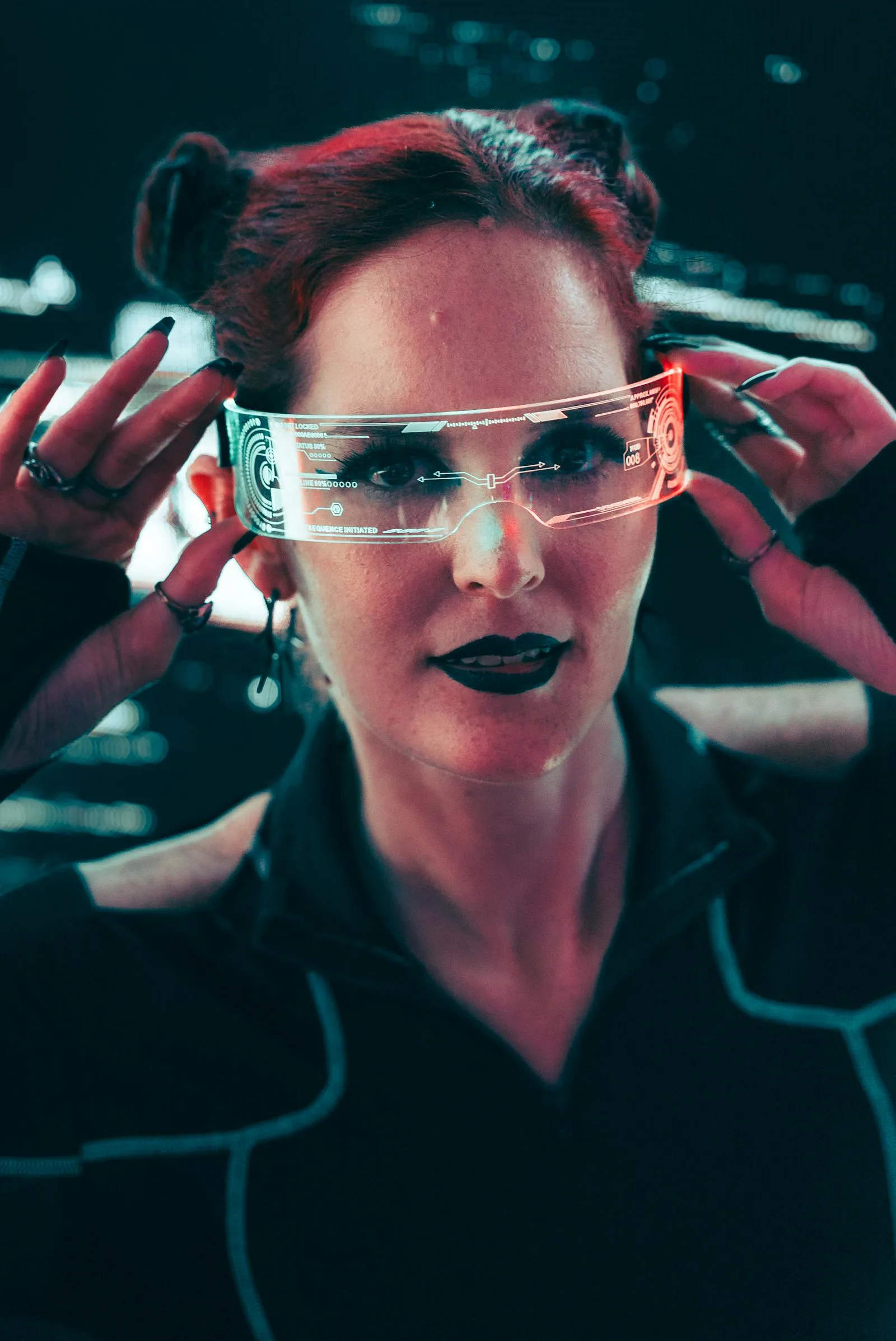
Examples: AirCaps ($599), Meta Ray-Ban Display ($799), Even Realities G1 ($599), Halliday ($489), Xreal One Pro ($599). A transparent heads-up display projects text and graphics onto the lens. The job is reading — captions, translations, notifications, navigation arrows, meeting summaries. Most consumer display glasses use monochrome (green) MicroLED at 640x480 to 800x600 resolution. Color is rare and still expensive.
| Category | What It Does | What It Doesn't | Price Range | Best For |
|---|---|---|---|---|
| Camera + AI | POV capture, visual AI, voice queries, music | No on-lens text, no captions, no translation reading | $299-$399 | Lifestyle, content creators, casual AI users |
| Audio + AI | Open-ear audio, voice AI, spoken translation | No display, you have to listen instead of read | $199-$499 | Audio-first users, ecosystem buyers (Apple, Samsung) |
| Display Glasses | On-lens captions, translation, navigation, notifications | Limited camera, more battery sensitive | $489-$799 | Hearing loss, travel, multilingual families, professionals |
| Spatial Computing | Full immersive computing, large virtual screens | Heavy, expensive, not everyday eyewear | $1,799-$3,499 | Dedicated work sessions, not all-day wear |
The vast majority of mainstream buyers will be best served by one of the first three categories. The Apple Vision Pro and Meta Quest sit in a separate spatial-computing bucket — they replace your view of the world rather than augment it.
Who Makes Smart Glasses in 2026?
The competitive map shifted hard in 2025-2026 as legacy tech giants joined the specialists. The brands worth knowing in 2026 cluster into four groups.
The Tech Giants
Meta ships three shipping models — Ray-Ban Meta Gen 2 ($379), Oakley Meta HSTN ($399), and Ray-Ban Display ($799) — and holds roughly 72% of global XR market share (IDC, 2025). Samsung launches Galaxy Glasses in August 2026 with Gemini AI (CNBC, 2026). Apple's Vision Pro is a $3,499 spatial-computing headset, with everyday glasses rumored for 2027 (Bloomberg, 2025). Google licenses Android XR to Samsung but does not currently ship its own glasses.
The Specialists
AirCaps ($599) is purpose-built for captioning, translation, and meeting intelligence. Even Realities G1 ($599) is a stylish display-glasses competitor with notification and translation features. Halliday ($489) uses a unique beam-projection display and ships with prescription lenses included (TechCrunch, 2025). Xreal sells a tethered AR display category — Xreal One Pro ($599) is for personal cinema and large virtual monitors rather than glance-and-go conversation.
The Audio-First Brands
Solos AirGo 3 ($249-$299) is the cheapest credible AI-glasses option, audio-only. Bose Frames is largely defunct as a smart category. Amazon Echo Frames continues at $269 but has not seen meaningful updates (Amazon, 2025).
The Accessibility Players
XanderGlasses ($5,000+) targets institutional accessibility deployments — clinics, classrooms, conferences — at enterprise pricing (HearingTracker, 2025). Envision Glasses ($3,500) focuses on vision accessibility and OCR. Hearview, Captify, and a handful of smaller brands compete in the consumer captioning niche but ship significantly less hardware than AirCaps.
For a head-to-head spec comparison of the three highest-volume display brands, see our Samsung vs. Meta vs. AirCaps breakdown.
How Much Do Smart Glasses Cost?
Smart glasses in 2026 cost between $199 (Solos audio frames) and $3,499 (Apple Vision Pro). The mainstream center sits between $379 and $799. Most display glasses cluster between $489 and $799, and most camera or audio glasses cluster between $249 and $399.
| Brand and Model | Price | Display | Required Subscription |
|---|---|---|---|
| Solos AirGo 3 Argon | $249-$299 | None | No |
| Amazon Echo Frames (7th Gen) | $269 | None | No |
| Ray-Ban Meta Gen 2 | $379 | None | No |
| Oakley Meta HSTN | $399 | None | No |
| Samsung Galaxy Glasses (est.) | ~$400 | None (2026), Display (2027) | Gemini Advanced optional |
| Halliday | $489 | Beam-projection | No |
| Even Realities G1 | $599 | MicroLED monocular | $4.99/mo (Pro tier) |
| AirCaps | $599 | MicroLED binocular | No (Free tier forever; Pro $20/mo optional) |
| Xreal One Pro | $599 | OLED tethered | No |
| Meta Ray-Ban Display | $799 | MicroLED monocular | No |
| Envision Glasses | $3,500 | Monocular (OCR-focused) | Optional |
| Apple Vision Pro | $3,499 | Dual 4K micro-OLED | No |
| XanderGlasses | $5,000+ | Captioning display | Institutional |
The hidden costs that buyer's guides usually miss are prescription lenses ($39 to $450), protection plans, and subscription tiers locked behind premium features. AirCaps is HSA/FSA eligible as an assistive device, which reduces effective cost by 20-35% depending on tax bracket. Meta Ray-Ban, Oakley Meta, Meta Ray-Ban Display, and Samsung Galaxy Glasses are consumer electronics and not HSA/FSA eligible. For the full pricing breakdown including warranty terms and refurbished options, see how much smart glasses cost in 2026.
What About Privacy, Recording, and Battery?
Privacy concerns about smart glasses are real, and they break down into two questions: what data is the device collecting, and how visible is that collection to the people around you? The honest answer in 2026 is that the category has matured but still requires user judgment.
Recording Indicators
Meta Ray-Ban Gen 2 displays a small LED that activates whenever the camera records. The LED is visible at conversational distance but can be obscured. Camera-equipped glasses are illegal to use covertly in many jurisdictions, and Meta has acknowledged the consent issue in product documentation (Meta, 2025). Smart glasses without cameras (AirCaps, Solos, Samsung's 2026 launch model) sidestep this entirely.
Audio Recording and Consent
Most US jurisdictions are one-party consent for audio recording, but several states (California, Florida, Illinois, Massachusetts, Pennsylvania, and others) and most of the EU require all-party consent. AirCaps surfaces a clear visible indicator when active capture is running and ships HIPAA, SOC 2 Type 2, and GDPR compliance for enterprise and healthcare buyers (AirCaps Meetings). If you plan to use smart glasses in client meetings, exam rooms, or courtrooms, the consent flow is a real obligation — not a checkbox.
Data Handling
Cloud-based AI processing means your audio leaves the glasses. Most vendors encrypt audio in transit and at rest, but the retention policies differ. AirCaps offers configurable retention windows. Meta retains voice queries by default unless you opt out in settings. Samsung's Galaxy Glasses processing on the Gemini cloud raises the same questions Google AI products do. Read the policy before deployment.
Battery Life
The dirty secret of smart glasses is that battery life is the biggest constraint on daily use. Continuous display use runs 2 to 4 hours on most premium models. Mixed use (intermittent display, captioning, voice queries) typically runs 4 to 8 hours. AirCaps lands at 4-8 hours mixed and 2-4 hours continuous, with fast charging that gives 2 hours of use in 15 minutes and a full charge in 40 minutes. The Power Capsules accessory ($79, $63 with device purchase) adds 18 hours of total continuous runtime via hot-swap magnetic batteries.
| Concern | Camera Glasses | Audio-Only Glasses | Display Glasses (No Camera) |
|---|---|---|---|
| Covert recording risk | High (visible LED, but possible) | Medium (audio only) | Low (no camera in AirCaps, Even Realities, Halliday) |
| Battery (mixed use) | 4-6 hours | 6-10 hours | 4-8 hours |
| Battery (continuous display) | N/A | N/A | 2-4 hours |
| HSA/FSA eligible | No | No | AirCaps only |
| HIPAA / GDPR / SOC 2 | Varies | Limited | AirCaps confirmed |
Can You Get Smart Glasses with Prescription Lenses?
Yes, almost all consumer smart glasses now support prescription lenses, though the process and pricing differ sharply. This matters because most full-day buyers already wear glasses — a smart glasses product that doesn't accept your real prescription is a non-starter.
AirCaps works with any prescription from -16 to +16 diopters via interchangeable lens holders fitted by any optician. The Prescription Lens Holder add-on is $39 ($31 with device purchase). The fitting process is the same as ordinary glasses — the optician adjusts the holder, no proprietary lab required. Meta Ray-Ban lens swaps cost around $200 and route through partnered optical chains (Meta Newsroom, 2026). Halliday includes free prescription lenses with the $489 purchase. Tajima sells aftermarket progressive lenses for various smart glasses at around $450.
The full process — measurement, lab time, fitting — is covered in our prescription smart glasses guide. The short version: prescription support is broad, but the price and convenience vary by 10x across brands. AirCaps is the cheapest and most flexible because it uses standard ophthalmic fitting, not a proprietary process.

Who Should Buy Smart Glasses in 2026?
Smart glasses in 2026 are a buy for specific jobs, not a universal upgrade. The honest answer breaks down by use case.
Deaf and Hard-of-Hearing Buyers
If you struggle to follow conversations in restaurants, family dinners, classrooms, theaters, or doctor's visits, display glasses with captions are the most concrete upgrade available in 2026. Approximately 1.5 billion people worldwide have some degree of hearing loss, and more than 60% don't use hearing aids (WHO, 2024; Healthy Hearing, 2025). For this group, AirCaps is purpose-built and HSA/FSA eligible. Don't buy Ray-Ban Meta — it has no display. Don't buy Samsung's 2026 model — it has no display either.
International Travelers and Multilingual Families
If you regularly travel internationally, host multilingual family meals, or work across language barriers, translation glasses with 60+ language support and a binocular reading display are the strongest 2026 buy. AirCaps lands here. Meta Ray-Ban Display only supports 6 generally available languages, and Samsung's 2026 launch model translates by voice — not by text on the lens.
Sales, Healthcare, and Executive Professionals
If meetings are your job and you're losing hours per week to note-taking and CRM admin, AI-meeting-enabled smart glasses are a productivity buy. AirCaps Pro adds AI summaries, speaker identification, and Q&A with notes for $20/month. McKinsey research on generative AI in customer service shows 14% issue resolution improvement and 9% handle-time reduction (McKinsey, 2023). Similar gains apply to sales calls and physician charting. For deeper case studies, see smart glasses for professionals.
Lifestyle and Camera-First Users
If you want a stylish AI-assistant accessory for music, podcasts, photos, and voice queries — and you don't need captions or translation reading — Ray-Ban Meta Gen 2 at $379 is the best-value option. Samsung Galaxy Glasses will be a strong alternative for Android users when they ship in August 2026.
People Who Shouldn't Buy Yet
If you mostly run fully-remote video calls from a desk, smart glasses don't add much that Zoom and an existing AI meeting tool don't already do. If you have light or intermittent use cases (occasional travel, one-off meetings), the ROI is harder to justify. And if you want full color spatial computing for gaming or productivity, wait for the Samsung 2027 display model or buy a Vision Pro instead.
What's Coming Next for Smart Glasses?
The 2026-2027 roadmap is more concrete than at any point in the past decade. The shifts to watch over the next 18 months:
Samsung is expected to release a Micro-LED display version of Galaxy Glasses in 2027, putting on-lens text and translation within reach of Android-ecosystem buyers (CNBC, 2026). Apple's everyday smart glasses are rumored for late 2027 based on Bloomberg reporting, targeted to compete with Ray-Ban Meta on price and form factor (Bloomberg, 2025). Meta is expected to release a second-generation Ray-Ban Display with full color and binocular displays in late 2026 or early 2027.
On the software side, the next leap is multimodal AI running locally on the glasses themselves — reducing latency, addressing privacy concerns, and removing the phone dependency for many tasks. Qualcomm and MediaTek both announced wearable-class chipsets for 2026 with on-device speech and vision capabilities (Qualcomm, 2025). Expect the line between "smart glasses" and "ambient computing device" to blur fast.
For accessibility, the most meaningful change will be insurance coverage. The American Academy of Audiology and the Hearing Loss Association of America are both engaged with insurers on assistive smart glasses classification (HLAA, 2025). If 2027 brings widespread insurance reimbursement for captioning glasses, the addressable market expands from a few million accessibility-aware buyers to the full 50 million-plus Americans with hearing loss.
Citation Capsule: Samsung is expected to ship a Micro-LED display version of Galaxy Glasses in 2027 (CNBC, 2026). Apple's everyday smart glasses are targeted for late 2027 (Bloomberg, 2025). Both will normalize on-lens displays for mainstream consumers and drive smart glasses shipments toward the 35 million unit forecast for 2030 (Omdia, 2025).
The category in 2026 is roughly where smartphones were in 2009. Workable, useful for specific jobs, growing fast, but still narrow compared to what's coming. Buying now means buying into the category before the wave; waiting means missing what AirCaps, Meta, Even Realities, and Halliday already do well today.
Frequently Asked Questions
What are smart glasses?
Smart glasses are eyewear with built-in microphones, speakers, sometimes a camera, and sometimes a heads-up display, paired with an AI software layer running on a connected phone or in the cloud. The 2026 category covers everything from $199 audio-only frames (Solos) to $599 binocular display glasses (AirCaps) to $3,499 spatial computing headsets (Apple Vision Pro). Each pair is built for a different job — knowing the job is the most important purchase decision.
Are smart glasses worth buying in 2026?
For specific jobs, yes. Captioning glasses at $599 are a fraction of the average $2,694-$4,727 paid for a pair of hearing aids and deliver functionality hearing aids cannot (HearingTracker, 2025). Translation glasses are the best technology available for multilingual conversation. AI meeting glasses recover hours of admin time for professionals. For lifestyle camera-and-AI use, Ray-Ban Meta is a strong value pick. For general-purpose computing, wait for 2027 hardware.
Do smart glasses record everything around you?
It depends on the model. Camera-equipped glasses (Ray-Ban Meta) can record video, with a visible LED indicator when active. Audio-only and display glasses without cameras (AirCaps, Solos, Halliday) do not capture video at all. AirCaps captures audio only when active capture is on, and surfaces a clear visible indicator. Recording consent laws vary by state and country — most US states are one-party consent, but California, Florida, Illinois, and others require all-party consent.
How long do smart glasses batteries last?
Mixed-use battery life ranges from 4 to 10 hours depending on the model. AirCaps runs 4-8 hours mixed and 2-4 hours of continuous display use. Ray-Ban Meta Gen 2 runs roughly 8 hours mixed, and Samsung Galaxy Glasses target 8-10 hours audio-only. The Power Capsules accessory ($79) extends AirCaps to 18 hours of continuous runtime via hot-swap magnetic batteries. Fast charging on most models gets you 1-2 hours of use in 10-15 minutes.
Can I wear smart glasses with my prescription?
Yes. AirCaps supports any prescription from -16 to +16 diopters via interchangeable lens holders fitted by any optician for $39. Meta Ray-Ban Display supports prescription lenses through partnered optical chains at around $200. Halliday includes prescription lenses with the $489 purchase. Most other brands have prescription options, though pricing and convenience vary. See our prescription smart glasses guide for the full process.
What's the difference between smart glasses and AR glasses?
Smart glasses is the broader category — anything from audio-only frames to display glasses to spatial computing headsets. AR glasses specifically refers to devices with a heads-up display that overlays information on what you see (AirCaps, Meta Ray-Ban Display, Even Realities G1, Halliday). True AR with 3D anchored objects in space is mostly limited to headsets like Vision Pro and Quest. Most consumer "AR glasses" in 2026 are 2D heads-up displays.
Are smart glasses safe for everyday use?
Yes. AirCaps holds FCC and CE certification and uses Bluetooth Low Energy at well below safe-exposure limits. Display glasses use very low-luminance MicroLED with under 2% light leakage. The most common everyday risks are battery temperature in extreme conditions (same as any consumer electronic) and skin contact allergies to frame materials (most premium brands now use hypoallergenic acetate or titanium). For sustained reading on the lens, choose binocular displays — monocular displays can cause eye strain over 2-4 hours of continuous use.
Will smart glasses replace phones?
Not in 2026, and probably not within the next five years. Smart glasses are a complementary surface that handles a narrow set of jobs better than a phone — glanceable text, hands-free voice queries, continuous capture during in-person conversation. They are not a screen, gaming, video, or full-application platform. The honest framing is that smart glasses are the next category, not the replacement for the previous one.
The Honest Verdict for 2026
Smart glasses are no longer a science project. The combination of mainstream-acceptable form factors, AI models fast enough for real conversation, and entry from Meta, Samsung, and (soon) Apple has pushed the category into a real market — 10 million units shipping in 2026, 35 million projected by 2030, and a $14.38 billion market by 2033. Buying smart glasses today is buying into a category that's roughly where smartphones were in 2009.
The biggest mistake in 2026 is buying the wrong type. Ray-Ban Meta is the right answer for camera and lifestyle use, full stop — but it has no display, no captioning, and only six languages of translation through spoken output. Samsung Galaxy Glasses are exciting for Android users but the 2026 launch model has no display either. If your reason for buying smart glasses involves reading text on the lens — captions for hearing loss, translations while traveling, meeting summaries during sales calls — you need display glasses, not audio glasses. AirCaps is purpose-built for that job at $599 with 4-microphone beamforming, 97% caption accuracy at 300 ms latency, 60+ languages with automatic detection, binocular MicroLED, HSA/FSA eligibility, and no required subscription.
For deeper category-specific guidance, start with our complete guide to captioning glasses if hearing loss is the use case, our translation glasses guide for travel and multilingual conversation, or our guide to smart glasses for professionals for meeting intelligence. For the head-to-head spec comparison between the three biggest 2026 brands, see Samsung vs. Meta vs. AirCaps. For pricing across the full category, see how much smart glasses cost in 2026.
The technology is finally good enough that the buying decision is no longer "is this real?" — it's "which one does the job I actually need done?" Answer that question first and the rest is straightforward.
Last updated: May 2026. We refresh this guide whenever a major smart glasses brand launches new hardware, changes pricing, or ships a meaningful software update. Sources are linked inline and verified against manufacturer newsrooms, IDC, Omdia, Counterpoint Research, Grand View Research, and independent reporting from CNBC, Bloomberg, and TechCrunch. Questions about AirCaps specs, HSA/FSA eligibility, or how a specific pair fits your use case? Email support@aircaps.com or call +1-203-296-3699.
On this page
Table of Contents
▼
Written by
Nirbhay Narang
Co-founder & CTO, AirCaps
Co-founder of AirCaps. Cornell-trained engineer with 11+ years building audio AI and smart glasses hardware. Y Combinator alum. Leads the engineering behind AirCaps' 4-microphone beamforming array and real-time speech recognition pipeline.
Related Articles
Technology
Samsung vs. Meta vs. AirCaps: Which Smart Glasses Are Right for You?
Samsung Galaxy Glasses launch in August 2026 with no display. Meta Ray-Ban translates 6 languages. AirCaps captions 60+ languages on a binocular display. Honest spec-by-spec comparison.
Nirbhay Narang
·
May 7, 2026
·
20 min read
Technology
Prescription Smart Glasses: Everything Your Optician Needs to Know
A practical guide to fitting smart glasses with prescription lenses — diopter ranges, what to tell your optician, bifocal options, and what it costs in 2026. About 75% of US adults need vision correction (Vision Council, 2025).
Nirbhay Narang
·
May 10, 2026
·
18 min read
Technology
Smart Glasses Battery Life: Real-World Numbers, Not Marketing Claims
Smart glasses claim 6-12 hours of battery life. Tom's Guide tested Meta Ray-Ban Display and watched it drop to 40% in 90 minutes. The honest 2026 numbers for every major model.
Nirbhay Narang
·
Jun 1, 2026
·
24 min read
© 2025 AirCaps. All rights reserved.