Captioning Glasses: The Complete 2026 Buyer's Guide
Captioning glasses show real-time subtitles in your line of sight. Compare accuracy, price, and features for the 1.5B people with hearing loss.
By Madhav Lavakare · Published 2026-03-27 · 21 min read
The Complete Guide to Captioning Glasses in 2026
Table of Contents
What Are Captioning Glasses?
Why Captioning Glasses Matter Right Now
How Do Captioning Glasses Work?
Step 1: Sound Capture
Step 2: Audio Processing
Step 3: Text Display
What About Display Types?
Who Are Captioning Glasses For?
People with Moderate to Severe Hearing Loss
Families of People with Hearing Loss
People Who Can't Hear in Specific Situations
Professionals Who Need Accessibility
What Makes Captioning Glasses Accurate in Noisy Places?
Why Microphone Count Matters
The Restaurant Test
How Do Captioning Glasses Compare to Hearing Aids?
Where Hearing Aids Excel
Where Hearing Aids Struggle
Where Captioning Glasses Win
The Complementary Approach
What Should You Look for When Buying?
Accuracy and Latency
Microphone Count and Beamforming
Display Type (Monocular vs. Binocular)
Battery Life
Prescription Lens Support
Subscription Requirements
Weight
How Much Do Captioning Glasses Cost?
Can You Use HSA or FSA for Captioning Glasses?
What's Next for Captioning Glasses?
Better AI, Lower Latency
Convergence with Hearing Aids
Mainstream Adoption
Frequently Asked Questions
How accurate are captioning glasses?
Do captioning glasses work without internet?
Can I wear captioning glasses with hearing aids?
How long do captioning glasses batteries last?
Are captioning glasses covered by insurance?
What languages do captioning glasses support?
Will captioning glasses replace hearing aids?
Where to Go from Here
Continue Reading

Guides
Captioning Glasses: The Complete 2026 Buyer's Guide

Madhav Lavakare
·
March 27, 2026
·
21 min read
On this page
Table of Contents
▼
Editorial disclosure: AirCaps manufactures captioning glasses. This guide covers the full market including our own product. All claims are independently sourced.
The Complete Guide to Captioning Glasses in 2026
Roughly 1.5 billion people worldwide live with some degree of hearing loss, and that number is projected to reach 2.5 billion by 2050 (WHO, 2024). Yet more than 60% of people who need hearing aids don't use them (Healthy Hearing, 2025). Captioning glasses are filling this gap — lightweight smart glasses that display real-time subtitles directly in your line of sight, like closed captions for the real world.
This guide covers everything: how these devices work, who they're built for, what separates the best from the rest, and how to choose the right pair. We've spent over a decade building AI-powered speech recognition for glasses, and we'll share what we've learned along the way.
Key Takeaways
- Captioning glasses show real-time speech-to-text subtitles in your field of view — no phone needed during conversations
- The best models reach 97% accuracy with under 300ms latency, even in noisy environments (WHO reports 1.5B people affected)
- Prices range from $300 to $5,000, with most consumer models between $500-$900
- Key differentiators: microphone count, noise handling, battery life, prescription support, and subscription requirements
- Many captioning glasses are HSA/FSA eligible as assistive medical devices
Table of Contents
- What Are Captioning Glasses?
- Why Captioning Glasses Matter Right Now
- How Do Captioning Glasses Work?
- Who Are Captioning Glasses For?
- What Makes Captioning Glasses Accurate in Noisy Places?
- How Do Captioning Glasses Compare to Hearing Aids?
- What Should You Look for When Buying?
- How Much Do Captioning Glasses Cost?
- Can You Use HSA or FSA for Captioning Glasses?
- What's Next for Captioning Glasses?
- Frequently Asked Questions
What Are Captioning Glasses?
Captioning glasses are smart glasses with a built-in transparent display that shows real-time text of what people around you are saying. They use AI-powered speech recognition to convert spoken words into subtitles you can read without looking down at a phone or screen. Think of them as closed captions for everyday life — a conversation at dinner, a doctor's appointment, a classroom lecture.
They aren't hearing aids. Hearing aids amplify sound. Captioning glasses convert speech into text. That's a fundamental difference, and it matters because the two technologies solve different parts of the same problem.
Here's what most captioning glasses have in common:
- Built-in microphones that capture speech from the people around you
- AI speech recognition running on a connected phone or in the cloud
- A heads-up display projecting captions onto the lens, visible only to the wearer
- Bluetooth connectivity to a companion smartphone app (iOS or Android)
- Prescription lens support so they can replace your regular glasses
What they're not: AR headsets, gaming devices, or screens strapped to your face. The best subtitle-enabled glasses weigh under 50 grams and look like ordinary eyewear.
One misconception worth clearing up: you don't need to be deaf for these glasses to be useful. Anyone who struggles to follow conversations — whether from age-related hearing loss, a noisy environment, or a foreign language — can benefit.
Why Captioning Glasses Matter Right Now
Hearing loss is the third most common chronic physical condition in the United States, more prevalent than diabetes or cancer (HLAA, 2025). Over 50 million Americans — roughly 1 in 7 people — live with some degree of it. And the global cost of unaddressed hearing loss runs nearly $1 trillion annually (WHO, 2024).
What's changed is the technology. Five years ago, real-time speech-to-text on glasses was a research project. Today, consumer captioning glasses deliver 85-97% accuracy with latency under a second. The AI speech models have gotten dramatically better, and the displays have gotten small enough to fit into frames that don't scream "medical device."
Three market forces are colliding right now. First, AI speech recognition accuracy crossed the usability threshold — 97% accuracy means you miss roughly one word in thirty, which is good enough to follow a natural conversation. Second, smart glasses shipments grew from 2.7 million units in 2024 to a projected 10 million in 2026 (Omdia, 2025), driving manufacturing costs down. Third, Samsung, Google, and Apple are all entering the smart glasses market in 2026, which is normalizing the form factor for mainstream consumers.
The result? Speech-to-text glasses are moving from niche assistive devices to mainstream wearable technology. And for the 60%+ of people with hearing loss who don't use hearing aids, they may be the first solution that actually fits their lives.
Hearing Loss: The Scale of the Problem
━━━━━━━━━━━━━━━━━━━━━━━━━━━━━━━━━━━━
Global hearing loss ████████████████████████████████ 1.5B people
Projected by 2050 ████████████████████████████████████████████ 2.5B
U.S. adults affected ████████████ 50M+
Using hearing aids ████ 39%
WITHOUT treatment ████████████████ 61%
Source: WHO (2024), Healthy Hearing (2025)
How Do Captioning Glasses Work?
Modern captioning glasses combine three technologies: microphone arrays for sound capture, AI speech recognition for converting audio to text, and micro-displays for showing captions in your field of view. The accuracy varies from 85% to 97% depending on the model, with latency ranging from 300ms to over 1,000ms (HearingTracker, 2025).
Here's the typical pipeline, from sound wave to text on your lens:
Step 1: Sound Capture
The glasses have built-in microphones — anywhere from one to four, depending on the model. More microphones matter because they enable beamforming, a technique that focuses on the speaker in front of you while filtering out background noise. We'll cover why this matters so much in the noise section below.
Step 2: Audio Processing
The raw audio streams via Bluetooth to a companion app on your phone. The app sends the audio to cloud-based AI speech recognition models that convert it to text. Some models also support on-device (offline) processing, though accuracy is typically lower — around 85-90% offline versus 95-97% with cloud processing.
Step 3: Text Display
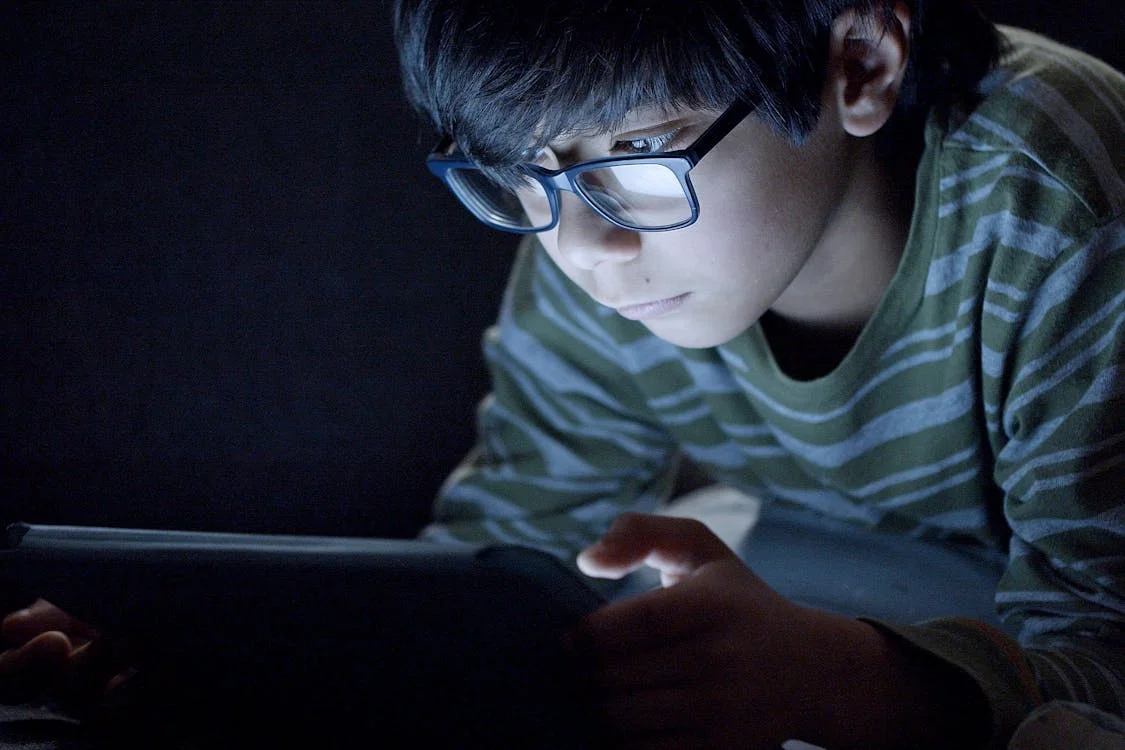
The text appears on the glasses' built-in display within 300-1,000 milliseconds of the person speaking. Better glasses use waveguide or MicroLED technology that projects text onto a transparent display — so you can read captions while still seeing the person talking. The text is only visible to the wearer; to everyone else, the glasses look normal.
What About Display Types?
Two main approaches exist: monocular (one display, one eye) and binocular (two displays, both eyes). Binocular displays are more comfortable for extended use because they don't create eye strain from one eye working harder than the other. If you plan to wear captioning glasses all day, binocular matters.
Most current captioning glasses use monochrome green displays optimized for high contrast and readability. Color isn't necessary for reading text — what matters is sharpness, brightness, and the ability to read in both bright sunlight and dim rooms.
Who Are Captioning Glasses For?
Over 50 million Americans report some degree of hearing difficulty, with prevalence rising sharply after age 65 — affecting 1 in 3 adults aged 65-74 and nearly half of those over 75 (NIDCD, 2025). But the people who actually use captioning glasses paint a more interesting picture than demographics alone suggest.
From thousands of customer interactions, here are the people who benefit most:
People with Moderate to Severe Hearing Loss
This is the core audience. People who have hearing aids but still struggle in group conversations, noisy restaurants, and uncaptioned venues. One user described it this way: "Before I had these glasses, I often felt left out. I'd miss jokes, withdraw from conversations, and sit quietly, smiling but not really connecting."
Families of People with Hearing Loss
A surprising percentage of captioning glasses are purchased by family members — adult children buying for aging parents, spouses tired of repeating themselves, families who want their grandparent included at holiday dinners. As one customer put it: "The first response was tears in our family."

People Who Can't Hear in Specific Situations
Not everyone with hearing difficulty has a diagnosed condition. Plenty of people hear fine in quiet rooms but lose conversations completely in restaurants, at parties, or in crowded offices. Captioning glasses are particularly effective here because they work precisely where hearing aids struggle most — in noise.
Professionals Who Need Accessibility
Deaf professionals in corporate settings, students in lecture halls, healthcare workers who need to understand patients clearly. The workplace is where real-time caption eyewear moves from "nice to have" to "career-changing." Some devices also double as AI-powered meeting assistants with transcription, notes, and speaker identification.
What we've noticed over years of building this technology: the emotional impact consistently surprises people. They expect a gadget. They get participation back. A 92-year-old customer told us the glasses "opened up my social world again." An otolaryngologist told a patient's family they could "stop talking about a cochlear implant." These aren't edge cases — they're the typical experience.
What Makes Captioning Glasses Accurate in Noisy Places?
Restaurant noise averages 78 dBA, and bars hit 81 dBA — both well above the 75 dBA threshold where conversation becomes difficult (NIDCD, 2025). In a CDC study, 25% of New York City restaurants exceeded 81 dBA. This is the single biggest pain point for people with hearing loss, and it's where captioning glasses earn their keep — or fail.
The secret isn't in the AI model. It's in the microphones.
Why Microphone Count Matters
Captioning glasses with a single microphone capture everything equally — the person talking to you, the table next to you, the kitchen noise, the music. The AI model then has to figure out what's speech and what isn't, which tanks accuracy in loud environments.
Glasses with four microphones can use beamforming — a technique that creates a directional "cone" of audio capture pointed at whoever you're facing. Research shows beamforming improves speech-to-noise ratio by 3.3 to 13.9 decibels (PubMed, 2018; PMC, 2022). In practical terms, that's the difference between understanding 60% of words and understanding 95%.

The Restaurant Test
Here's a useful rule of thumb: ask any captioning glasses manufacturer about accuracy in a noisy restaurant. If they dodge the question or only quote accuracy for quiet rooms, that tells you something. The best glasses on the market maintain 92-97% accuracy in environments up to 80 dBA. Others drop to 70-80%, which means you're missing every fourth or fifth word — enough to lose the thread of conversation entirely.
According to HearingTracker's independent testing, accuracy varies dramatically by device: some models hit 92-97% accuracy at conversational distance with Wi-Fi, while others drop to 82% in restaurant noise at 80 dBA (HearingTracker, 2025).
The Restaurant Noise Problem (dBA Levels)
━━━━━━━━━━━━━━━━━━━━━━━━━━━━━━━━━━━━━━━━

Normal conversation          ██████████████████  60 dBA
Difficulty threshold         ███████████████████████  75 dBA
Average restaurant           █████████████████████████  78 dBA
Average bar                  ██████████████████████████  81 dBA
Hearing damage threshold     ████████████████████████████  85 dBA

Source: NIDCD (noisyplanet.nidcd.nih.gov), CDC
80% of UK diners have left a restaurant because the noise made conversation impossible (PMC, 2022). Captioning glasses with multi-microphone beamforming are the only wearable solution that directly addresses this problem.
How Do Captioning Glasses Compare to Hearing Aids?
Hearing aids and captioning glasses solve fundamentally different problems: hearing aids amplify sound so you hear more, while captioning glasses convert speech to text so you read what you can't hear. According to the Hearing Loss Association of America, hearing loss is the third most common chronic condition in the U.S. — yet only 39% of those who need hearing aids actually use them (HLAA, 2025).
So why don't more people use hearing aids? And where do captioning glasses fit?
Where Hearing Aids Excel
Hearing aids are the right choice for amplifying environmental sounds — birdsong, doorbells, approaching vehicles, music. They're discreet, don't require a phone, and modern ones are remarkably sophisticated. For mild to moderate hearing loss in relatively quiet settings, hearing aids work well.
Where Hearing Aids Struggle
Group conversations. Noisy restaurants. Lecture halls. Any environment with competing sound sources. Even premium hearing aids with noise reduction struggle when multiple people are talking at once — because they're fundamentally trying to amplify the right sounds while suppressing the wrong ones. As of 2026, only two hearing aid products (Phonak Sphere Infinio and ReSound Vivia) use real-time AI processing to address this (Soundly, 2026).
Where Captioning Glasses Win
Captioning glasses sidestep the amplification problem entirely. Instead of making sounds louder, they translate speech into text. This means they work regardless of the type or severity of hearing loss. Background noise at 80 dBA? The AI focuses on the speaker's voice, converts it to text, and you read it — the noise doesn't matter because you're not trying to hear through it.
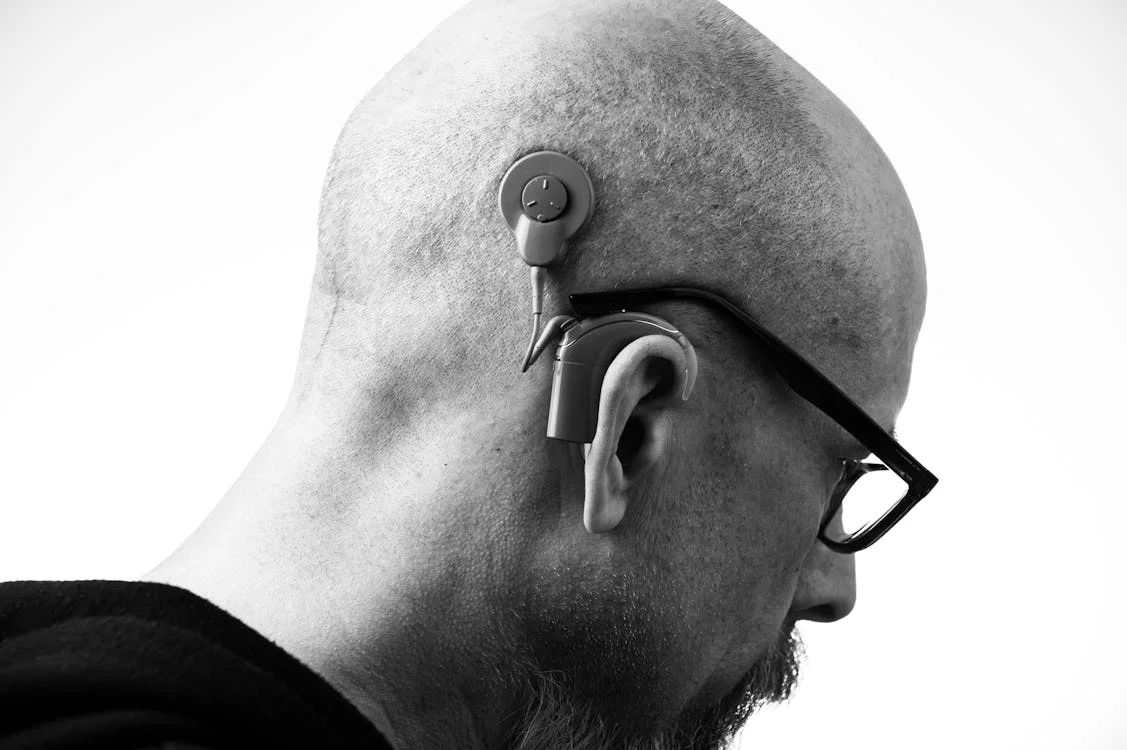
They're also the only option for profoundly deaf individuals who get no benefit from amplification. And for people who use cochlear implants or hearing aids, live-caption eyewear serves as a supplement for the situations where amplification alone falls short.
The Complementary Approach
The smartest approach isn't either/or — it's both. Wear your hearing aids for the environmental awareness and amplification they provide. Add captioning glasses for the situations where hearing aids fail. Several customer reviews describe exactly this combination working better than either device alone.
Here's a quick guide to which technology fits which situation:
| Situation | Best Solution |
|---|---|
| Quiet one-on-one conversations | Hearing aids or captioning apps |
| Noisy restaurants and social events | Caption glasses with noise-isolating microphones |
| Work meetings and conferences | Caption glasses with AI meeting features |
| Phone calls and media streaming | Hearing aids with Bluetooth |
| International travel and multilingual settings | Caption glasses with real-time translation |
What Should You Look for When Buying?
The captioning glasses market has grown from two or three options to nearly a dozen in the past year. Prices span from $300 to $5,000, and the specs that matter aren't always the ones manufacturers highlight (HearingTracker, 2025). Here's what actually determines whether you'll use the glasses or leave them in a drawer.
Accuracy and Latency
These are the two numbers that matter most. Accuracy below 90% means you're guessing at too many words. Latency above 500ms means the captions lag noticeably behind the speaker. Look for glasses that publish their accuracy numbers for noisy environments specifically — not just quiet rooms. For reference, AirCaps publishes 97% accuracy at 300ms latency in noisy environments using cloud processing, and 90%+ offline.
Microphone Count and Beamforming
One or two microphones is adequate for one-on-one conversation in quiet settings. Four microphones with beamforming is what you need for restaurants, group conversations, and real-world use. Don't compromise here — this is the single biggest predictor of real-world satisfaction.
Display Type (Monocular vs. Binocular)
Monocular displays (one eye only) cause eye strain during extended use. Binocular displays (both eyes) are more comfortable but less common and usually more expensive. If you plan to wear captioning glasses for more than an hour at a time, binocular is worth the premium. AirCaps uses a binocular MicroLED waveguide display at 640x480 per eye, with less than 2% light leakage — meaning the captions are virtually invisible to others.
Battery Life
Most captioning glasses last 2-8 hours depending on usage. Continuous captioning drains the battery faster than intermittent use. Check whether the manufacturer offers external battery accessories — AirCaps, for example, offers magnetic hot-swap Power Capsules that extend use to 18 hours without removing the glasses, and a charging case that provides 10+ full recharges on the go.
Prescription Lens Support
If you wear prescription glasses, this is non-negotiable. Some caption-enabled eyewear uses interchangeable lens holders that any optician can fit. Others require you to order through the manufacturer. The former is more flexible and usually cheaper.
Subscription Requirements
Some captioning glasses work fully out of the box. Others lock key features behind a monthly subscription ($15-30/month). Over two years, a $20/month subscription adds $480 to the total cost. Check whether the glasses work without a subscription and what features are included free. AirCaps offers a free tier with unlimited captions in 9 languages at 90%+ accuracy, with a $20/month Pro tier unlocking 60+ languages, 97%+ accuracy, speaker ID, and meeting intelligence. A 30-day free trial is included with purchase.
Weight
You'll wear these on your face for hours. Every gram matters. The lightest captioning glasses weigh around 36-43 grams. Anything over 50 grams will start to feel heavy during extended wear. For reference, most regular eyeglasses weigh 25-40 grams. AirCaps weighs 49 grams with a frame designed in collaboration with Bolon Eyewear.
How Much Do Captioning Glasses Cost?
Consumer captioning glasses range from $300 for budget clip-on models to $5,000 for institutional-grade devices, with most full-featured consumer glasses falling between $500 and $900 (HearingTracker, 2025). That's a wide range, and the price doesn't always correlate with quality.
Here's what the current landscape looks like:
| Price Range | What You Get | Examples |
|---|---|---|
| $300-400 | Clip-on or sport-frame designs, basic transcription, limited languages | Hearsight (ENGO 2) |
| $500-600 | Integrated glasses frame, cloud AI, 60+ languages, prescription support | Mid-range consumer models |
| $600-900 | Premium AI, multi-microphone beamforming, binocular display, meeting features | AirCaps ($599), full-featured consumer models |
| $1,000+ | Enterprise features, specialized form factors, institutional licensing | XRAI Glass, enterprise tiers |
| $3,000-5,000 | Medical/institutional grade, highest accuracy, dedicated support | XanderGlasses |
The sweet spot for most individual buyers is $500-$900. Below that, you're typically getting a single microphone and monocular display — fine for quiet one-on-one conversations but frustrating in the real-world situations where you actually need captioning. Above $900, you're usually paying for enterprise features or brand premium rather than meaningfully better captioning.
Watch out for the subscription trap. A $500 pair of glasses with a mandatory $25/month subscription costs $1,100 over two years. A $600 pair that works without a subscription costs $600. Always calculate the two-year total cost of ownership.
Can You Use HSA or FSA for Captioning Glasses?
Yes — captioning glasses that qualify as assistive hearing devices are generally eligible for HSA (Health Savings Account) and FSA (Flexible Spending Account) purchases. The IRS includes hearing aids, hearing devices, and their batteries and repairs under eligible medical expenses in Publication 502 (IRS, 2025). Since captioning glasses serve as assistive hearing technology, they fall under this category.
Here's what you should know:
- HSA funds roll over year to year, so there's no deadline pressure
- FSA funds typically expire December 31 (some plans offer a grace period or $610 carryover). If you're losing FSA funds at year-end, captioning glasses are a legitimate way to use them.
- You may need a Letter of Medical Necessity from your audiologist or doctor. Ask your plan administrator.
- Prescription smart glasses are also eligible — the prescription lens component qualifies independently (GoodRx, 2025)
The tax savings are significant. If you're in the 22% federal tax bracket, buying $600 captioning glasses with HSA/FSA funds effectively saves you $132 in taxes. Combined with state tax savings, the effective discount can reach 30-40%.
Not all captioning glasses manufacturers explicitly market HSA/FSA eligibility. If it's not mentioned on their site, ask their support team directly — the eligibility is based on the device category, not the manufacturer's marketing.
What's Next for Captioning Glasses?
The smart glasses market is projected to grow from $2.46 billion in 2025 to $14.38 billion by 2033 — a 24.2% compound annual growth rate (Grand View Research, 2025). Samsung, Google, and Apple are all preparing smart glasses launches in 2026, which will drive mainstream awareness and push the entire category forward.
For captioning glasses specifically, three trends will define the next two years:
Better AI, Lower Latency
The AI models powering speech recognition improve every few months. Expect accuracy to push past 98% and latency to drop below 200ms within the next year. On-device processing will also improve, making offline captioning nearly as good as cloud-based.
Convergence with Hearing Aids
The hearing aid industry and the smart glasses industry are converging. EssilorLuxottica received FDA clearance for Nuance Audio hearing aid glasses in 2025 (Ophthalmology Times, 2025). Forum discussions on HearingTracker show strong consumer demand for a single device that combines amplification and captioning. It's a matter of when, not if.
Mainstream Adoption
As Samsung and Apple enter the market, "smart glasses" will stop being a niche category. The ripple effect for captioning glasses: more awareness, lower component costs, better frames, and broader insurance coverage. WHO estimates that every $1 invested in hearing care returns nearly $16 over 10 years (WHO, 2024). As the economic case becomes clearer, expect healthcare systems to start covering captioning glasses more broadly.

Frequently Asked Questions
How accurate are captioning glasses?
Accuracy ranges from 85% to 97% depending on the model and environment. The best captioning glasses achieve 97% accuracy with cloud-based AI processing, even in noisy settings. Offline accuracy is typically lower, around 85-90%. Accuracy is also affected by microphone quality, speaker distance, and background noise — glasses with four-microphone beamforming consistently outperform single-microphone models (HearingTracker, 2025).
Do captioning glasses work without internet?
Most captioning glasses support offline use, but with reduced accuracy and fewer language options. Offline models typically support 5-10 major languages at 85-90% accuracy. Cloud processing delivers 95-97% accuracy across 60+ languages. If you need captioning glasses primarily for restaurants or social events, you'll almost always have phone data available for cloud processing.
Can I wear captioning glasses with hearing aids?
Yes. Captioning glasses and hearing aids serve different functions and work well together. The hearing aids amplify environmental sounds while the captioning glasses provide a text backup for speech. Many users report this combination is significantly more effective than either device alone, particularly in group conversations and noisy environments.
How long do captioning glasses batteries last?
Battery life ranges from 2-3 hours of continuous captioning display to 8+ hours of mixed use. Fast charging is common — some models reach 2 hours of use from a 15-minute charge. External battery accessories can extend total use to 12-18 hours. If battery life is a priority, check whether the manufacturer offers charging cases or hot-swappable battery packs.
Are captioning glasses covered by insurance?
Coverage varies by plan and carrier. Captioning glasses may qualify as durable medical equipment (DME) with a prescription or Letter of Medical Necessity from an audiologist. HSA and FSA funds are generally eligible for assistive hearing devices. Contact your insurance provider directly to confirm coverage for your specific plan. The HLAA reports hearing loss costs the U.S. economy billions annually, and coverage is slowly expanding (HLAA, 2025).
What languages do captioning glasses support?
Language support varies dramatically. Budget models support 5-10 languages. Premium models support 60+ languages with automatic language detection — meaning the glasses identify what language is being spoken and switch automatically without manual input. This matters if you interact with speakers of multiple languages, since manual language selection mid-conversation breaks the flow.
Will captioning glasses replace hearing aids?
No. Captioning glasses and hearing aids solve different problems. Hearing aids amplify sound — they help you hear environmental cues, music, and conversation. Captioning glasses convert speech to text — they help when amplification alone isn't enough, such as in noisy restaurants or group conversations. For most people with hearing loss, the best approach is using both: hearing aids for everyday amplification and captioning glasses for challenging listening situations.
Where to Go from Here
Captioning glasses aren't a future technology — they're here, they work, and they're getting better fast. For the 1.5 billion people with hearing loss worldwide, they represent a fundamentally new way to participate in conversations that hearing aids alone can't fully solve.
The category is still young enough that the right pair of glasses can genuinely change someone's daily life. The wrong pair will collect dust. The difference comes down to accuracy in noise, battery life, comfort, and whether the manufacturer treats you as a customer or a subscription revenue stream.
If you're evaluating captioning glasses for yourself or a family member, start with the basics: How noisy are the environments where you need help? Do you need prescription lenses? How many hours a day will you wear them? The answers to those three questions will narrow your options faster than any spec sheet.
Continue Reading
On this page
Table of Contents
▼
Written by
Madhav Lavakare
Co-founder & CEO, AirCaps
Co-founder of AirCaps. Building AI-powered smart glasses for conversation since 2013. Yale graduate, Y Combinator alum. Built his first Google Glass apps at age 13 and has spent 11+ years in speech AI and wearable computing.
Related Articles

Guides
Can't Hear in Restaurants? How Captioning Glasses Solve the #1 Hearing Loss Complaint
Restaurant noise makes hearing aids fail. Learn why captioning glasses with 4-mic beamforming maintain 97% accuracy at 78+ dBA — and how they solve the most common hearing loss frustration.
Madhav Lavakare
·
Apr 4, 2026
·
16 min read

Guides
Captioning Glasses vs. Hearing Aids: A Complete Comparison
Captioning glasses and hearing aids solve hearing loss differently. Compare accuracy in noise, restaurant performance, cost, insurance coverage, and which solution works best for your situation.
Madhav Lavakare
·
Apr 1, 2026
·
17 min read
Guides
The Complete Guide to Hearing Loss Technology in 2026
Hearing aids, caption glasses, and apps compared for the 1.5B people with hearing loss. Accuracy, cost, and real-world performance data for 2026.

Nirbhay Narang
·
Mar 27, 2026
·
22 min read
© 2025 AirCaps. All rights reserved.