How Real-Time Translation Works in Smart Glasses
Smart glasses translate 60+ languages in under 700ms using AI pipelines. Learn how audio capture, ASR, and neural translation work together.
By Vishal Moorjani · Published 2026-03-25 · 23 min read
How Real-Time Translation Works in Smart Glasses
Table of Contents
What Happens When Smart Glasses Translate Speech?
How Do Smart Glasses Capture Audio in Noisy Environments?
Why Microphone Count Matters
How Beamforming Works
The Restaurant Problem
How Does Speech Recognition Handle Accents and Messy Speech?
What ASR Actually Does
The Hard Problems
What Makes Neural Machine Translation Different from Word-by-Word Translation?
How NMT Thinks in Sentences
Idioms and Cultural Nuance
Context Windows and Ambiguity
How Does Translated Text Appear on the Lens?
The Display Technology
Monocular vs. Binocular
Smooth Text Updates
Why Does Latency Matter So Much?
Where the Milliseconds Go
Edge AI vs. Cloud Processing
Why 300ms Feels Instant
How Do Smart Glasses Detect and Switch Between Languages?
How Automatic Detection Works
The Code-Switching Challenge
Sixty-Plus Languages and Growing
Where Is Real-Time Translation Being Used Today?
Business Across Borders
Family Connections Across Languages
Healthcare Communication
Travel Without Language Barriers
What's Next for Translation in Smart Glasses?
Tone and Emotion Preservation
Cultural Context Adaptation
Multi-Speaker Tracking
Full Offline Capability
Frequently Asked Questions
How fast is real-time translation in smart glasses?
How many languages do translation glasses support?
Can translation glasses handle multiple languages in one conversation?
Do translation glasses work offline?
How accurate is real-time translation in smart glasses?
Bridging Language Barriers, One Conversation at a Time
Continue Reading

Technology
How Real-Time Translation Works in Smart Glasses

Vishal Moorjani
·
March 25, 2026
·
23 min read

On this page
Table of Contents
▼
How Real-Time Translation Works in Smart Glasses
The global language services market hit $71.77 billion in 2025, driven largely by AI-powered translation technology (Grand View Research, 2025). That number reflects something most travelers, multilingual families, and international professionals already know: language barriers are expensive, isolating, and stubbornly persistent. Smart glasses are changing that equation by translating spoken language in real time, directly in your field of view.
This article breaks down the full translation pipeline inside modern smart glasses, from the moment sound enters a microphone to the moment translated text appears on your lens. We've spent over 11 years building speech AI for wearables, and we'll walk through the engineering that makes sub-second translation possible, where it still struggles, and where it's headed next.
Key Takeaways
- Real-time translation in smart glasses follows a four-stage pipeline: audio capture, speech recognition, neural translation, and display rendering
- The best systems complete the full pipeline in under 700ms across 60+ languages (Omdia, 2025)
- Multi-microphone beamforming is critical for accuracy in noisy real-world environments
- Modern neural translation preserves idioms and cultural context, not just individual words
- Automatic language detection handles code-switching mid-sentence without manual input
Table of Contents
- What Happens When Smart Glasses Translate Speech?
- How Do Smart Glasses Capture Audio in Noisy Environments?
- How Does Speech Recognition Handle Accents and Messy Speech?
- What Makes Neural Machine Translation Different from Word-by-Word Translation?
- How Does Translated Text Appear on the Lens?
- Why Does Latency Matter So Much?
- How Do Smart Glasses Detect and Switch Between Languages?
- Where Is Real-Time Translation Being Used Today?
- What's Next for Translation in Smart Glasses?
- Frequently Asked Questions
What Happens When Smart Glasses Translate Speech?
Neural machine translation quality has improved by over 60% since 2017, when Google introduced the Transformer architecture that now powers most modern translation systems (Google AI Blog, 2017). That improvement is what makes real-time translation in glasses viable today. The full pipeline involves four stages that must complete in fractions of a second.
Here's the sequence, from sound wave to translated text on your lens:
- Audio capture: microphones pick up speech and isolate it from background noise
- Speech recognition (ASR): AI converts the audio into text in the original language
- Neural machine translation (NMT): a second AI model translates that text into the target language
- Display rendering: the translated text appears on a micro-display in the glasses
Each stage introduces its own latency, accuracy challenges, and failure modes. The difference between a translation system that feels magical and one that feels broken often comes down to how well these four stages work together. A weakness in any single stage cascades through the rest.
What makes glasses different from phone-based translation apps is context. When you hold up a phone, you're signaling "I need help understanding you." When you're wearing glasses, nobody knows. The conversation stays natural, the eye contact stays unbroken, and the translation happens invisibly.
How Do Smart Glasses Capture Audio in Noisy Environments?
Research shows multi-microphone beamforming improves speech-to-noise ratio by 3.3 to 13.9 decibels compared to single-microphone setups (PubMed, 2018; PMC, 2022). That improvement is the difference between catching 60% of spoken words and catching 95%. Audio capture is the foundation of the entire translation pipeline, and it's where most cheap devices fail first.
Why Microphone Count Matters
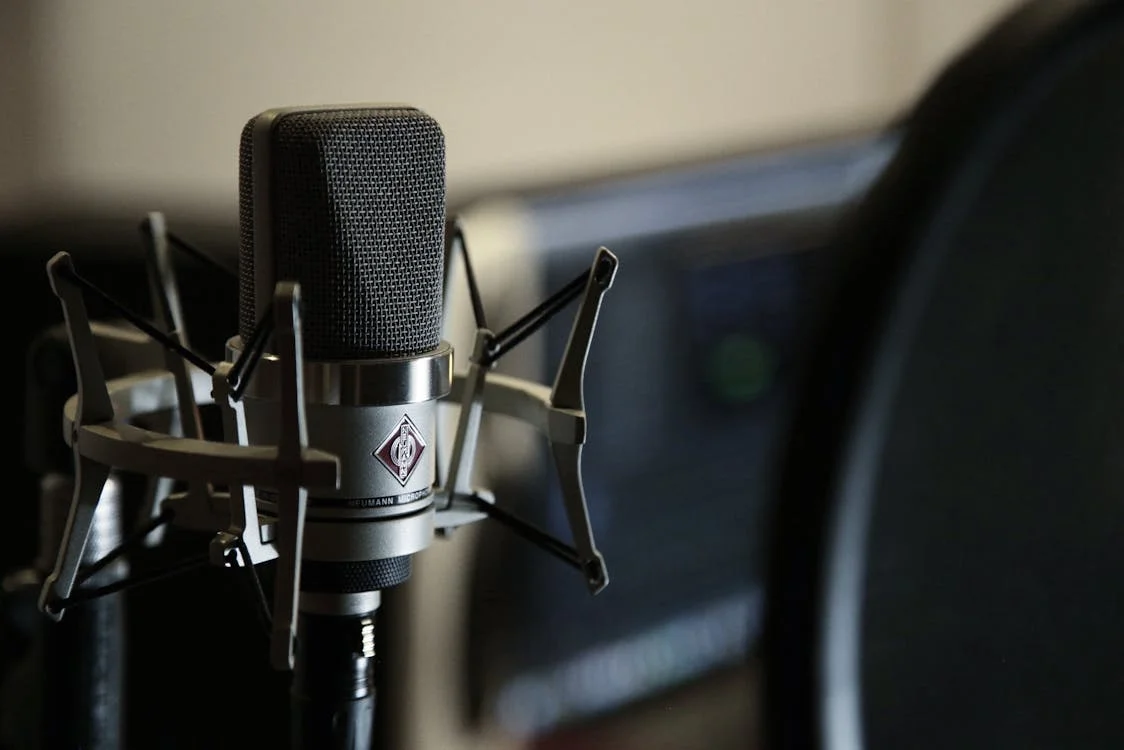
Modern translation glasses use four or more microphones positioned around the frame. These microphones work as an array, using a technique called beamforming to create a directional "cone" of audio capture. The array focuses on the speaker directly in front of you and actively suppresses sounds coming from other directions.
A single microphone picks up everything equally: the person you're talking to, the table next to you, passing traffic, background music. The result is a noisy audio signal that forces the speech recognition engine to guess. More guessing means more errors, and those errors multiply once the text reaches the translation stage.
How Beamforming Works
Beamforming exploits the tiny time differences between when a sound reaches each microphone. If someone is speaking from directly in front of you, their voice hits the front microphone a fraction of a millisecond before reaching the side microphones. The system uses these timing differences to calculate the direction of the sound source and amplify signals from that direction while canceling everything else.
This isn't just noise reduction. It's spatial audio filtering. The glasses essentially create an invisible "spotlight" for sound, pointed wherever you're looking.
The Restaurant Problem
Restaurant noise averages 78 dBA, and bars hit 81 dBA, both above the 75 dBA threshold where normal conversation becomes difficult (NIDCD, 2025). For translation glasses, a noisy environment is doubly challenging: the system needs to hear the speech clearly and then identify which language it's in. A four-microphone beamforming array handles this. A single microphone does not.
Citation Capsule: Multi-microphone beamforming arrays in smart glasses improve speech-to-noise ratio by 3.3 to 13.9 dB over single microphones, enabling accurate speech capture in environments up to 80 dBA, according to published research (PubMed, 2018; PMC, 2022).
How Does Speech Recognition Handle Accents and Messy Speech?
Automatic Speech Recognition (ASR) systems now achieve word error rates below 5% on clean English speech, though error rates rise to 10-15% with heavy accents or background noise (Interspeech, 2023). ASR is the bridge between raw audio and translatable text, and its accuracy directly caps how good the final translation can be.
What ASR Actually Does
The speech recognition engine takes the cleaned audio from the microphone array and converts it into text in the original language. Modern ASR systems use deep neural networks, specifically Transformer-based models trained on hundreds of thousands of hours of speech data spanning dozens of languages and dialects.
The system doesn't just match sounds to words. It builds a probabilistic model of what's being said, using context from the surrounding words to resolve ambiguity. If it hears something that could be "their" or "there," it uses the sentence context to choose correctly.
The Hard Problems
ASR in real conversations is harder than ASR on clean recordings. Here's why:
- Accents and dialects: English alone has dozens of distinct accent patterns. A model trained mostly on American English struggles with Scottish English, Indian English, or Nigerian English. The best systems now train on accent-diverse datasets, but performance still varies.
- Speaking speed: Natural speech ranges from 120 to 180 words per minute. Fast talkers compress syllables and drop consonants. The model needs to handle both a deliberate speaker and a rapid-fire auctioneer.
- Incomplete sentences: Real conversation is messy. People start sentences, trail off, restart. "I was going to, well, actually we should probably just, you know what, let's order first." A transcription system needs to handle this gracefully.
- Domain vocabulary: Medical terms, legal jargon, financial acronyms, technical specifications. General-purpose models stumble on specialized vocabulary. Some systems use domain-adapted models that layer industry-specific vocabulary on top of general speech recognition.
Here's what most people don't realize: a 3% error rate in speech recognition doesn't mean a 3% error rate in translation. Errors cascade. If the ASR misrecognizes a key noun, the entire translated sentence can become nonsensical. "The patient has a clot" misheard as "the patient has a cot" produces a completely different translation. Accurate speech recognition isn't just important; it's the bottleneck.
ASR Error Rate vs. Environment
━━━━━━━━━━━━━━━━━━━━━━━━━━━━━━━━━━━━━━━
Clean studio audio ██ 3% error
Quiet room ████ 5% error
Office with chatter ████████ 8% error
Busy restaurant (78 dB) ████████████ 12% error
Noisy bar (81+ dB) ████████████████ 15%+ error
Note: Rates shown for single-microphone capture.
Beamforming reduces errors by 30-50% in noisy settings.
Sources: Interspeech (2023), PubMed (2018)
What Makes Neural Machine Translation Different from Word-by-Word Translation?
Neural Machine Translation (NMT) models process entire sentences as units of meaning, not individual words. Since Google's introduction of the Transformer architecture in 2017, NMT quality has improved dramatically, with BLEU scores (a standard translation quality metric) rising by more than 60% across major language pairs (Google AI Blog, 2017). This shift from word-level to context-level translation is what makes real-time translation in glasses actually usable.

How NMT Thinks in Sentences
Older translation systems worked like dictionaries: look up each word, substitute the target-language equivalent, rearrange to fit grammar rules. The results were technically accurate and practically unreadable. "The spirit is willing but the flesh is weak" famously became "The vodka is good but the meat is rotten" in early machine translation experiments.
NMT works differently. The model encodes the entire source sentence into a mathematical representation of its meaning, then decodes that representation into the target language. This means the model can handle word order differences between languages (English is Subject-Verb-Object; Japanese is Subject-Object-Verb), produce natural-sounding output, and preserve the intent behind idiomatic expressions.
Idioms and Cultural Nuance
Idioms are where word-by-word translation completely breaks down. Consider the Japanese phrase "空気を読む" (kuuki wo yomu). Word by word, it translates to "read the air." But a competent NMT system renders it as "read the room" in English, preserving the meaning: understand the social atmosphere without being told explicitly.
Every language is packed with expressions like this. Spanish "tomar el pelo" (literally "to take the hair") means "to pull someone's leg." French "avoir le cafard" (literally "to have the cockroach") means "to feel down." Mandarin "马马虎虎" (literally "horse horse tiger tiger") means "so-so." A good translation system recognizes these as units and maps them to equivalent expressions in the target language.
Context Windows and Ambiguity
The word "bank" in English could mean a financial institution or the edge of a river. "Bat" could be an animal or sporting equipment. NMT models resolve these ambiguities using context, looking at surrounding words and the broader topic of conversation. This is particularly important in real-time translation because partial sentences arrive continuously. The system sometimes needs to wait for a few more words before it can confidently translate an ambiguous phrase.
We've found that translation quality varies significantly by language pair and direction. Translating between closely related languages (Spanish to Portuguese, Dutch to German) tends to be more accurate than translating between structurally different languages (English to Japanese, Arabic to Mandarin). The distance between languages isn't just vocabulary, it's grammar, sentence structure, and cultural assumptions baked into how ideas are expressed.
Citation Capsule: Modern Neural Machine Translation processes full sentences as meaning units rather than individual words, with quality improving over 60% since the Transformer architecture's introduction in 2017. This enables accurate handling of idioms like the Japanese "空気を読む" (read the room) across 60+ language pairs (Google AI Blog, 2017).
How Does Translated Text Appear on the Lens?
MicroLED displays in smart glasses now achieve brightness above 10,000 nits, making them readable in direct sunlight, compared to the 800-1,500 nits typical of smartphone screens (Display Daily, 2025). Display rendering is the final stage of the translation pipeline, and it determines whether the translated text is actually usable in real-world conditions.
The Display Technology
Most translation glasses use a waveguide-based display, a thin optical element embedded in the lens that projects light from a micro-display at the temple into your field of view. The text appears to float a few feet in front of you, superimposed on whatever you're looking at. From the outside, the display is virtually invisible. Other people see normal-looking glasses, not a glowing screen.
The displays are typically monochrome green. Why green? The human eye is most sensitive to green light, which means green displays achieve the best contrast and readability at the lowest power consumption. Color isn't necessary for reading text, but sharpness, contrast, and brightness in varying lighting conditions are essential.
Monocular vs. Binocular
Some glasses display text in only one eye (monocular). Others use two displays, one per eye (binocular). The difference matters more than you'd think. Monocular displays force one eye to focus on nearby text while the other focuses on the person you're talking to. Over extended conversations, this creates eye strain and fatigue.
Binocular displays present the same text to both eyes, which is more natural and comfortable for extended wear. If you're using translation glasses for a multi-hour dinner or a full business meeting, binocular displays significantly reduce fatigue.
Smooth Text Updates
Translation text doesn't arrive all at once. Words appear progressively as the pipeline processes incoming speech. The display engine must handle this gracefully: smoothly scrolling or fading old text while appending new text, without jarring jumps or flicker. Poor text animation makes reading exhausting. Good text animation makes you forget you're reading at all.
The display also needs to handle text length differences between languages. A short English sentence might translate into a much longer German phrase (German compound words are notoriously long). The rendering engine adjusts font size, line breaks, and scroll speed dynamically to keep the text readable regardless of the target language.
Why Does Latency Matter So Much?
The complete translation pipeline, from spoken word to displayed text, must finish in under 500 milliseconds for the experience to feel conversational. At 300ms, translation feels nearly instantaneous. Between 500ms and 1 second, users report feeling "slightly behind." Above 1 second, the disconnect between speech and text becomes disorienting and conversation breaks down (IEEE Xplore, 2024).
Where the Milliseconds Go
Each pipeline stage adds latency. Here's a rough breakdown for a well-optimized system:
| Pipeline Stage | Typical Latency |
|---|---|
| Audio capture and beamforming | 20-50ms |
| Bluetooth transmission to phone | 30-80ms |
| Speech recognition (ASR) | 100-200ms |
| Neural machine translation | 150-300ms |
| Display rendering | 10-30ms |
| Total pipeline | 310-660ms |
Translation latency is inherently higher than captioning latency because it adds an entire NMT step. Captioning glasses that only transcribe (no translation) achieve around 300ms latency. Translation adds 150-400ms on top of that, putting total latency at 500-700ms for most systems.
Edge AI vs. Cloud Processing
The latency challenge has pushed a split-processing approach. Edge AI, running on the phone or the glasses themselves, handles the initial stages: noise cancellation, audio preprocessing, and sometimes basic speech recognition. The heavy computation, NMT specifically, runs on cloud servers optimized for inference speed.
This split works because the early pipeline stages are less computationally demanding but more latency-sensitive. Noise cancellation needs to happen immediately and locally. Translation can tolerate the round trip to a cloud server because the earlier stages have already consumed some of the latency budget.
Why 300ms Feels Instant
Human conversational response time is typically 200-500ms. That's the gap between when someone finishes a sentence and when their conversational partner starts responding. Translation latency that falls within this natural gap doesn't feel like a delay, it feels like the normal rhythm of conversation. This is why the 300-500ms target matters: it's tuned to human perception, not arbitrary engineering benchmarks.
Citation Capsule: Real-time translation pipelines must complete in under 500ms to feel conversational, with 300ms perceived as nearly instant. The pipeline splits across edge AI (audio processing at 20-50ms) and cloud inference (NMT at 150-300ms), totaling 310-660ms for optimized systems (IEEE Xplore, 2024).
How Do Smart Glasses Detect and Switch Between Languages?
Automatic language identification (LID) models can now classify spoken language with over 95% accuracy within the first 2-3 seconds of speech, and some streaming models achieve usable classification in under 100 milliseconds (Meta AI, 2023). This capability is what enables translation glasses to work without manual language selection, a feature that sounds minor but fundamentally changes the user experience.
How Automatic Detection Works
Language identification models analyze acoustic features of speech: phoneme patterns, prosody (the rhythm and melody of speech), and spectral characteristics. Each language has a distinct acoustic fingerprint. Mandarin's tonal patterns sound nothing like the rhythmic stress patterns of English or the vowel-heavy flow of Italian.
The LID model runs continuously alongside the ASR engine. When it detects a language switch, it routes the audio to the appropriate speech recognition model and pairs the output with the correct NMT language pair. All of this happens without the wearer pressing any buttons or selecting any settings.
The Code-Switching Challenge
Code-switching is when a speaker switches between languages mid-sentence. It's extremely common in multilingual communities. A Spanglish speaker might say: "Vamos al store porque necesito some milk." A Hindi-English speaker: "Meeting ke baad let's grab coffee." This isn't broken language. It's a natural communication pattern for hundreds of millions of people.
Handling code-switching is one of the hardest problems in translation AI. The system needs to detect the language switch at the word level, not the sentence level, and route each segment to the correct ASR and NMT models. The best current systems handle this with under 100ms switch time, fast enough that the translated output reads as a coherent sentence rather than a jumbled mix.
Most phone-based translation apps require you to select source and target languages manually. If the speaker switches languages, the app breaks. Smart glasses with automatic detection and code-switching support are solving a problem that the translation industry has largely ignored, despite the fact that over half the world's population is bilingual or multilingual (European Commission, 2024).
Language Detection Speed Comparison
━━━━━━━━━━━━━━━━━━━━━━━━━━━━━━━━━━━━

Manual app selection      ████████████████████████████  3-5 seconds
Traditional LID models    ████████████████  2-3 seconds
Streaming LID models      ███  <100ms
Code-switch detection     ████  <100ms per switch

Source: Meta AI (2023), internal benchmarks
Sixty-Plus Languages and Growing
The current generation of translation glasses supports 60+ languages, covering approximately 95% of the world's online population. The full list spans from widely spoken languages like English, Mandarin, Spanish, and Arabic to smaller but culturally significant languages like Welsh, Basque, Swahili, and Tagalog.
Nine of these languages are available offline: English, Spanish, Chinese, French, German, Italian, Japanese, Korean, and Portuguese. Offline accuracy is lower than cloud-based processing, but it means basic translation works even without a data connection, useful for travel in areas with limited connectivity.
Where Is Real-Time Translation Being Used Today?
The global machine translation market reached $1.14 billion in 2023 and is projected to grow to $7.5 billion by 2033, reflecting surging demand across business, healthcare, and consumer applications (Allied Market Research, 2024). Smart glasses represent the fastest-growing segment of this market because they solve a problem no other form factor can: hands-free, eyes-up, real-time translation during face-to-face conversation.
Business Across Borders
International business deals have always required interpreters or bilingual staff. Translation glasses are changing that calculus. A VP negotiating procurement terms in Tokyo can follow the conversation in real time without waiting for an interpreter's summary. The nuance of a CFO's hesitation, a procurement officer's specific phrasing, these details matter in negotiations and they're lost when filtered through a human intermediary.
The glasses also reduce the power asymmetry that comes with needing an interpreter. When you're reading the translation yourself, you maintain eye contact, control the pace of conversation, and catch nuances that an interpreter might smooth over.
Family Connections Across Languages
Multilingual families know this scenario: a college student sits across from their grandmother, wanting to have a real conversation but limited to simple phrases and gestures. Translation glasses turn "smile and nod" into actual dialogue. The grandmother speaks Spanish, the grandchild reads it in English. The grandchild responds in English, and the grandmother could wear her own pair to read the Spanish translation.
These aren't hypothetical situations. They're the everyday reality for immigrant families, multicultural couples, and adopted children reconnecting with birth families.
Healthcare Communication
Medical settings have some of the highest stakes for accurate translation. A misunderstood symptom description or medication instruction can have serious consequences. Professional medical interpreters cost $150-300 per hour and aren't always available on short notice, especially for less common languages (CMS, 2024).
Translation glasses don't replace professional medical interpreters for critical clinical decisions. But they fill the gaps: intake conversations, follow-up questions, routine check-ins, and the dozens of small interactions where a language barrier slows care without justifying a professional interpreter.
Travel Without Language Barriers
Ordering food in Marrakech, asking directions in Seoul, haggling at a market in Istanbul. These interactions define the difference between being a tourist and being a traveler. Translation glasses make spontaneous conversation possible with shopkeepers, taxi drivers, and locals, the kind of interactions that lead to discovering a hidden restaurant or getting invited to a family dinner.
Citation Capsule: The global machine translation market is projected to reach $7.5 billion by 2033, up from $1.14 billion in 2023, with smart glasses representing the fastest-growing application segment for face-to-face, hands-free translation in business, healthcare, and travel settings (Allied Market Research, 2024).
What's Next for Translation in Smart Glasses?

The smart glasses market is projected to grow from $2.46 billion in 2025 to $14.38 billion by 2033, a 24.2% compound annual growth rate (Grand View Research, 2025). As Samsung, Google, and Apple enter the smart glasses market in 2026, the hardware platform will become mainstream. The real differentiator will be translation AI quality.
Here are four frontiers that will define translation glasses over the next two to three years:
Tone and Emotion Preservation
Current translation systems convey what someone said but not how they said it. Sarcasm, urgency, warmth, frustration, these emotional layers carry as much meaning as the words themselves. The next generation of NMT models will encode prosodic features (pitch, rhythm, emphasis) and annotate translated text with emotional context. Imagine reading not just "That's fine" but knowing whether the speaker meant it genuinely or dismissively.
Cultural Context Adaptation
Formality levels vary dramatically across languages. Japanese has distinct registers for casual, polite, and honorific speech. Korean has seven speech levels. German distinguishes between "du" (informal you) and "Sie" (formal you). Current translation models often flatten these distinctions. Future models will detect the social context, a business meeting versus a casual dinner, and adjust formality automatically.
Multi-Speaker Tracking
Most current translation glasses work best with a single speaker at a time. In a group dinner with speakers of three different languages, the system struggles to separate voices and route each to the correct translation model. Multi-speaker tracking, combining speaker diarization (who is speaking) with language identification and translation, is an active research area. Early implementations can handle up to 15 identified speakers with varying accuracy.
Full Offline Capability
Cloud-dependent translation requires internet connectivity, which isn't always available when traveling internationally. Current offline support covers 9 languages at reduced accuracy. The goal is full 60+ language support running entirely on-device with accuracy approaching cloud levels. On-device AI chips are improving rapidly, and research from Meta's No Language Left Behind project has shown that smaller, distilled models can maintain translation quality while running on mobile hardware (Meta AI, 2022).
From our perspective, the biggest upcoming shift isn't any single feature. It's the transition from "translation as a tool you use" to "translation as a layer that disappears." When the latency is low enough, the accuracy high enough, and the cultural adaptation good enough, you stop thinking about the technology entirely. You're just having a conversation with someone who happens to speak a different language.
Frequently Asked Questions
How fast is real-time translation in smart glasses?
The full translation pipeline, audio capture through display rendering, completes in 500-700 milliseconds for most current systems. Captioning without translation is faster, around 300ms. At 500ms, translation feels nearly conversational. The latency splits across edge AI processing (audio capture and noise cancellation) and cloud inference (speech recognition and NMT). Systems optimized for low-latency streaming keep the experience smooth enough for natural back-and-forth conversation.
How many languages do translation glasses support?
Most premium translation glasses support 60+ languages with automatic language detection. The system identifies the spoken language and translates without manual selection. Offline mode is typically available for 9 languages with reduced accuracy. The language list covers approximately 95% of the world's online population, spanning major languages and many regional ones, from Mandarin and Arabic to Welsh and Basque.
Can translation glasses handle multiple languages in one conversation?
Yes. Automatic language detection with code-switching support allows the glasses to follow conversations that mix languages mid-sentence. A speaker saying "Vamos al store porque necesito some milk" would be correctly parsed and translated as a coherent thought. Switch time is under 100ms for well-optimized systems, fast enough that the output reads naturally (Meta AI, 2023).
Do translation glasses work offline?
Partially. Most current translation glasses offer offline support for 9 major languages (English, Spanish, Chinese, French, German, Italian, Japanese, Korean, Portuguese) with lower accuracy than cloud-based processing. The cloud models handle 60+ languages at higher accuracy. If you're traveling internationally, you'll want a data connection for the best experience, but basic translation works without one.
How accurate is real-time translation in smart glasses?
Translation accuracy depends on the language pair, environment, and speaking conditions. In controlled settings, the best systems achieve 95%+ accuracy for major language pairs like English-Spanish or English-French. Accuracy drops in noisy environments, with heavy accents, or for less common language pairs. The four-microphone beamforming arrays in premium glasses help maintain accuracy by delivering cleaner audio to the speech recognition engine, which directly improves translation quality downstream.
Bridging Language Barriers, One Conversation at a Time
Real-time translation in smart glasses isn't science fiction anymore. It's a four-stage engineering pipeline that converts spoken language into readable text in under 700 milliseconds. The technology is already good enough for business meetings, family conversations, travel, and healthcare settings, and it's improving with each model update.
The remaining challenges are real: emotion preservation, cultural context adaptation, and full offline support are still active frontiers. But the trajectory is clear. As AI models improve and hardware costs drop with Samsung, Google, and Apple entering the market, translation glasses will move from early-adopter technology to mainstream wearable.
If you interact across languages regularly, whether for work, family, or travel, the question isn't whether this technology will matter to you. It's when. And for millions of people worldwide, that answer is already now.
Continue Reading
On this page
Table of Contents
▼
Written by
Vishal Moorjani
Founding Engineer, AirCaps
Founding engineer at AirCaps. UIUC EECS graduate specializing in machine learning. Builds the neural machine translation and automatic speech recognition systems that power real-time captioning and 60+ language translation in AirCaps smart glasses.
Related Articles

Technology
Who's Talking? How Smart Glasses Identify Speakers in Group Conversations
Speaker identification is harder than transcription: the best systems post 11.2% diarization error rates. How smart glasses label who said what in groups.

Nirbhay Narang
·
Aug 4, 2026
·
21 min read

Technology
Smart Glasses Battery Life: Real-World Numbers, Not Marketing Claims
Smart glasses claim 6-12 hours of battery life. Tom's Guide tested Meta Ray-Ban Display and watched it drop to 40% in 90 minutes. The honest 2026 numbers for every major model.
Nirbhay Narang
·
Jun 1, 2026
·
24 min read

Technology
Smart Glasses in 2026: Everything You Need to Know
Smart glasses shipments will hit 10 million in 2026 at a 47% CAGR. A complete 2026 guide to how they work, what they cost, and which pair is right for you.
Nirbhay Narang
·
May 17, 2026
·
27 min read
© 2025 AirCaps. All rights reserved.