Translation Glasses vs. Phone Apps vs. Earbuds: Which Actually Works?
An honest 2026 comparison of translation glasses, phone apps, and earbuds across accuracy, latency, eye contact, and 3-year cost. Which one wins where you actually use it.
By Vishal Moorjani · Published 2026-04-27 · 22 min read
Translation Glasses vs. Phone Apps vs. Earbuds: Which Actually Works?
Table of Contents
The Three Form Factors at a Glance
How Each Form Factor Actually Works
Phone Apps
Translation Earbuds
Translation Glasses
Which Is Most Accurate in Real-World Conversation?
Why Microphone Count Dominates the Accuracy Story
Translation Model Quality Still Matters
What Does Latency Feel Like in Each Form Factor?
Where Phone Apps Still Win
Where Translation Earbuds Still Win
Where Translation Glasses Win Hands-Down
What Does Each Form Factor Cost Over Three Years?
How to Pick the Right Form Factor for Your Real Life
Frequently Asked Questions
Are translation glasses really better than Google Translate?
How fast are translation earbuds compared to glasses?
Can phone apps work without an internet connection?
Do translation earbuds work for people with hearing loss?
What's the cheapest way to get real-time translation in 2026?
The Honest Verdict

Guides
Translation Glasses vs. Phone Apps vs. Earbuds: Which Actually Works?

Vishal Moorjani
·
April 27, 2026
·
22 min read

On this page
Table of Contents
▼
Editorial disclosure: AirCaps makes translation glasses. This article compares glasses against phone apps and translation earbuds — including direct competitors. Specs and statistics come from manufacturer pages, peer-reviewed research, and independent surveys, all linked inline. Where AirCaps wins, we say so. Where another form factor wins for a specific use case, we say that too.
Translation Glasses vs. Phone Apps vs. Earbuds: Which Actually Works?
Google Translate has surpassed 1 billion app installs and serves more than 500 million people every day, and the language now-supports list reached roughly 249 languages after Google's 2024 expansion (Google, 2024). The translation device market — pocket boxes, earbuds, and now glasses — was valued at $1.6 billion in 2024 (GMInsights, 2024). And smart glasses shipments are projected to grow from $2.46 billion in 2025 to $14.38 billion by 2033 at a 24.2% CAGR (Grand View Research, 2025). Three form factors, three price points, three completely different conversation experiences.
The short answer: phone apps win for one-shot translations like signs and menus. Translation earbuds win when you need audio in your ear and can sacrifice eye contact. Translation glasses win for actual conversation — the kind where you need to read someone's face while you read their words. Which one you should buy depends on which scenario describes your real life. After 11 years of building real-time translation for smart glasses with binocular MicroLED displays, we've watched enough customers cross over from phones and earbuds to know exactly where each form factor breaks.
Key Takeaways
- The mere presence of a smartphone during a face-to-face conversation lowers conversation quality and reduces empathic concern, especially among close partners (Misra et al., Environment and Behavior via SAGE, 2016)
- Translation earbuds trade eye contact for audio: you hear a delayed, machine-voiced version of the other person's words while their face is still moving (GMInsights, 2024)
- Average mainstream restaurant noise sits at 78 dBA, and automatic speech recognition word error rate climbs from 5.5% at 20 dB SNR to 15.2% at 0 dB SNR — meaning microphone count and beamforming dominate accuracy in real-world settings (NIDCD; Frontiers in Signal Processing, 2022)
- A meta-analysis of 52 phubbing studies (n=19,698) found phone-mediated conversation consistently lowers relationship satisfaction, intimacy, and trust (Frontiers in Psychology, 2025)
- AirCaps translation glasses run on 4-microphone beamforming, hit 95% translation accuracy at 700ms end-to-end latency across 60+ languages, weigh 49 grams, and cost $599 with no required subscription
Table of Contents
- The Three Form Factors at a Glance
- How Each Form Factor Actually Works
- Which Is Most Accurate in Real-World Conversation?
- What Does Latency Feel Like in Each Form Factor?
- Where Phone Apps Still Win
- Where Translation Earbuds Still Win
- Where Translation Glasses Win Hands-Down
- What Does Each Form Factor Cost Over Three Years?
- How to Pick the Right Form Factor for Your Real Life
- Frequently Asked Questions
The Three Form Factors at a Glance
In 2026, three different shapes of real-time translation are competing for the same wallet: a phone in your hand, an earbud in your ear, or glasses on your face. Each one solves a different sub-problem. Phone apps optimize for breadth — 249 languages on Google Translate, near-zero hardware cost, instant access (Google, 2024). Earbuds optimize for audio output without breaking your visual focus on the speaker. Glasses optimize for hands-free, eyes-up conversation where the goal is reading, not listening.
| Form Factor | Primary Output | Eye Contact | Hands Free | Best For | Worst For |
|---|---|---|---|---|---|
| Phone apps (Google Translate, DeepL, iTranslate) | Screen text + TTS audio | Broken (you look at phone) | No | Menus, signs, one-shot phrases | Long conversations, dinners, work meetings |
| Translation earbuds (Timekettle, Pocketalk, Vasco) | Audio in your ear | Preserved | Yes after pairing | Walking tours, one-way speeches, two-person dialogue | Group dinners, noisy rooms, deaf or hard of hearing users |
| Translation glasses (AirCaps, Even Realities, Meta) | Text on lens | Preserved | Yes | Multi-speaker conversation, business meetings, family dinners | Reading a printed menu, a written sign, OCR tasks |
The rest of this guide goes deeper on each row of that table, with real specs and real failure modes. The ordering here is deliberate: a phone in your hand is the cheapest option that exists, but it's also the most disruptive to the actual human in front of you. That single trade-off — utility versus presence — is the through-line of every comparison below.
How Each Form Factor Actually Works
The pipeline is the same in all three: capture audio, recognize speech, translate, output. What differs is where each step runs and how the result reaches you. That distinction is what creates the experience gap.
Phone Apps
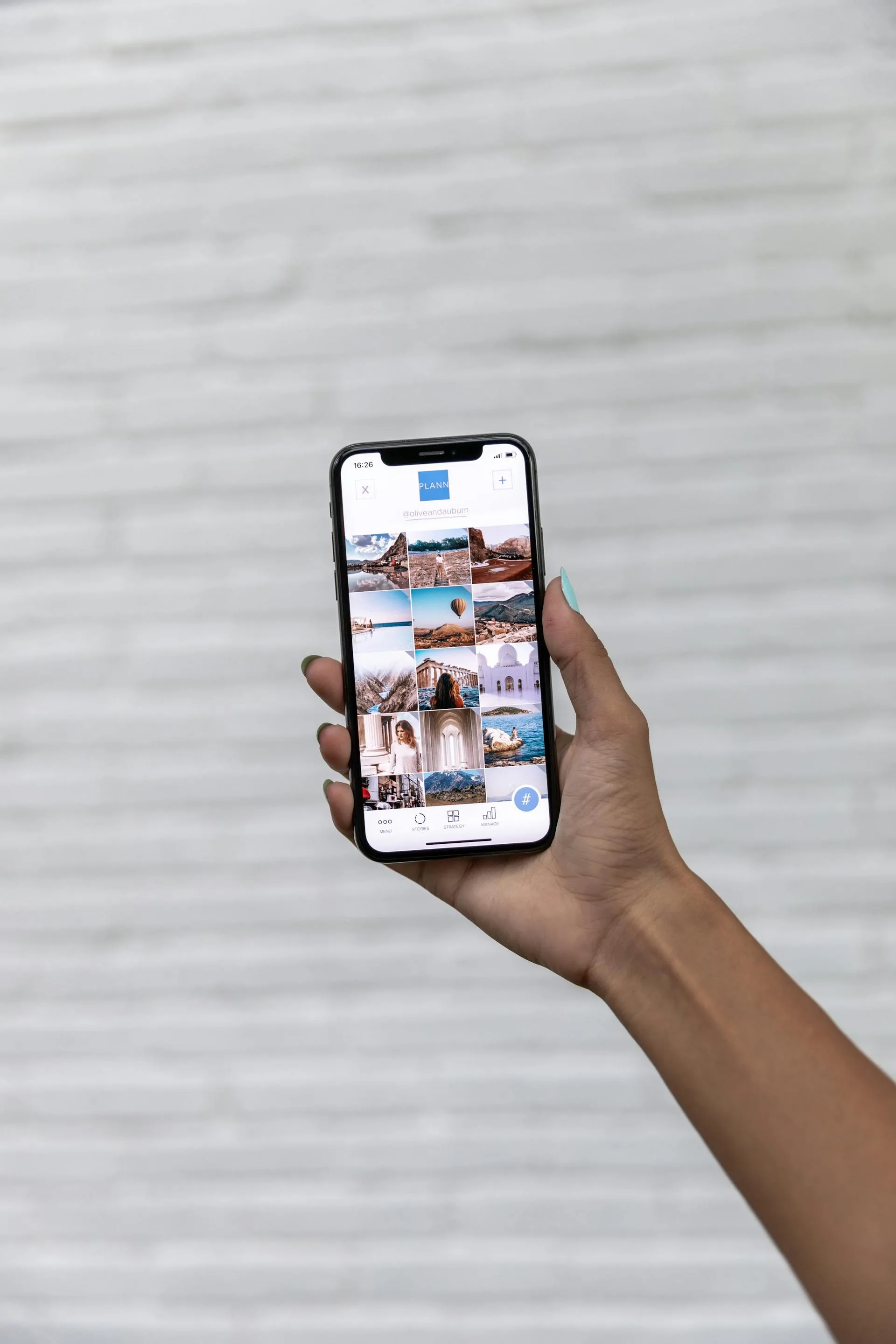
You open the app, you pick a source language and a target language, you tap a microphone button, and the phone sends audio to a cloud model. Google Translate, DeepL, Microsoft Translator, and iTranslate all share roughly this architecture. Recognition runs on the phone or in the cloud. Translation runs in the cloud. Output is text on the screen and optional text-to-speech audio. End-to-end latency on a good connection is 1.5 to 4 seconds depending on the app and the language pair. Total cost is typically zero — phone apps monetize through ads, premium tiers, or enterprise contracts.
Translation Earbuds
A pair of in-ear devices captures audio either through built-in microphones or by pairing two earbuds — one for each speaker. Audio routes to a phone app over Bluetooth, the phone or cloud translates, and the result plays back in your ear as synthesized speech. Timekettle holds 30%+ of the North American AI-earbud market, and the broader real-time translator earbuds market is projected to grow from $341 million in 2025 to $4.76 billion by 2032 (INFO Guangdong, 2024; Verified Market Research, 2025). Latency runs 1.5 to 3 seconds. Hardware sits in the $200 to $700 range.
Translation Glasses
Microphones in the frame capture audio, often with beamforming arrays that isolate the speaker facing you. The phone or cloud translates, and the result appears as text on a tiny display in your line of sight. AirCaps uses 4-microphone beamforming, hits 700ms end-to-end translation latency at 95% accuracy across 60+ languages, weighs 49 grams, and projects text via a binocular MicroLED waveguide with under 2% light leakage. Hardware ranges from roughly $299 (Ray-Ban Meta Gen 2, 6 languages) to $3,500 (Envision, OCR-focused).
The form factor question is fundamentally about output modality. Audio in your ear competes with the speaker's actual voice. Text on a phone competes with the speaker's face. Text on a lens competes with neither. That last property — text and face occupying the same visual frame — is why glasses became the form factor that works for actual conversation.
For a deeper walkthrough of the speech-to-translation pipeline, see the complete guide to translation glasses.
Which Is Most Accurate in Real-World Conversation?
Accuracy in a controlled test and accuracy in a noisy bar are two different numbers. In a quiet room, all three form factors hit 90%+ on common language pairs. In a 78 dBA restaurant — the average noise level for mainstream casual dining (NIDCD) — the gap opens dramatically, and the gap is almost entirely about microphone hardware, not translation models.
Independent peer-reviewed work on automatic speech recognition shows word error rate climbs from roughly 5.5% at 20 dB signal-to-noise ratio to 15.2% at 0 dB SNR under babble noise — the kind of overlapping multi-speaker chatter you get in a restaurant (Frontiers in Signal Processing, 2022). Translation amplifies that effect because a misheard noun produces a completely different translated sentence. "The patient has a clot" misheard as "the patient has a cot" generates a wrong instruction in French, German, or Mandarin, and the user has no way to know.

Why Microphone Count Dominates the Accuracy Story
A phone microphone — even a great one — is omnidirectional. It picks up the speaker, the table next to you, the kitchen, the music. The translation model gets one mixed audio stream and has to guess which voice matters. Earbud microphones sit closer to the speaker if you've handed one over, but most travel earbuds rely on a single bud or rely on the phone's mic for the second speaker. Glasses microphones sit in a fixed array on the frame, and the premium ones use beamforming.
Beamforming measures the tiny time differences between when a sound hits each microphone and calculates the direction it came from. The system then amplifies sound from the speaker facing you and suppresses everything else. Systematic reviews of advanced binaural beamforming hearing systems show consistent speech-in-noise improvement on the order of 4 to 6 dB (PubMed, 2023). Earlier evaluations of multi-mic arrays in real-world conditions report a 3.3 to 13.9 dB SNR lift depending on the geometry and adaptation method (PubMed, 2018). Translated into accuracy: that's the difference between 60% and 95% in a busy restaurant. For a deeper engineering walkthrough, see our explainer on why 4 microphones beat 1 in noise.
Citation Capsule: Translation accuracy in real-world conversation is dominated by microphone hardware, not translation model quality. A 4-mic beamforming array on glasses lifts speech-to-noise ratio by 3.3 to 13.9 dB compared to a single phone microphone, which translates into the difference between roughly 60% and 95% translation accuracy in a 78 dBA restaurant (PubMed, 2018; NIDCD).
Translation Model Quality Still Matters
Hardware decides whether the model gets clean input. Once it does, model quality decides what comes out. DeepL benchmarked 1.3x more accurate than Google Translate and 2.3x more accurate than Microsoft in blind expert evaluations during a 2024 industry survey, and 82% of language service companies report using DeepL versus 46% Google Translate (DeepL via ALC, 2024). One peer-reviewed comparison on French-English translation reported DeepL at 99.04 against Google's 84 on a manual quality assessment (PMC, 2024). The point is not that one model is universally better — it's that the choice of translation model is a real variable, and most phone apps and earbuds run on Google or Microsoft pipelines while premium glasses ship custom-tuned models layered on top.
What Does Latency Feel Like in Each Form Factor?
Under 500 milliseconds feels invisible. Between 500 and 1,000 milliseconds feels conversational. Above 1 second feels stilted. Above 2 seconds breaks the back-and-forth rhythm completely. Phone apps and earbuds typically deliver 1.5 to 3 seconds. Premium glasses deliver 700 milliseconds. That difference is small in numbers and enormous in feel.
| Form Factor | Typical End-to-End Latency | Conversation Feel |
|---|---|---|
| Phone app (Google Translate Conversation Mode) | 2-4 seconds | Halting; speaker pauses, waits for app, repeats |
| Phone app (DeepL Voice) | 1.5-3 seconds | Slow but usable for short exchanges |
| Translation earbuds (Timekettle X1, Pocketalk Plus) | 2-3 seconds | Audio overlap; you hear translation while speaker is still talking |
| Translation glasses (Even Realities G1, Ray-Ban Meta) | 1-2 seconds | Noticeable lag, still conversational |
| AirCaps translation glasses | 700ms | Feels nearly real-time; back-and-forth flows |
| AirCaps captioning (same language, no translation) | 300ms | Effectively invisible |
There's a non-obvious dynamic with earbuds specifically. Audio output competing with audio input is a divided-attention problem. You're trying to listen to a French speaker in real time while a synthesized English voice plays the translation in your ear with a 2-second delay. Your brain ends up doing more work than if you'd just read the translation silently. This is one reason translation earbuds underperform their spec sheets in actual use — the spec is right, the ergonomics are wrong.
For a deeper read on the technical pipeline, see how real-time translation works in smart glasses.
Where Phone Apps Still Win
Phone apps remain the default for a reason. Google Translate has been installed on more than a billion devices, supports roughly 249 languages after the 2024 expansion, and costs nothing (Google, 2024). DeepL covers 30+ languages with category-leading model quality on European pairs. Three scenarios are genuine wins for the phone, and we won't pretend otherwise.
First, written text. Menus, signs, packaging, instructions, paperwork. Phone cameras paired with OCR translate printed text instantly, and they handle handwriting that earbuds and glasses simply can't see. If you're standing in front of a Japanese vending machine or reading a Moroccan museum placard, point your phone. Glasses can't replace OCR yet at consumer scale.
Second, low-stakes solo translations. You're alone, you need a quick word or phrase, nobody is waiting for you. The phone is in your pocket already. Buying $599 glasses to translate "where is the train station" twice a year is a category error. The phone is right.
Third, languages outside the 60-language tier. AirCaps and most premium translation glasses cover the world's most-spoken 60+ languages well, but Google Translate covers 249 (Google, 2024). If you need Punjabi, Quechua, Asturian, or Luganda, the phone has the model coverage.
The cost of using a phone app is invisible until you're in a real conversation. The phone breaks eye contact, redirects your attention to a screen, and signals to the other person that you're divided. That cost is well-documented. A 2016 SAGE study found the mere presence of a smartphone during conversation reduced empathic concern and conversation quality, particularly when the topic was personally meaningful (Misra et al., 2016). A 2025 meta-analysis of 52 phubbing studies covering 19,698 participants confirmed consistent negative effects on relationship satisfaction, intimacy, and trust (Frontiers in Psychology, 2025). For a quick menu translation, that cost doesn't matter. For a three-hour family dinner with your partner's relatives, it does.
Where Translation Earbuds Still Win
Translation earbuds get unfair criticism in the smart glasses press, and we're going to push back on it. Earbuds genuinely beat glasses in three scenarios.
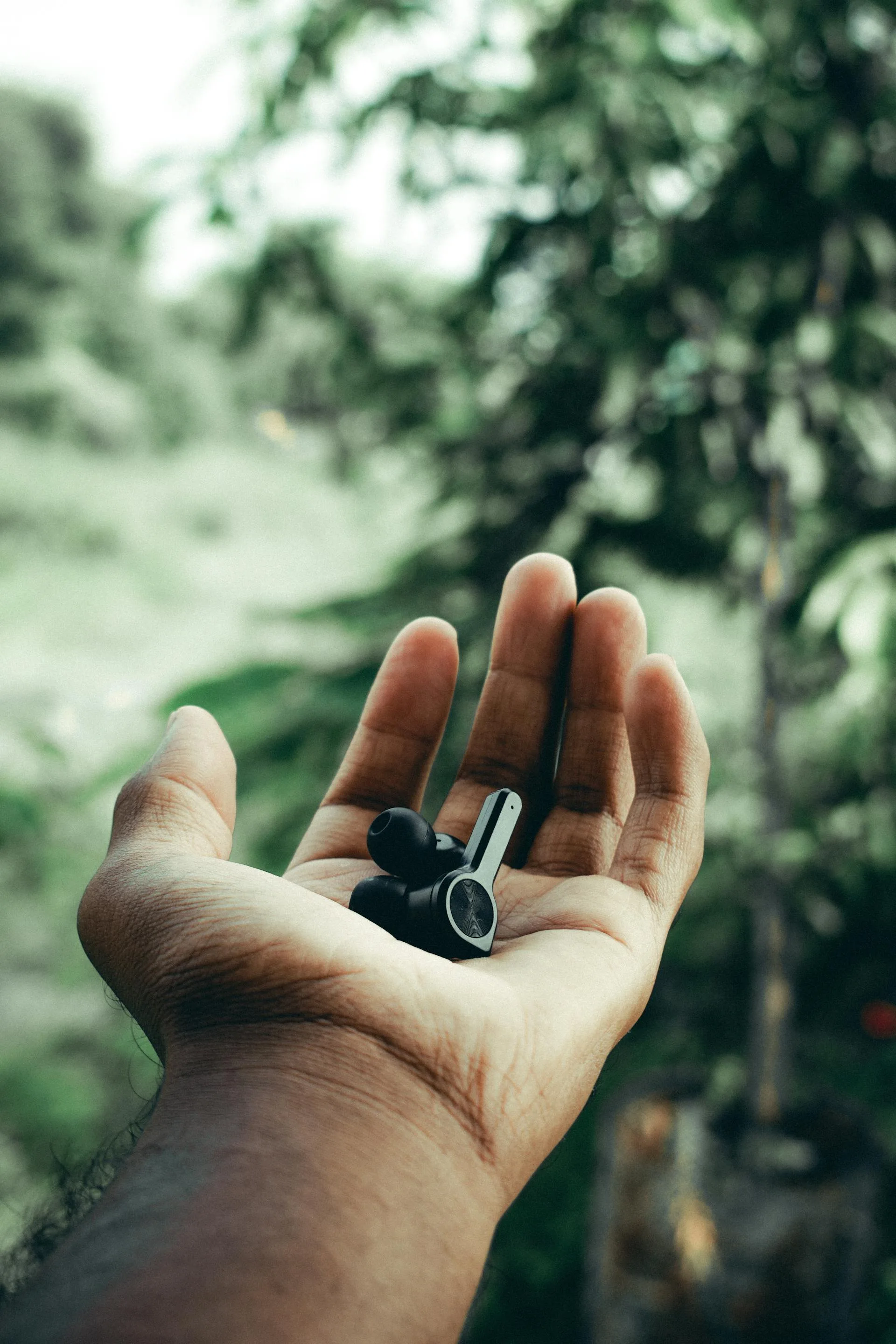
First, one-way speeches. Walking tours, audio guides, lectures, panel talks, religious services. Anywhere a single speaker is presenting and you don't need to respond. Audio routed to your ear lets you keep your eyes on the speaker, the slides, or the architecture without text overlay competing for visual attention. Earbuds shine here.
Second, two-person dialogue with a physical handoff. Timekettle's split-bud design — one earbud for each speaker — is genuinely elegant for a one-on-one conversation. You give the other person a bud, you keep one, and audio translates each direction in your respective languages. It's clunky in groups but excellent for a coffee meeting in Tokyo or a single-vendor negotiation in Dubai.
Third, when text on a lens isn't appropriate. Some users — including some with vision differences — read audio better than text. Some cultural contexts where wearing glasses indoors might feel rude or out of place. Earbuds are quieter and more discreet than a glasses display, even though premium glasses now have under 2% light leakage.
The category trade-off remains real. Earbuds split your attention between the speaker's voice and the synthesized translation playing 2 seconds later in your ear. They struggle in noise because in-ear microphones don't have the acoustic real estate for proper beamforming arrays. They are also unusable for people with hearing loss who rely on captions rather than audio — which is one reason AirCaps was originally built for the Deaf and Hard of Hearing community before it expanded into translation.
Where Translation Glasses Win Hands-Down
Five scenarios separate translation glasses from every other form factor. Each one is a place where phones and earbuds genuinely cannot compete on physics or ergonomics.

First, multi-speaker conversations. Family dinners, business meetings, group tours, dinners with twelve people in three languages. Phone apps require a single source language picked ahead of time and a single audio source. Earbuds route audio from one speaker per bud. Glasses with 4-mic beamforming and speaker identification can label up to 15 speakers in real time and follow whichever face is currently pointed at you. The Mexico City Sunday lunch and the Marrakech leather souk we wrote about in our travel stories are both examples — phone apps and earbuds can't keep up with code-switching at a 12-person dinner table.
Second, hands-free environments. Documentary work, cooking, parenting, restaurant ordering, art photography, surgery. Anywhere you need both hands on the world while needing translation. The phone in your hand defeats the purpose. The glasses don't.
Third, eye contact and rapport-driven conversations. Negotiation, healthcare, sales calls, immigration interviews, diplomatic exchanges, first dates with someone whose native language is different from yours. The 2016 iPhone Effect study found that even an inactive phone visible on the table reduced perceived empathic concern in face-to-face conversation (SAGE Journals, 2016). Glasses keep both pairs of eyes on each other.
Fourth, accessibility. People with hearing loss can read captions but cannot hear synthesized translation in their ear. Glasses are the form factor that combines real-time captioning at 97% accuracy and 300ms latency with translation at 95% accuracy and 700ms latency in the same hardware. Earbuds aren't even an option. See our piece on captioning and translation glasses for aging parents for what that combination unlocks for families with mixed hearing and language needs.
Fifth, long sessions. Battery and ergonomics matter for anything over 30 minutes. Phone screens drain a phone and your attention. In-ear earbuds get uncomfortable after a couple of hours of continuous wear and audio bleed. Glasses with binocular MicroLED displays, no eye strain, 49g weight, and 4-8 hour battery life are designed for a full day of wear. AirCaps Power Capsules — magnetic hot-swap batteries — push continuous use to 18 hours.
What Does Each Form Factor Cost Over Three Years?
Sticker price hides the real number. A free phone app sounds free until you account for data usage abroad, a premium translation tier subscription, and the dinner you missed because everyone got tired of waiting for the screen. Earbuds and glasses both run subscriptions on top of hardware in many cases. Here is the honest three-year math.
| Tool | Hardware | Subscription | Hidden Costs | 3-Year TCO |
|---|---|---|---|---|
| Google Translate (free tier) | $0 (phone you already own) | $0 | International data; ad exposure | ~$0-$300 in data |
| DeepL Pro | $0 | $8.99/mo Starter | Limited free tier on voice | ~$324 |
| Timekettle X1 earbuds | $699.99 | Included | Charging case, replacement tips | ~$700 |
| Pocketalk Plus | ~$299 | Free for 2 years, then $50/yr | Cellular plan optional | ~$349 |
| Vasco Translator V4 | ~$389 | Free lifetime data | Limited offline coverage | ~$389 |
| Ray-Ban Meta (Gen 2) | $299 | $0 | Prescription add-on ~$200 | ~$499 |
| AirCaps (free tier) | $599 | $0 forever | Optional Rx holder $39 | $638 |
| AirCaps (Pro) | $599 | $20/mo × 36 | HSA/FSA eligible | $1,358 |
| Even Realities G1 (Pro) | $599 | $4.99/mo × 36 | Rx +$150 | ~$929 |
| Envision Glasses (OCR-focused) | $3,500 | $200/yr optional | Niche feature set | $4,100 |
HSA/FSA eligibility on AirCaps cuts effective cost by 22-35% depending on tax bracket — see our HSA/FSA guide for smart glasses for the full IRS Publication 502 walkthrough.
A few honest observations. Phone apps are essentially free if you're already paying for a phone. Earbuds are competitive on hardware price but generally lock you into a single ecosystem. AirCaps on the free tier costs less over three years than every comparable-feature glasses competitor because translation and captioning are included at no charge. The Pro tier is optional and can be paused.
How to Pick the Right Form Factor for Your Real Life
The right tool depends on which scenario describes 80% of your translation use. Use the table below to map your real life to a form factor.
| If You Mostly... | Pick | Why |
|---|---|---|
| Travel for tourism 1-2 weeks per year, need menus and signs | Phone app (Google Translate or DeepL) | OCR + 249-language coverage; cost is sunk |
| Take guided tours or attend single-speaker talks abroad | Translation earbuds (Timekettle, Pocketalk) | Audio in ear, eyes free for visuals |
| Have one-on-one business meetings in a single foreign language | Translation earbuds with split-bud design | Hand a bud to the other speaker; bidirectional |
| Attend multilingual family dinners or work in a multilingual household | Translation glasses (AirCaps) | Code-switching, 4-mic beamforming, multi-speaker support |
| Work in international sales, healthcare, law, or consulting | Translation glasses with meeting intelligence | Captioning + translation + speaker ID + meeting summaries |
| Have hearing loss and also need translation | Translation glasses | Only form factor that combines captions and translation in one device |
| Travel intensively across multiple countries per year | Translation glasses with offline mode | 9-language offline pack; broad live coverage |
| Read printed menus, museum placards, or paperwork in foreign languages | Phone app (camera OCR) | Glasses don't currently OCR text at consumer scale |
Many real users end up with two tools — a phone app for OCR and signs, glasses for actual conversation. That's the honest answer. Anyone who tells you a single device covers every translation scenario is selling you something.
For a side-by-side spec sheet of every translation glasses model on the market, see our best translation glasses 2026 comparison. For a specific deep dive on travel scenarios across Tokyo, Marrakech, and Mexico City, see our translation glasses for travel piece.
Frequently Asked Questions
Are translation glasses really better than Google Translate?
For one-shot translations of menus, signs, and short phrases, Google Translate is usually better — it covers 249 languages and is free (Google, 2024). For multi-speaker conversations, business meetings, family dinners, or any context where eye contact matters, translation glasses are better because they keep both hands free and don't redirect your attention to a screen. The forms answer different questions, so picking the right one depends on your actual use case.
How fast are translation earbuds compared to glasses?
Translation earbuds typically deliver 1.5 to 3 seconds of end-to-end latency, while premium translation glasses run at 700 milliseconds to 1.5 seconds. The difference is meaningful — under 1 second feels conversational, over 2 seconds breaks rhythm. AirCaps translation glasses run at 700ms, and pure same-language captioning runs at 300ms latency. Earbuds have the additional ergonomic problem of audio overlap: the translation plays in your ear while the original speaker is still talking.
Can phone apps work without an internet connection?
Some phone apps offer offline language packs — Google Translate offers 59 offline languages, and DeepL recently added partial offline support — but offline accuracy is meaningfully lower than online for almost every model. Translation earbuds and translation glasses also offer offline modes (AirCaps supports 9 languages offline), with similar accuracy trade-offs. Plan for offline mode as a fallback, not as your primary use case, especially for less-resourced languages.
Do translation earbuds work for people with hearing loss?
Generally no. Translation earbuds output synthesized audio in the ear, which assumes the user can hear the audio. People with severe hearing loss, deafness, or auditory processing disorders need visual translation — captions on a screen or text on a lens. Translation glasses are currently the only form factor that combines real-time captioning of the user's own language with translation of foreign languages in a single device. See AirCaps for captions for the hearing-loss-specific feature set.
What's the cheapest way to get real-time translation in 2026?
Google Translate Conversation Mode on a smartphone costs nothing if you already own a phone, and DeepL Voice's free tier covers basic use. Both work well for low-stakes one-on-one or solo translations. For the form-factor benefits of hands-free, eye-up, multi-speaker translation, Ray-Ban Meta at $299 is the lowest-cost glasses option, though its translation feature covers only 6 core languages with 14 in early access. AirCaps at $599 with no required subscription is the cheapest option in the 60+ language full-feature tier.
The Honest Verdict
Three form factors, three different jobs. Phone apps still own one-shot translation, OCR, and language breadth. Translation earbuds still own one-on-one audio dialogue and one-way speeches. Translation glasses own actual conversation — multi-speaker, eyes up, both hands free, in noise. Most heavy users end up with a phone app for written text and glasses for live conversation, and that combination handles roughly 95% of real-world translation needs.
If you came here looking for a single answer, here it is. If your translation use is occasional and mostly menus, keep using your phone — you don't need new hardware. If you mostly do one-on-one tourism dialogue, earbuds are a reasonable upgrade. If your life involves international meetings, multilingual family, or any kind of group conversation across languages, translation glasses are the only form factor that solves the real problem. AirCaps was built for that last category — 4-mic beamforming, 95% translation accuracy, 700ms latency, 60+ languages, $599, no required subscription. The hardware is the message: your hands stay free, your eyes stay up, and the translation gets out of the way.
For more on what AirCaps can do in your own language, see the captions feature page. For business and high-stakes professional use, see meetings. And for the broader picture of where the smart glasses category is heading in 2026, start with the complete guide to translation glasses.
The form factor matters because the conversation matters. Pick the one that fits your actual life.
On this page
Table of Contents
▼
Written by
Vishal Moorjani
Founding Engineer, AirCaps
Founding engineer at AirCaps. UIUC EECS graduate specializing in machine learning. Builds the neural machine translation and automatic speech recognition systems that power real-time captioning and 60+ language translation in AirCaps smart glasses.
Related Articles

Guides
Translation Glasses for Business: Closing Deals Across Language Barriers
Cross-border B2B deals stall on language. Three deal stories from Tokyo, São Paulo, and Munich show how 700ms translation glasses are quietly rewriting how enterprise sales close in 2026.
Vishal Moorjani
·
May 23, 2026
·
25 min read

Guides
How Automatic Language Detection Works (And Why Manual Selection Is Dead)
Modern smart glasses identify the spoken language in under 100ms across 100+ languages — no menus, no buttons, no presets. Inside the neural language ID stack that finally killed the dropdown.
Vishal Moorjani
·
May 22, 2026
·
23 min read

Guides
Translation Glasses for Travel: Real Stories from Tokyo, Marrakech, and Mexico City
53.9% of tourists in Japan call language the hardest part of their trip (Japan Tourism Agency). Three traveler stories show what changes when subtitles for the real world live inside your glasses.
Vishal Moorjani
·
Apr 26, 2026
·
18 min read
© 2025 AirCaps. All rights reserved.