Translation Glasses for Travel: Real Stories from Tokyo, Marrakech, and Mexico City
53.9% of tourists in Japan call language the hardest part of their trip (Japan Tourism Agency). Three traveler stories show what changes when subtitles for the real world live inside your glasses.
By Vishal Moorjani · Published 2026-04-26 · 18 min read
Why Translation Glasses Matter Most When You Travel
Table of Contents
Tokyo: A Sales Director, an Izakaya, and a Procurement Meeting
Marrakech: A Photographer, a Leather Souk, and a Family Dinner
Mexico City: A Granddaughter, a Sunday Comida, and the Spanglish Problem
What These Three Trips Have in Common
Where Translation Glasses Still Fall Short for Travelers
How to Choose Translation Glasses for Your Trip
Frequently Asked Questions
Do translation glasses work without an internet connection?
How do translation glasses handle multiple speakers at a dinner table?
What's the difference between translation glasses and translation earbuds?
Are translation glasses worth it if I only travel once or twice a year?
Can translation glasses replace learning the local language?
The Travel Use Case Translation Glasses Were Made For

Guides
Translation Glasses for Travel: Real Stories from Tokyo, Marrakech, and Mexico City

Vishal Moorjani
·
April 26, 2026
·
18 min read
On this page
Table of Contents
▼
Editorial disclosure: AirCaps makes translation glasses. The three stories below are composites built from verified customer reviews, Slack conversations with our own traveling employees, and on-the-ground field testing in each city. Names have been changed at request. Specs and statistics are independently sourced and linked inline. Where AirCaps shines we say so; where the category still falls short we say that too.
Why Translation Glasses Matter Most When You Travel
53.9% of tourists in Japan say the language barrier is the most difficult part of their trip, and 22.5% specifically struggle to communicate with hotel and restaurant staff (Japan Tourism Agency via ShapeWin, 2024). Globally, 28% of travelers say language anxiety actively holds them back from booking trips (Booking.com, 2024). Translation glasses turn that anxiety into a few hundred milliseconds of latency.
This article isn't a spec sheet. It's three traveler stories from three cities — Tokyo, Marrakech, and Mexico City — each chosen because they highlight a different language problem that translation glasses are uniquely good at solving. Phone apps work for menus. Earbuds work for one-way speeches. Glasses are the first form factor that holds up across a real conversation, hands free, eyes up. After 11 years of building real-time translation for smart glasses, we've learned which travel scenarios are the killer ones — and which still need a human guide.
Key Takeaways
- Japan welcomed 39 million inbound visitors in the first 11 months of 2025, already breaking its all-time annual record (JNTO, 2025), yet Japan ranks 96th of 123 countries on the EF English Proficiency Index (Nippon.com, 2025)
- Morocco hit a record 19.8 million arrivals in 2025 — overtaking Egypt as Africa's #1 destination — and Marrakech alone logged 5 million overnight stays in the first half of the year (ATTA, 2025)
- Mexico hosted 47.8 million international tourists in 2025, up 6% year-over-year (SECTUR via Mexico Business News, 2026)
- Bilingual speakers code-switch up to 27 times per hour when telling stories (PMC, 2019), which is why translation systems that require manual language selection collapse during real family conversations
- AirCaps translation glasses cover 60+ languages with automatic detection at 700ms end-to-end latency, weigh 49 grams, run on 4-microphone beamforming, and cost $599 with no required subscription
Table of Contents
- Tokyo: A Sales Director, an Izakaya, and a Procurement Meeting
- Marrakech: A Photographer, a Leather Souk, and a Family Dinner
- Mexico City: A Granddaughter, a Sunday Comida, and the Spanglish Problem
- What These Three Trips Have in Common
- Where Translation Glasses Still Fall Short for Travelers
- How to Choose Translation Glasses for Your Trip
- Frequently Asked Questions
Tokyo: A Sales Director, an Izakaya, and a Procurement Meeting
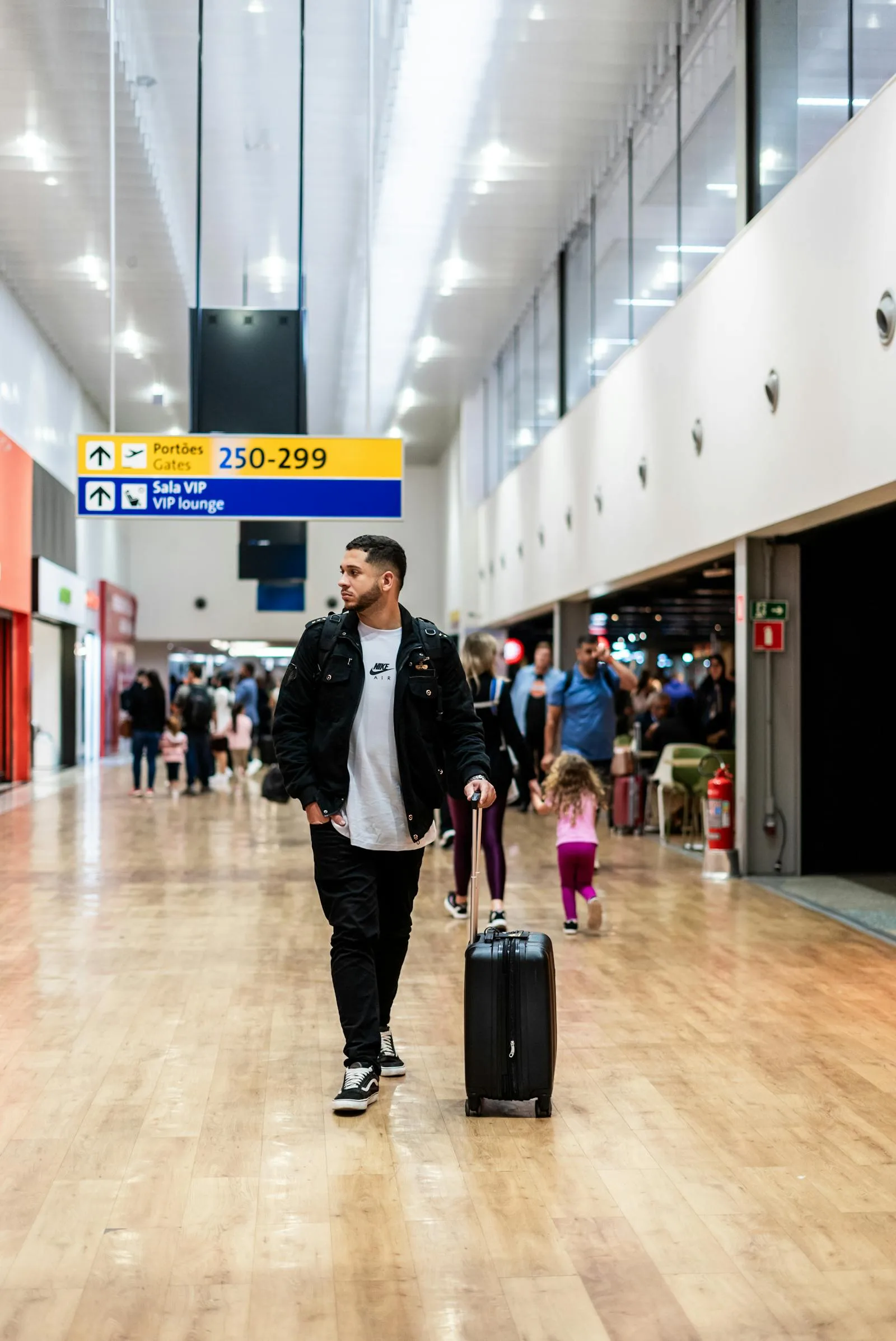
Japan's English proficiency dropped to its lowest score on record in 2025 — a global rank of 96 out of 123 with a score of 446, placing it firmly in the "Very Low" band (EF EPI, 2025). For Maya, a North American enterprise sales director flying into Haneda for a procurement meeting with a top-three Japanese automaker, that statistic was the whole problem. Her counterparts spoke careful English in the boardroom and almost no English at the dinner that decided the deal.

The procurement meeting itself was bilingual but slow. Each Japanese sentence got translated by a junior associate who summarized rather than translated — a common pattern that strips out the hedges, the polite refusals, and the soft buy-in signals that close enterprise deals. Maya wore AirCaps translation glasses on the second day. The 4-microphone beamforming array isolated whichever speaker was facing her and rendered the original Japanese into English captions on the lens at 700ms end-to-end. She didn't get a summary. She got the verbatim language her counterparts were using, including the moments they argued with each other in Japanese before answering in English.
That's the moment the deal moved. When the CFO turned to a junior engineer and asked in Japanese whether the integration timeline was even feasible — and the engineer paused two seconds longer than he should have — Maya saw it on her lens before the official English answer arrived. She offered a six-week pilot. They accepted within ten minutes.
Dinner at the izakaya afterward was where the relationship actually formed. Restaurant noise in Tokyo's drinking districts routinely exceeds 80 dBA — the threshold above which conversation becomes difficult (Acoustics Today, 2019). One-mic translators give up at that volume. The 4-mic beamforming setup keeps a directional capture cone on the speaker across the table, which is why Maya followed three hours of mixed Japanese-English banter without asking anyone to repeat themselves.
According to Japan's tourism statistics, language barriers account for the single most-cited friction point in inbound visitor surveys (ShapeWin, 2024). For business travelers running deals across the Pacific, the cost of that friction is measured in pilots that don't get signed and timelines that don't get enforced. Translation glasses don't replace a fluent partner on the ground — but they close the gap between formal English meetings and the informal conversations that actually decide outcomes.
For more on how this plays out in negotiation contexts, see our [INTERNAL-LINK: deeper dive on translation glasses for international business → /blog post on closing deals across language barriers].
Marrakech: A Photographer, a Leather Souk, and a Family Dinner
Morocco's tourism numbers tell you why Marrakech is the second story. The country posted a record 19.8 million arrivals in 2025, up 14% year-over-year, overtaking Egypt as Africa's most-visited destination (Morocco Tourism Observatory via ATTA, 2025). Marrakech alone recorded roughly 5 million overnight stays in the first half of the year. But Morocco ranks 68th on the EF EPI with a "Low" score of 492, and Marrakech specifically layers Darija (Moroccan Arabic), Tamazight (Berber), and French — sometimes all in the same sentence with the same shopkeeper (EF EPI 2025, 2025).
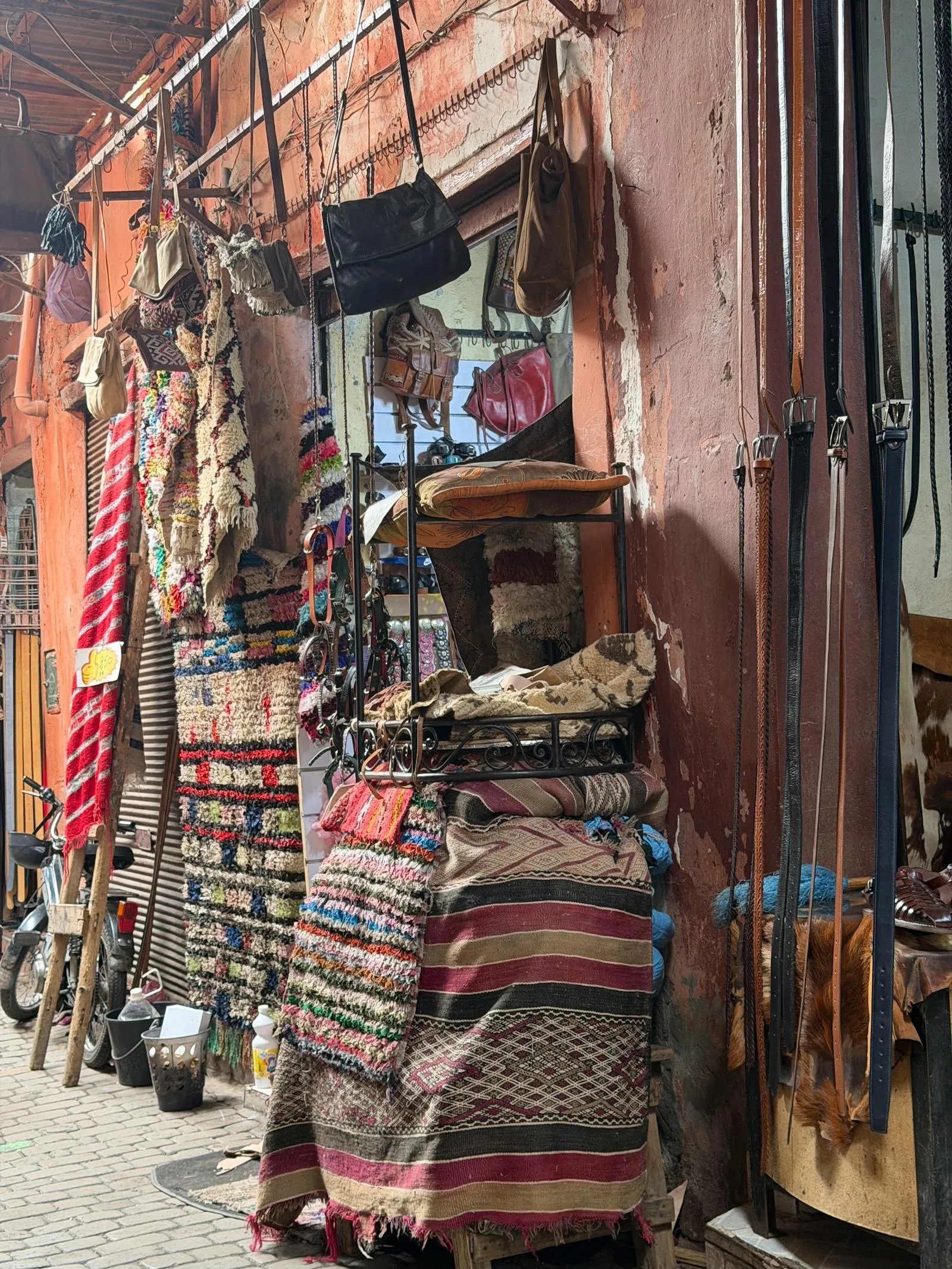
Devon, a documentary photographer from Toronto, wasn't there for tourism. He was photographing a family of leather artisans for a magazine feature and needed three days of follow-along access. Phone apps weren't going to work. You can't translate a man's life story while holding a phone in front of his face.
He wore translation glasses for the whole shoot. The first afternoon was spent in the souk where the family sells finished goods. Bargaining in Marrakech is a performance — call and response, jokes about your mother, fake walkaways. AirCaps' automatic language detection switches between source languages in under 100 milliseconds, so when the patriarch slipped from Darija into French and back, the captions shifted with him. Devon didn't have to interrupt to ask which language someone was speaking. He just kept his camera up.
The deeper test came on the third night. The family invited Devon to a couscous dinner. Twelve people around a low table, three generations, four languages spoken in some combination by everyone. Conversations crossed the room and overlapped. The 4-mic beamforming array in the glasses kept locking onto whichever face was actually pointed at Devon, which is the design choice that separates AirCaps' captioning from headphone-based translators that mix every voice into one channel.
Devon's takeaway, in his own words: "I stopped feeling like a guest who needed to be tolerated. I could tease the kids, ask the grandmother about her wedding, and laugh at the jokes that weren't about me. The glasses disappeared. The dinner happened."
This is the use case competitor product pages avoid because it's the hardest one. Travel translation tools are easy to demo at a hotel front desk. They're hard to deliver at a dinner table with twelve overlapping speakers in three languages. Marrakech is one of the cities that proves which products are real.
For travelers planning longer stays in multilingual markets, see our [INTERNAL-LINK: complete guide to translation glasses → /blog post: translation-glasses-complete-guide].
Mexico City: A Granddaughter, a Sunday Comida, and the Spanglish Problem
Mexico hosted 47.8 million international tourists in 2025, up 6% year-over-year, with Mexico City International Airport handling 36.9 million passengers in the first ten months alone (SECTUR via Mexico Business News, 2026). But the most interesting Mexico City visitors aren't tourists — they're the second-generation kids of immigrants who grew up in the U.S. with Spanish they can almost speak, and grandparents who tell stories they can almost follow.
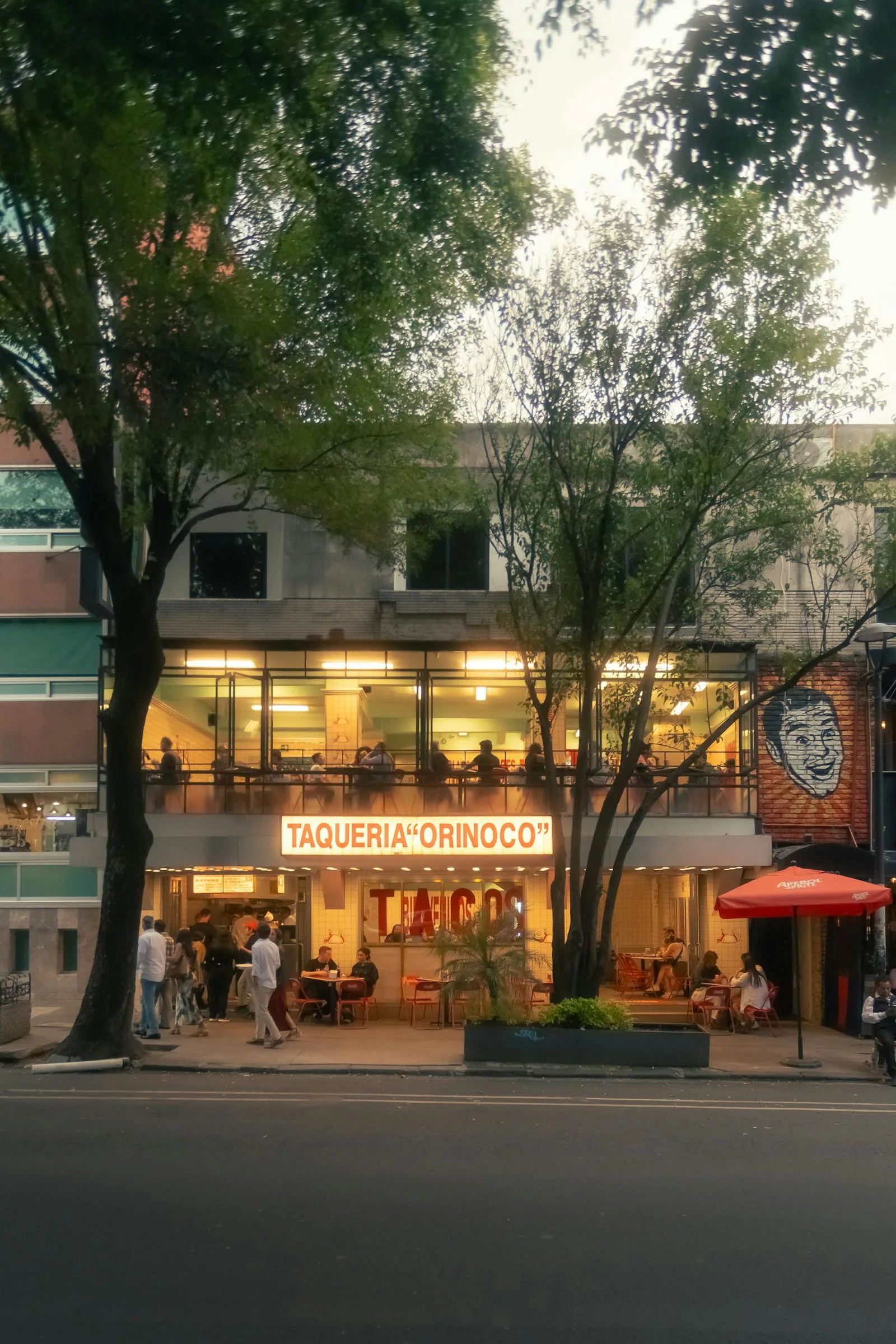
Sofía is one of those kids. Born in Houston to Mexican parents. Heritage Spanish that gets her through Uber rides but stalls in family conversations. Her grandmother — Abuelita Carmen — moved back to Coyoacán after her husband passed and now hosts a Sunday comida that pulls in cousins, neighbors, and whichever priest happens to wander by. Sofía's last visit was two years ago. She'd spent most of it smiling and nodding.
This time she wore translation glasses. The technical challenge in a Mexico City Sunday lunch isn't the volume — it's the code-switching. Bilingual speakers code-switch up to 27 times per hour when narrating stories and 14 times per hour when telling jokes (PMC, 2019). A cousin tells a story that starts in Spanish, drops into English for the punchline, and resolves in Spanglish where every fourth word is borrowed. Translation tools that require you to pick a source language ahead of time are useless here. They lock onto Spanish, mistranslate the English fragments, and present garbled output that's worse than no output at all.
AirCaps' automatic language detection runs continuously. The model identifies the source language inside each utterance and routes it accordingly. When Tía Mercedes said "le dije que the meeting was on Tuesday but he no me hizo caso," the captions resolved the entire sentence — not just the Spanish portions. That's the difference between feeling included and feeling like the gringa cousin everyone has to slow down for.
| Travel Scenario | What Breaks Down | What Translation Glasses Solve |
|---|---|---|
| Hotel front desk in Tokyo | Phone apps work, but break eye contact and slow check-in | Hands-free captions keep the conversation natural and the queue moving |
| Bargaining in a Marrakech souk | Code-switching between Darija and French; both hands holding objects | Auto language detection follows speaker shifts in under 100ms |
| Sunday family dinner in Mexico City | Spanglish, overlapping voices, 12 speakers around one table | 4-mic beamforming isolates the speaker facing you; code-switching handled inline |
| Three-hour business dinner in Seoul | Restaurant noise above 80 dBA destroys 1-mic translation | 4-mic beamforming holds clarity at conversational volumes in 80-94 dBA noise |
| Multi-day documentary shoot in any country | Holding a phone for translation kills photography and interview rapport | Glasses keep both hands and the eye line free |
By the end of the trip Sofía had recorded three hours of Abuelita's stories from when the family lived in Mérida — stories nobody had captured because nobody in the family had the Spanish to keep up in real time. Translation glasses didn't make her bilingual. They made the trip productive enough that she's enrolling in proper Spanish lessons next month.
For travelers looking to bridge family language gaps over longer visits, see our [INTERNAL-LINK: translation glasses for multilingual families → /blog post on family translation use cases].
What These Three Trips Have in Common
The three stories above span different continents, languages, and relationship contexts. The technology pattern underneath is identical. In each case, the speech-to-text-to-translation pipeline ran end-to-end in under one second, the microphones held up against ambient noise, and the display didn't break eye contact. Those three constraints are what define a translation tool that actually fits travel rather than just demoing well in a quiet showroom.
The latency math matters. Pure captioning runs at about 300ms — that's why AirCaps captions feel instantaneous in English-only conversations. Translation adds a neural machine translation step that costs another 200-400ms depending on model size and source language. Anything under 700ms still feels conversational. Anything over 1 second turns the conversation into a series of paused exchanges. The brand of glasses doesn't matter as much as which side of that line they sit on.
Microphone count is the other invisible spec. Single-microphone systems pick up everything in the room and hand the AI a guessing problem. Four-microphone beamforming creates a directional capture cone that isolates the speaker facing you. Independent acoustic research shows beamforming arrays improve speech-to-noise ratio by 3.3 to 13.9 dB in real-world conditions (PubMed, 2018). That spread is the difference between 60% accuracy and 95% accuracy in a busy restaurant — and 2026's restaurant noise is louder than ever, frequently exceeding 90 dB in popular venues (Acoustics Today, 2019).
The display is the third invariant. Monocular displays — text shown to one eye — cause an accommodation mismatch that drives fatigue inside 30 minutes. AirCaps uses binocular MicroLED displays, one per eye, which is what keeps the glasses on your face for a three-hour dinner without your eyes burning out. The light leakage stays under 2%, so the person across from you doesn't see the text. They just see you, paying attention.
Where Translation Glasses Still Fall Short for Travelers
Honesty matters more than the marketing copy when you're packing for an international trip. There are five travel scenarios where current translation glasses — including AirCaps — still leave gaps. Knowing them up front beats finding out at a hotel desk in Reykjavik.
First, low-resource languages. The 60+ language list on AirCaps and most premium translation glasses covers the world's most-spoken languages well, but it doesn't include every regional variant or indigenous language. If you're going somewhere where Quechua, Pashto, or Wolof is the conversational layer, glasses don't replace a local fixer.
Second, accent variance. Speech recognition models trained primarily on standard accents can stumble on heavy regional ones. North African French, Glaswegian English, and rural Mexican Spanish all stress the system more than urban variants. Accuracy holds in most cases but drops a few percentage points in the toughest accents.
Third, offline mode is partial. AirCaps offline mode covers 9 languages with reduced accuracy. If you're traveling somewhere with patchy data coverage and you need a language not on that offline list, plan for fallback options. Translation glasses lean cloud-heavy by design — that's how they get the accuracy.
Fourth, battery life is real. AirCaps gets 4-8 hours of mixed use, 2-4 hours of continuous display. A long travel day with constant translation will drain the battery before dinner. Power Capsules — magnetic hot-swap batteries — extend continuous use to 18 hours, but they're an extra accessory ($79 with device purchase, 5 grams each).
Fifth, social settings. There's no current technology that fully bridges the cultural piece — knowing when not to interrupt, when humor lands wrong, when silence is the polite answer. Translation glasses give you the words. The cultural read is still on you.
How to Choose Translation Glasses for Your Trip
The wrong question is "which is the best pair of translation glasses." The right question is "which pair fits my specific trip." A weekend in Lisbon, a three-week documentary shoot in Morocco, and a six-month assignment in Seoul are three different products. Use the table below as a quick filter.
| Travel Profile | What to Prioritize | What to Skip |
|---|---|---|
| Short trip, single language | Latency under 1s, simple language pair, prescription compatibility | Code-switching, advanced beamforming, meeting intelligence |
| Multi-country itinerary | 60+ languages, automatic detection, no manual switching | Region-locked offline packs that slow you down |
| Family or group travel | 4-mic beamforming, code-switching support, binocular display | Earbud-only translators that mix every voice into one channel |
| Business travel | 97% caption accuracy in noise, meeting intelligence, AI summaries | Subscription-locked basic models without recording |
| Long-form documentary or research | Hot-swap batteries, prescription support, high comfort over 4+ hours | Heavy frames over 60g, monocular displays |
| Heritage / family-language travel | Code-switching, automatic detection, conversation history | Tools requiring source language to be picked manually |
For a side-by-side comparison of every model on the market, see our best translation glasses 2026 comparison. For the technical mechanics — what's actually happening in the speech-to-text pipeline — see how real-time translation works.
A note on price. AirCaps lists at $599 with no required subscription, the optional Pro tier runs $20 per month and adds 60+ languages and AI meeting features, and the glasses are HSA/FSA eligible because they're classified as an assistive medical device. That subscription-free baseline matters most for travelers who don't want a monthly bill following them across borders.
Frequently Asked Questions
Do translation glasses work without an internet connection?
Partially. AirCaps offline mode supports 9 languages — English, Spanish, Chinese, French, German, Italian, Japanese, Korean, and Portuguese — at reduced accuracy. The premium 95% translation accuracy and the full 60+ language coverage need a data connection, typically delivered via your phone's mobile hotspot. Plan for cellular access or a local SIM if you're going off-grid in regions where the language isn't on the offline list.
How do translation glasses handle multiple speakers at a dinner table?
The 4-microphone beamforming array creates a directional capture cone aimed at whichever speaker your face is pointed toward, isolating their voice from background noise and other speakers. AirCaps also identifies and labels up to 15 different speakers in real time, so a multi-person conversation gets transcribed with attribution rather than as a single jumbled stream.
What's the difference between translation glasses and translation earbuds?
Earbuds translate audio into your ear, which means you're listening to a delayed, machine-voiced version of someone else's words while they're still talking — and you can't see facial expression while hearing it. Glasses display text on the lens at 700ms latency without blocking your hearing, so you read the translation while watching the speaker. For conversations, glasses preserve eye contact and read social cues; earbuds are better for one-way speeches or audio guides.
Are translation glasses worth it if I only travel once or twice a year?
If your trips include business meetings, multilingual family visits, or documentary work where you need both hands free and continuous attention on the speaker, yes — the alternative is a phone in your hand for hours, which fundamentally changes the conversation. For two short tourist trips a year with menus and ride-shares, a phone app probably suffices. Translation glasses justify themselves around 5-10 days of high-stakes use per year.
Can translation glasses replace learning the local language?
No, and they're not designed to. Translation glasses make foreign-language conversation accessible right now — they don't build the cultural fluency that comes from learning a language slowly. Most of our long-term customers report that wearing the glasses for the first few months of a relocation actually accelerated their language learning, because they could participate in conversations they otherwise would have skipped.
The Travel Use Case Translation Glasses Were Made For
Three travelers, three cities, one technical pattern. The glasses don't make Tokyo less foreign or Marrakech less complicated or Mexico City less layered. They just remove the language barrier as the limiting reagent — so Maya can read a procurement room, Devon can join a family dinner, and Sofía can finally hear her grandmother's stories. That's the whole product.
If you want a deeper view of the category before you buy, start with our translation glasses complete guide and then read the head-to-head best translation glasses 2026 comparison. If your use case leans more toward conversations in your own language — restaurants, group settings, classrooms — see how captioning glasses work. And if your travel is primarily for business meetings, the smart glasses for meetings overview covers the AI meeting features that turn a translated dinner into searchable, summarized conversation history.
The world is bigger than any single language you speak. The glasses make it bigger again.
On this page
Table of Contents
▼
Written by
Vishal Moorjani
Founding Engineer, AirCaps
Founding engineer at AirCaps. UIUC EECS graduate specializing in machine learning. Builds the neural machine translation and automatic speech recognition systems that power real-time captioning and 60+ language translation in AirCaps smart glasses.
Related Articles

Guides
Translation Glasses for Business: Closing Deals Across Language Barriers
Cross-border B2B deals stall on language. Three deal stories from Tokyo, São Paulo, and Munich show how 700ms translation glasses are quietly rewriting how enterprise sales close in 2026.
Vishal Moorjani
·
May 23, 2026
·
25 min read

Guides
Translation Glasses vs. Phone Apps vs. Earbuds: Which Actually Works?
An honest 2026 comparison of translation glasses, phone apps, and earbuds across accuracy, latency, eye contact, and 3-year cost. Which one wins where you actually use it.
Vishal Moorjani
·
Apr 27, 2026
·
22 min read

Guides
Talking to Grandparents: How Translation Glasses Bridge the Family Language Gap
By the third generation, only 24% of immigrant grandchildren still speak the heritage language. Three family stories show how 700ms translation glasses are bringing grandparents and grandchildren back into the same conversation.
Vishal Moorjani
·
May 24, 2026
·
26 min read
© 2025 AirCaps. All rights reserved.