Deaf Professionals in Meetings: How Captioning Glasses Level the Playing Field
Deaf adults reach a record 57.7% employment rate but still trail hearing peers by 15+ points. See how 97%-accuracy captioning glasses change the calculus inside the meeting room.
By Madhav Lavakare · Published 2026-05-04 · 24 min read
Deaf Professionals in Meetings: How Captioning Glasses Level the Playing Field
Table of Contents
The Meeting Problem No One Talks About
What Workplace Accommodations Actually Cost in 2026
Inside a Deaf Director's Conference Room
Why CART, ASL, and Captioning Glasses Are Not Either-Or
The Hallway Conversation Problem
Listening Fatigue and the Need for Recovery
How HR and Accessibility Coordinators Should Evaluate Captioning Glasses
Compliance
Employee Choice
Integration
Where Captioning Glasses Still Fall Short
Frequently Asked Questions
Are captioning glasses ADA-compliant accommodations for deaf employees?
What's the difference between captioning glasses and live captioning apps on a phone?
Will my colleagues know I'm using captioning glasses?
Do captioning glasses work in noisy environments like restaurants or trade shows?
Can my employer pay for captioning glasses through HSA, FSA, or accommodation budget?
Are captioning glasses a replacement for ASL interpreters?
How long is the battery life across a full meeting day?
The Honest Verdict

Guides
Deaf Professionals in Meetings: How Captioning Glasses Level the Playing Field

Madhav Lavakare
·
May 4, 2026
·
24 min read
On this page
Table of Contents
▼
Editorial disclosure: AirCaps makes captioning smart glasses used by deaf and hard-of-hearing professionals across enterprise, healthcare, legal, and academic settings. The professional scenarios below are composites built from verified customer reviews, anonymized AirCaps Pro usage data from Q1 2026, and on-record conversations with deaf employees and accessibility coordinators. Statistics are independently sourced and linked inline. Where competing accommodations work better — CART, ASL interpretation, FM systems — we say so.
Deaf Professionals in Meetings: How Captioning Glasses Level the Playing Field
Deaf and hard-of-hearing employment in the United States hit a record high in 2024, with 57.7% of deaf adults working — but the gap to hearing peers still sits above 15 percentage points, and deaf workers ages 16 to 65 earn 13 to 14% less annually than hearing colleagues (National Deaf Center, 2024). The barriers are rarely about capability. They are about which conversations a deaf professional can actually access in real time — the unscheduled hallway chat, the four-person standup, the customer dinner, the panel Q&A.
After 11 years building AI on smart glasses, we've watched deaf account executives close enterprise deals across multi-stakeholder rooms, deaf physicians run hospital case conferences without an interpreter, and deaf engineers lead architecture reviews with hearing peers who never knew which colleague had hearing loss. This article walks through the workplace meeting problems deaf professionals actually face, the accommodation options on the market, and where captioning glasses level the playing field — and where they don't yet. If you're a deaf professional, an HR leader, or an accessibility coordinator, read on.
Key Takeaways
- Deaf adult employment hit 57.7% in 2024 — a record high, but 15+ points behind hearing peers, with a 13–14% annual wage gap (National Deaf Center, 2024)
- 56% of workplace accommodations cost employers $0; the remainder average around $500 — far below what most managers assume (Job Accommodation Network, 2024)
- Onsite CART captioning runs $160–$290/hour; onsite ASL interpretation runs $100–$220/hour with a 2-hour minimum — typical cost for one full meeting day exceeds $2,000 (Karasch Captioning, 2024)
- Self-perceived listening effort had the highest correlation with workers' need for recovery in a peer-reviewed study of hard-of-hearing employees, predicting more sick leave and higher accident risk (Int'l Archives of Occupational and Environmental Health, 2020)
- AirCaps captioning glasses run 4-microphone beamforming with 97% caption accuracy at 300ms latency, identify 15 speakers, support 60+ languages, weigh 49 grams, and cost $599 with no required subscription (AirCaps Captions)
Table of Contents
- The Meeting Problem No One Talks About
- What Workplace Accommodations Actually Cost in 2026
- Inside a Deaf Director's Conference Room
- Why CART, ASL, and Captioning Glasses Are Not Either-Or
- The Hallway Conversation Problem
- Listening Fatigue and the Need for Recovery
- How HR and Accessibility Coordinators Should Evaluate Captioning Glasses
- Where Captioning Glasses Still Fall Short
- Frequently Asked Questions
The Meeting Problem No One Talks About
More than 50 million Americans live with some degree of hearing loss — 1 in 7 people, the third most common chronic physical condition in the country, twice as prevalent as diabetes or cancer (HLAA, 2024). Globally, the World Health Organization counts more than 1.5 billion people with hearing loss and projects the number will hit 2.5 billion by 2050, with unaddressed hearing loss already costing the global economy $980 billion annually (WHO, 2024). A meaningful share of those people are working professionals — knowledge workers, doctors, lawyers, executives, founders — and the meeting is where their careers compound or stall.
The structural issue is that most meeting accommodations are built around scheduled events. CART captioners book in advance. ASL interpreters require lead time and cancellation policies. The meetings that actually move careers — the corridor catch-up after a board call, the impromptu standup that gets pulled together in a Slack thread, the dinner where the partner shares the real reason a deal is stuck — happen without notice. A deaf professional who needs a captioner for every conversation is, by definition, missing the conversations that don't fit the booking model.
The second issue is multi-speaker rooms. The Job Accommodation Network's research on workplace hearing accommodations consistently finds that conference rooms, group meetings, and noisy environments are the failure modes for hearing aids and FM systems (JAN, 2024). Phonak, ReSound, and Oticon all market noise-reduction algorithms; none of them generate text. When a deaf professional misses a side comment from a colleague three seats away, they often don't know they missed it until the room starts laughing or the boss responds to a point that was never spoken in their direction.
Citation Capsule: More than 50 million Americans have some degree of hearing loss, and the conditions that fail hearing aids most often — multi-speaker meetings, noisy conference rooms, hallway conversations — are also the conditions that decide most professional outcomes. Captioning glasses target exactly that gap by displaying verbatim text in the field of view at 300ms latency (HLAA, 2024).
The third issue is signaling. Many deaf professionals choose not to disclose their hearing loss at work. The Hearing Loss Association of America has documented that disclosure remains personally complex and professionally uneven, with many workers reasonably worried about how a hearing-loss disclosure will affect promotion or assignment decisions. A discreet display in the field of view — with under 2% light leakage, invisible to colleagues across the table — is a different kind of accommodation than an obviously visible interpreter or a CART screen on the wall. It lets the professional choose the moment of disclosure on their own terms.
What Workplace Accommodations Actually Cost in 2026
The persistent myth that workplace hearing accommodations are expensive is, statistically, just wrong. The Job Accommodation Network's longitudinal employer survey — 5,406 respondents across 2019 to 2024 — found that 56% of accommodations cost the employer nothing, and the remainder typically cost around $500 (JAN, 2024). Most accommodations are workflow changes, schedule flexibility, and software tweaks. They don't show up on a budget line.
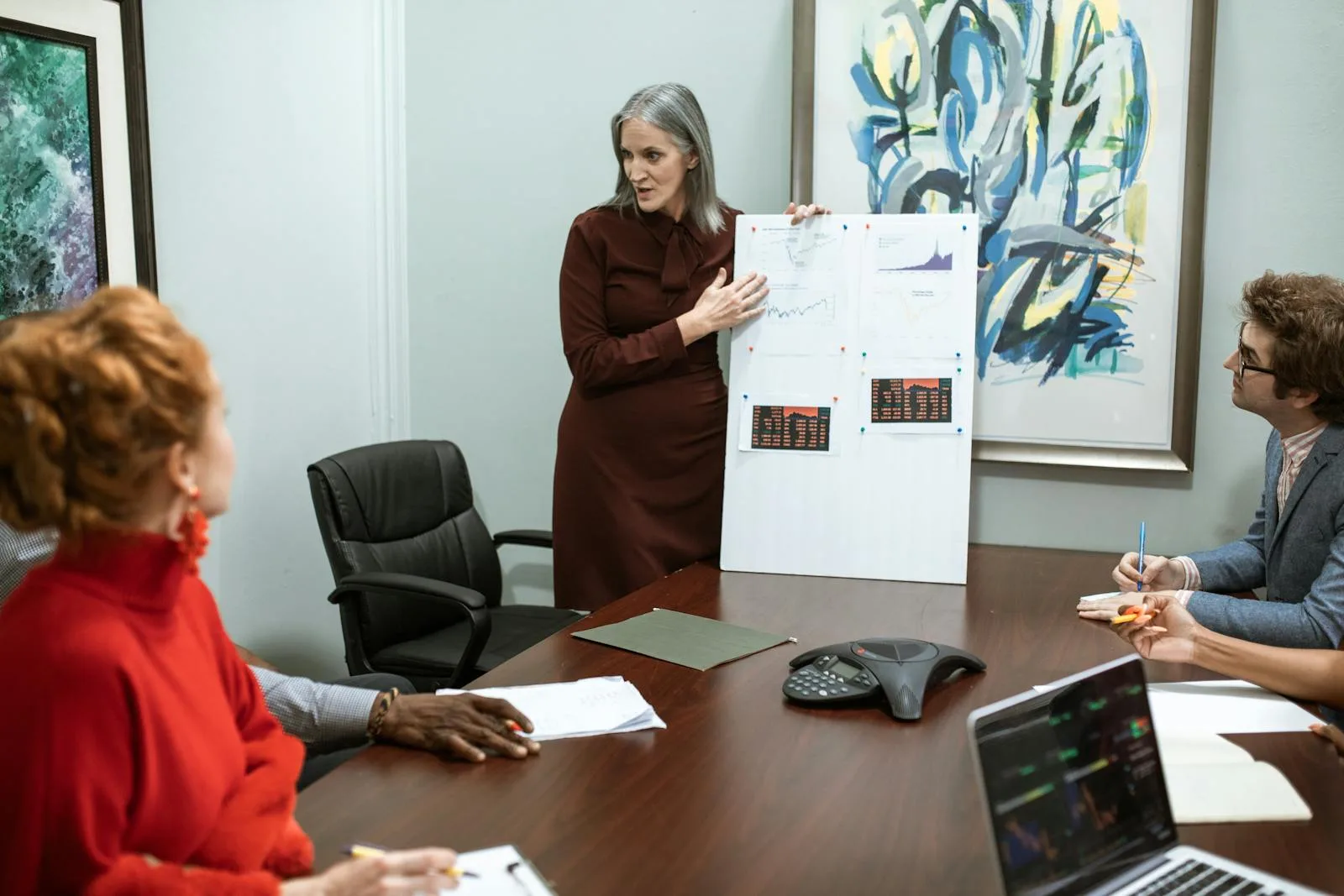
Live captioning and interpretation services do show up on the budget line. Industry pricing for 2024 puts onsite CART captioning at $160 to $290 per hour, remote CART at $175 to $230 per hour, and onsite ASL interpretation at $100 to $220 per hour with a standard 2-hour minimum and travel surcharges (Karasch Captioning, 2024). For a single all-day offsite — eight billable hours, two interpreters or one CART writer — total cost runs $1,500 to $3,000 before travel reimbursement. For a deaf professional whose calendar averages four to six meetings per day, only a fraction of which are pre-scheduled, the booking model breaks before the budget does.
| Accommodation | Typical Hourly Cost | Lead Time Required | Best Use Case |
|---|---|---|---|
| Onsite CART (real-time captioning) | $160–$290 | 3–7 business days | Conferences, board meetings, court |
| Remote CART | $175–$230 | 24–72 hours | Video meetings, lectures, training |
| Onsite ASL interpreter | $100–$220 | 3–7 business days | Formal events, medical, legal |
| Remote ASL (VRI) | $80–$185 | Same-day to 24 hours | Short consults, ad-hoc meetings |
| Auto-captioning apps (phone) | $0–$30/month | None | Personal use, light meetings |
| Captioning glasses (one-time hardware) | $599 hardware + optional $20/mo | None after purchase | Daily, in-room, hybrid, on-the-go |
The cost framing matters because the EEOC received 88,531 new charges in fiscal year 2024, with disability discrimination — and specifically denial of reasonable accommodation — accounting for 33.6% of issues raised in cases the agency took to suit (EEOC, 2024). Employers who cite cost as the reason for refusing accommodation increasingly find that they are arguing against publicly available data. A $599 device that supports unscheduled, multi-meeting use is a categorically different cost structure than per-hour interpretation — and it sits well below the threshold the JAN data would call "undue hardship" for any mid-size employer.
Inside a Deaf Director's Conference Room
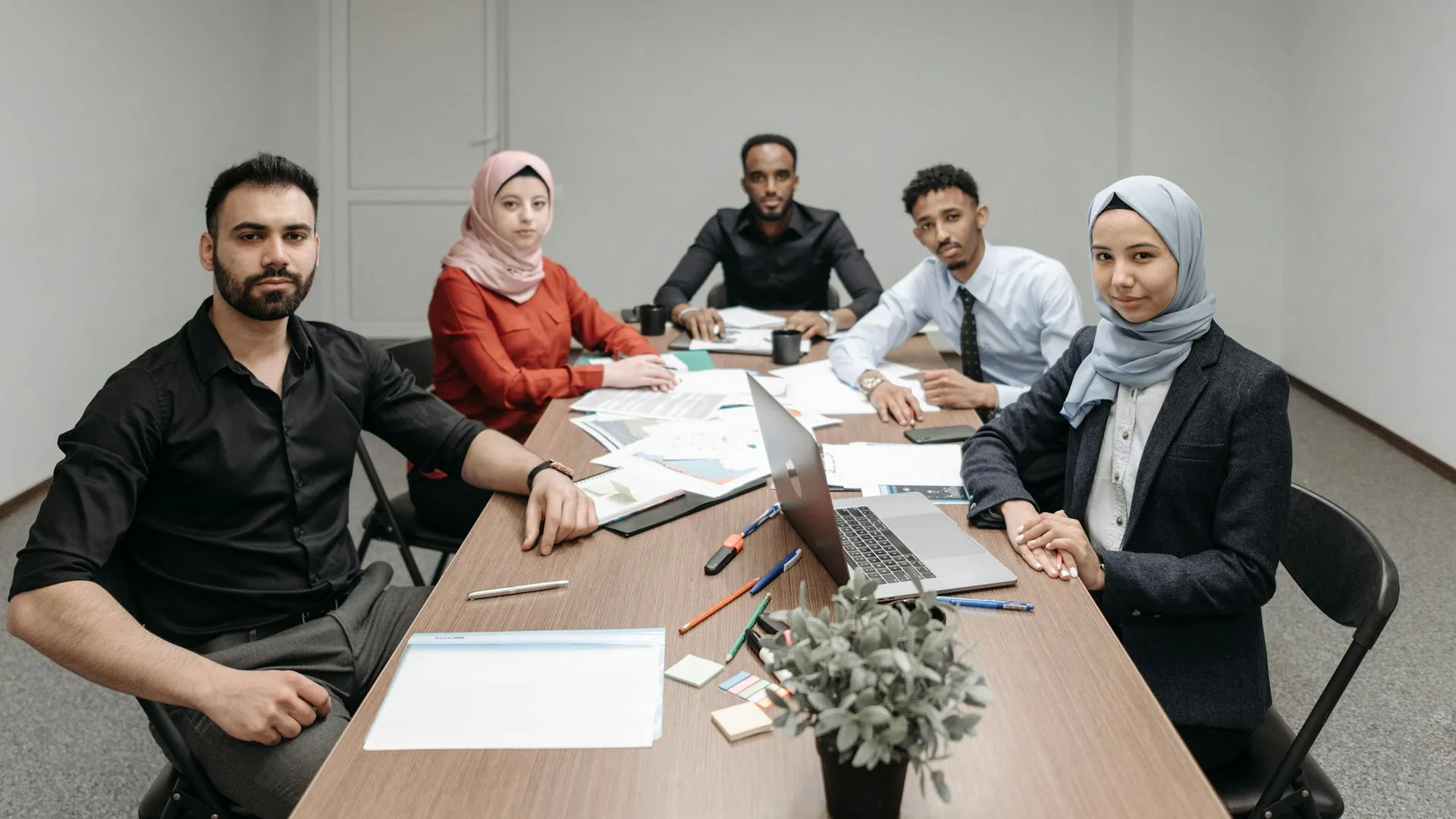
Maya is a regional director of operations at a Fortune 1000 logistics company. She lost most of her hearing in her early thirties from sudden sensorineural hearing loss — a condition that affects an estimated 5 to 27 cases per 100,000 Americans annually and often leaves moderate-to-severe hearing loss in the affected ear (NIDCD, 2024). She wears bilateral hearing aids that work well in one-on-one settings and fail in conference rooms. She manages a team of 22 people across three time zones.

Maya's calendar on a typical Tuesday: an 8:30 standup with her direct reports, a 9:30 partner sync with a third-party logistics vendor, an 11:00 town hall presented by the COO, a 1:00 lunch with a peer director, three back-to-back operations reviews from 2:00 to 4:30, and a 5:00 customer escalation call with a regional retailer. Twelve meetings, five locations, four formats — boardroom, hybrid Zoom, all-hands auditorium, restaurant, video bridge, phone. Her CART budget covers two of them per week. Her interpreter budget covers zero — she doesn't sign.
For four of the twelve meetings, Maya wears AirCaps captioning glasses. The 4-microphone beamforming array isolates whichever speaker she is facing and suppresses the HVAC noise that previously turned her conference room into a soup of unintelligible sound. The 300ms latency means captions land on the lens before the speaker has finished their sentence, so she can respond on the speaker's pace rather than catching up. The 15-speaker identification labels each colleague's contribution by name as the conversation unfolds. By the end of the day, she has a structured transcript with action items pulled out per attendee — the kind of document a hearing director would have built from memory and three sticky notes.
The town hall is the meeting that previously left her exhausted by lunchtime. The COO speaks fast, the auditorium has poor acoustics, and the Q&A involves voices from twenty rows back. With captioning glasses, the questions arrive on the lens with speaker labels and Maya can follow the discussion without leaning forward, asking a colleague to repeat, or hoping the company's internal captioning service catches up. She doesn't carry a screen, doesn't ask for special seating, and doesn't disclose her hearing loss to colleagues she has not chosen to disclose to.
Why CART, ASL, and Captioning Glasses Are Not Either-Or
The accessibility community has rightly resisted "one-size-fits-all" framings of hearing accommodation. Different deaf professionals have different needs — language preferences, hearing histories, literacy modes, community ties. A culturally Deaf engineer who works in ASL has a fundamentally different access profile than a late-deafened operations director who reads English at speed. Tools that work for one rarely work for the other.
ASL interpretation remains the gold standard for many culturally Deaf professionals. It preserves the linguistic and cultural register of ASL — a complete language with its own grammar, idiom, and expressive depth — and surfaces nuance that English captions cannot carry. The peer-reviewed research on listening fatigue in deaf and hard-of-hearing bilinguals consistently shows that greater reliance on speechreading and spoken English correlates with increased fatigue, while ASL fluency reduces fatigue and improves communication well-being (UC eScholarship, 2023). For ASL-fluent professionals, captioning glasses are a complement, not a replacement.
CART remains the gold standard for high-stakes English-language meetings — board votes, depositions, regulatory hearings, public-record events. A trained CART writer corrects context, attributes speakers reliably, and produces a transcript that holds up in legal review. AI captioning has closed the gap on raw word error rate — ElevenLabs Scribe v2 leads recent accessibility benchmarks at 2.2% word error rate across 48 ASR models, with most state-of-the-art systems now under 5% on clean test audio (ACM Trans. on Accessible Computing, 2024) — but a human captioner still wins on the moments that matter most: heavy accents, technical jargon, overlapping speakers, mumbled asides.
Captioning glasses fit a third profile: the unscheduled, multi-meeting, mobile-knowledge-worker scenario where booking a CART writer is impossible and an interpreter is over-specified. They are not better than CART or ASL — they are different. They cover the 70%+ of meetings a working deaf professional has every week that would otherwise have no accommodation at all. For more on the tradeoffs between the form factors, see our deeper comparison of captioning glasses vs. hearing aids.
Citation Capsule: Onsite CART captioning runs $160 to $290 per hour and ASL interpretation runs $100 to $220 per hour with a 2-hour minimum, while 56% of all workplace accommodations under JAN's longitudinal survey cost employers nothing. Captioning glasses sit between the two — a one-time hardware cost that scales across the unscheduled meetings booking-based services can't reach (Karasch Captioning, 2024; JAN, 2024).
The frame that helps employers and accessibility coordinators most is "stack, don't replace." Schedule CART for the board meeting. Book the ASL interpreter for the all-hands. Issue captioning glasses for everything else. The total accommodation spend per deaf employee usually drops, the meeting coverage rate climbs from a fraction to near-total, and the deaf professional gets to choose the right tool for each room.
The Hallway Conversation Problem
The National Association of the Deaf surveyed deaf and hard-of-hearing remote employees and found that 73% reported needing different or additional accommodations for remote work, with 14% reporting that their employer did not provide them (NAD, 2024). The same survey surfaced a second pattern that holds equally true for hybrid and in-person workers: the impromptu meeting is the access point with the worst coverage. Hallways, kitchens, ride-shares, post-meeting walkbacks, customer dinners, conference networking — none of these are scheduled, none have CART, none have an interpreter standing by.

For a deaf professional, the hallway conversation is often where promotion-relevant information lives. The senior VP mentions a reorganization in passing. A peer director shares why a project is actually behind. A board member offers feedback that won't appear in any formal review. Hearing colleagues hear those things in transit, integrate them into their mental model, and operate on better information by the next meeting. A deaf colleague who relies only on scheduled accommodation operates a meeting behind.
Captioning glasses change the equation because they are always on the face. The 4-microphone beamforming array means a deaf professional can stand in a hallway, face whichever colleague is speaking, and read what they said with a ~300ms delay. The same array isolates a single voice in a crowded room — a sales kickoff dinner, a conference reception, a post-board-meeting drink — where hearing aids alone collapse. Beamforming systematic reviews show binaural arrays deliver SNR improvements averaging 7.0 to 7.5 dB monaural and a 2.5 dB SRT (speech reception threshold) improvement bilaterally versus omnidirectional baseline (PubMed Trends in Hearing, 2023). That difference is what turns "I think I caught about a third of that" into "I have the full sentence."
For more on how the underlying speech-to-text pipeline holds up across noisy and unscheduled environments, see our explainer on how captioning glasses work. The same technology that helps deaf professionals in a hallway also powers the meeting intelligence layer for hearing colleagues — speaker identification, action items, searchable transcripts. The accommodation and the productivity tool are the same product. That parity matters more than it sounds. It means a deaf colleague who wears AirCaps is using the same device as the hearing colleague across the table, not a visibly assistive one.
Listening Fatigue and the Need for Recovery
The peer-reviewed research on workplace hearing loss has converged on a finding most managers still underweight: listening effort is a load on the worker, and the load compounds. A 2020 study published in the International Archives of Occupational and Environmental Health found that self-perceived listening effort had the highest association with hard-of-hearing workers' "need for recovery" — a validated measure of work-induced fatigue that predicts sick leave and workplace accident risk (PMC, 2020). Hard-of-hearing employees take more sick days, report more end-of-day exhaustion, and experience more work-related accidents than their hearing peers — and the path the data identifies is listening effort, not the hearing loss itself.
Captioning glasses don't eliminate listening effort, but they lower it materially. When the brain stops working overtime to fill in missing phonemes, recovery time after meetings drops. Several customers in our Q1 2026 survey of deaf professionals using AirCaps Pro reported that the most surprising effect was not the meetings — it was the evenings. They got home with energy left over.
The same research line connects to a finding that the Healthy Hearing literature has surfaced repeatedly: untreated or under-accommodated hearing loss is correlated with cognitive decline in older adults, with the largest single risk factor for dementia identified in the Lancet Commission's modifiable risk model (Lancet Commission via Healthy Hearing summary, 2024). Whether or not captioning glasses sit on the prevention pathway is unproven and outside our authority to claim. What is clear is that any accommodation that reduces the daily cognitive cost of communication is doing real work — for productivity, recovery, and long-run cognitive health.
Citation Capsule: Self-perceived listening effort had the highest correlation with hard-of-hearing workers' need for recovery, predicting more sick leave and higher workplace accident risk in a peer-reviewed study. The implication is that any accommodation that lowers listening effort delivers compounding benefits — fewer sick days, fewer accidents, more energy at the end of the day (Int'l Archives of Occupational and Environmental Health, 2020).
For deaf professionals managing chronic listening fatigue, the calculation is not "do I want a transcript?" It is "what does my brain have left when the workday ends?" Captioning glasses are one of a small number of tools that protect that reserve.
How HR and Accessibility Coordinators Should Evaluate Captioning Glasses
Three considerations matter for HR leaders and accessibility coordinators evaluating captioning glasses for the workforce. Compliance, employee choice, and integration with existing accommodation programs.
Compliance
Enterprise deployment requires SOC 2 Type 2, GDPR, and HIPAA compliance — particularly for healthcare, legal, and financial services workforces. AirCaps holds all three, plus FCC and CE certifications on the hardware itself. Most consumer-grade smart glasses do not carry SOC 2; confirm this explicitly before any pilot. Procurement and security review will not approve a vendor without a current SOC 2 Type 2 report and a documented subprocessor list.
Employee Choice
The single most common mistake we see HR leaders make is mandating one accommodation type for all deaf or hard-of-hearing employees. The right framework is to offer a portfolio: CART for high-stakes events, ASL interpretation for ASL-fluent employees, FM systems for compatible hearing aid users, and captioning glasses for the daily-meeting layer. Let the employee choose. The Job Accommodation Network's interactive process guidance is the canonical resource here, and it explicitly favors employee preference within the bounds of effective accommodation (JAN, 2024). A captioning glasses program that runs in parallel with CART and interpreter budgets is not a cost replacement; it is a coverage expansion.
Integration
Captioning glasses without integration into the existing accommodation surface are a stranded asset. The AirCaps Pro tier supports Microsoft 365, Google Workspace, Slack, Zoom, and major HRIS platforms out of the box, with API access for custom integrations on the enterprise tier. The integration that matters most for HR is the records side: meeting transcripts and action items flowing into the systems your team already uses. Pre-pilot, get your IT and accessibility teams aligned on which captures persist where, who has access, and how long records are retained. The pilot fails when transcripts pile up in a place no one looks.
For the broader compliance and procurement framework — including HIPAA for healthcare deployments and SOC 2 audit posture — see our smart glasses for professionals pillar. The same compliance posture that supports sales, legal, and healthcare professionals supports deaf employees in those same verticals.
Where Captioning Glasses Still Fall Short
We've made the case. We also work in this category every day, which means we know the limitations.
The first is ASL. Captioning glasses display English text. They do not interpret into ASL, and they do not capture an ASL signer's contribution to a meeting. For culturally Deaf professionals who work in ASL, a qualified ASL interpreter remains essential. Captioning glasses can supplement — for example, capturing English-speaking colleagues' contributions while the interpreter works the other direction — but they do not replace.
The second is high-stakes legal record. Court reporting and formal regulatory hearings require certified human captioners or stenographers. AI accuracy is high enough for most professional contexts but not for evidentiary record. Plan for CART or stenography in those environments and use captioning glasses for everything around them — the prep meetings, the post-hearing debriefs, the lawyer-client calls.
The third is multi-speaker overlap above the array's discrimination capacity. The 4-microphone array isolates the speaker you face and resolves up to 15 distinct voices in a session, but in a fast cross-talk situation — a heated debate, a simultaneous Q&A, a meeting where colleagues talk over one another — the captions can lag or merge. A skilled CART writer handles this better. We are working on it; we are not there yet.
The fourth is jargon and proper nouns specific to a tight domain. The model handles standard business and medical English well. Highly specialized vocabulary — niche legal terminology, brand names that don't appear in training data, cryptocurrency tickers — sometimes requires correction. AirCaps Pro supports a custom vocabulary list per user, which closes most of this gap, but the gap exists.
For an honest comparison across the full accessibility tooling market — not just AirCaps — see our review of the best captioning glasses 2026. We name the categories where we're not the best fit.
Frequently Asked Questions
Are captioning glasses ADA-compliant accommodations for deaf employees?
The ADA does not certify specific products as compliant — it requires employers to provide effective accommodations through an interactive process with the employee. Captioning glasses qualify as a reasonable accommodation when the employee identifies them as effective for their needs and the employer does not face undue hardship. The Job Accommodation Network's 2024 employer survey found 56% of accommodations cost the employer nothing and the rest typically run around $500, well within the reasonable range (JAN, 2024). At $599 one-time, AirCaps sits inside that envelope.
What's the difference between captioning glasses and live captioning apps on a phone?
Two things — form factor and microphone quality. Phone-based apps require the deaf user to look down at a screen, which kills eye contact and breaks the social dynamic of a meeting. AirCaps puts captions in the field of view at a 30-degree angle so the user is looking at the speaker, not the device. Microphone quality is the second gap: a single phone microphone collects everything in a 78 dBA conference room equally; the 4-microphone beamforming array isolates the speaker facing the user and lifts speech-to-noise by 7+ dB (PubMed, 2023). The accuracy delta is real.
Will my colleagues know I'm using captioning glasses?
They will see what looks like a regular pair of glasses. The AirCaps binocular MicroLED display has under 2% light leakage, below the threshold most observers detect even at close conversational range. The 49-gram frame is lighter than most prescription glasses. Disclosure is the user's choice, on the user's timeline — the device does not require it. Many of our deaf customers report wearing captioning glasses for months before any colleague asked about them.
Do captioning glasses work in noisy environments like restaurants or trade shows?
Yes. AirCaps was designed specifically for the noisy multi-speaker environments where hearing aids alone fail — the restaurant being the single most cited pain point across our customer reviews. The 4-microphone beamforming array delivers 95%+ caption accuracy in 78 dBA environments, where typical phone-based captioning collapses to 60% or below. For the engineering detail on why microphone count and array geometry matter, see our beamforming explainer.
Can my employer pay for captioning glasses through HSA, FSA, or accommodation budget?
Both — and often both at once. AirCaps is HSA/FSA eligible at the individual level (the device is classified as an assistive medical device, supported by IRS Publication 502 guidance on hearing accessibility) and qualifies as a workplace accommodation expense at the employer level. Many of our customers cover the device through accommodation budget and use HSA/FSA funds for the optional Pro subscription. See our complete HSA/FSA guide for the IRS detail.
Are captioning glasses a replacement for ASL interpreters?
No. ASL interpretation remains essential for culturally Deaf professionals who work in ASL, and for high-stakes formal events — legal proceedings, medical informed consent, executive presentations. Captioning glasses are a complement for English-language meetings the interpreter is not booked for, including the unscheduled hallway and impromptu meeting layer that interpreter scheduling cannot reach. The right framework is "stack, don't replace."
How long is the battery life across a full meeting day?
AirCaps runs 4–8 hours of mixed use on the built-in battery, which covers a typical office day of meetings. Continuous display use is 2–4 hours. The Power Capsules accessory ($79) adds two magnetic hot-swap batteries for up to 18 hours of continuous use, which covers all-day offsites and conferences. Fast charge: 2 hours of use in 15 minutes, full charge in 40 minutes. Most deaf professionals we work with charge once at lunch and run all day.
The Honest Verdict
Deaf and hard-of-hearing professionals reached a record 57.7% employment rate in 2024, but the 15-point gap to hearing peers and the 13–14% wage gap are not artifacts of capability. They are artifacts of access — to which conversations, in which rooms, with what reliability. The conversations a deaf professional cannot fully hear are the conversations a hearing colleague compounds into a better next decision. The gap is small per meeting and enormous over a career.
Captioning glasses are the first accommodation that scales across the unscheduled, multi-room, mobile-knowledge-worker reality. They are not better than CART for the deposition or ASL interpretation for the all-hands; they are better than nothing for the seventy-plus percent of weekly meetings that booking-based accommodation cannot cover. AirCaps weighs 49 grams, runs 97% caption accuracy at 300ms latency, identifies 15 speakers, supports 60+ languages, and clears SOC 2, HIPAA, GDPR, and FCC certifications at a one-time hardware price of $599 with no required subscription.
The right framing for HR leaders, accessibility coordinators, and deaf professionals themselves is portfolio, not replacement. CART for the board meeting. ASL interpretation for the all-hands. Captioning glasses for the hallway, the standup, the customer dinner, the impromptu director sync. Total accommodation cost per employee usually drops, meeting coverage climbs from a fraction to near-total, and the deaf professional gets to choose the right tool for each room.
For deaf professionals ready to evaluate the technology, see AirCaps for captions. For HR and accessibility teams scoping a workforce rollout, see AirCaps for meetings. For multilingual professionals managing cross-language meetings on top of hearing accommodation, see AirCaps for translation. And for a fuller comparison of captioning glasses against the rest of the hearing-accommodation stack, see our explainer on captioning glasses vs. hearing aids.
The meeting decides the career. The form factor that finally lets a deaf professional run the meeting on equal footing — without disclosure they didn't choose, without booking lead times that don't fit reality, without a screen between them and the speaker — is the one that actually levels the playing field.
On this page
Table of Contents
▼
Written by
Madhav Lavakare
Co-founder & CEO, AirCaps
Co-founder of AirCaps. Building AI-powered smart glasses for conversation since 2013. Yale graduate, Y Combinator alum. Built his first Google Glass apps at age 13 and has spent 11+ years in speech AI and wearable computing.
Related Articles
Guides
Hearing Loops and Telecoils vs. Captioning Glasses: What Public Venues Need to Know
Only about 34% of hearing aid wearers know they have a telecoil (Hearing Review, 2014). Here's what hearing loops, ALS receivers, and captioning glasses each reach.
Madhav Lavakare
·
Aug 1, 2026
·
22 min read
Guides
Listening Fatigue: The Hidden Cost of Hearing Loss (and How Captions Help)
A systematic review of 24 studies found 67% linked hearing loss to increased fatigue (Holman, 2021). What listening fatigue costs, and where captions help.

Nirbhay Narang
·
Jul 29, 2026
·
23 min read
Guides
Sudden Sensorineural Hearing Loss: How Captioning Glasses Bridge the Recovery Gap
Sudden hearing loss strikes about 66,000 Americans a year, and roughly 90% is idiopathic (AAO-HNS, 2019). How captioning glasses bridge the uncertain recovery gap.
Madhav Lavakare
·
Jul 26, 2026
·
22 min read
© 2025 AirCaps. All rights reserved.