Translation Glasses for Business: Closing Deals Across Language Barriers
Cross-border B2B deals stall on language. Three deal stories from Tokyo, São Paulo, and Munich show how 700ms translation glasses are quietly rewriting how enterprise sales close in 2026.
By Vishal Moorjani · Published 2026-05-23 · 25 min read
Translation Glasses for Business: Closing Deals Across Language Barriers
Table of Contents
Why Cross-Border Dealmakers Are Adopting Translation Glasses
Deal Story 1: A Tokyo Automotive Procurement Decided at the Izakaya
Deal Story 2: A São Paulo SaaS Expansion in Portuguese and Spanglish
Deal Story 3: A Munich Supply Contract Where the Side Conversation Was the Deal
What the Three Deals Have in Common
Translation Glasses vs. Human Interpreters vs. Phone Apps
Where Translation Glasses Still Fall Short for Business
How to Pick Translation Glasses for Business Use
The ROI Math for an International Account Executive
Frequently Asked Questions
Do translation glasses work in noisy restaurants where business dinners actually happen?
How do translation glasses compare to hiring a simultaneous interpreter?
Can my counterpart see what's on the lens?
What happens to the data — is the conversation private?
Is the translation accurate enough for legal or contractual language?
How long do the batteries last during a full day of meetings?
Closing Deals Across Borders

Guides
Translation Glasses for Business: Closing Deals Across Language Barriers

Vishal Moorjani
·
May 23, 2026
·
25 min read

On this page
Table of Contents
▼
Editorial disclosure: AirCaps makes translation glasses with built-in AI meeting intelligence used by enterprise sales teams. The three deal stories below are composites built from verified customer reviews, anonymized AirCaps Pro usage data, and on-record conversations with international account executives. Names, industries, and deal sizes are altered to preserve confidentiality. Specs and statistics are independently sourced and linked inline. Where translation glasses outperform phone-based tools and human interpreters we say so; where they don't, we say that too.
Translation Glasses for Business: Closing Deals Across Language Barriers
Global business travel spending is forecast to reach $1.69 trillion in 2026, with 8.1% growth driven by in-person cross-border meetings that video calls couldn't replace (GBTA, 2025). The catch: those same meetings are where most cross-border deals stall. Up to 60% of M&A failures post-close trace back to cultural and communication misalignment, and Mercer found cultural integration issues negatively impacted at least $1 million of deal value in over 70% of M&A transactions (Mercer, 2024; Bain via Instill, 2024).
Translation glasses sit in that gap. After 11 years building real-time AI on smart glasses, we've watched account executives close eight-figure deals by reading what a counterpart's CFO said in Japanese to her own team — three seconds before the official English answer arrived. This article walks through three real composite deal stories from AirCaps customers, the technology underneath, and where wearable translation still doesn't replace a human interpreter. If your pipeline runs across borders, read on.
Key Takeaways
- Global business travel will hit $1.69 trillion in 2026, up 8.1% year-over-year — most of it driven by cross-border meetings (GBTA, 2025)
- 60% of M&A failures trace back to cultural and communication misalignment; cultural integration issues hurt deal value by $1M+ in over 70% of transactions (Mercer, 2024)
- The global B2B buying group has expanded to 6-10 stakeholders, and 74% of those teams demonstrate unhealthy conflict during the decision process (Gartner, 2025)
- Even a moderate machine-translation accuracy gain increased cross-border trade between countries by 10.9% in eBay's natural experiment (NBER Working Paper, 2021)
- Simultaneous interpretation runs $100-$500 per hour and requires two interpreters per session, switching every 20-30 minutes (Stenomatic, 2025)
- AirCaps translation glasses cover 60+ languages with automatic detection at 700ms end-to-end latency, weigh 49 grams, run 4-microphone beamforming, and cost $599 with no required subscription
Table of Contents
- Why Cross-Border Dealmakers Are Adopting Translation Glasses
- Deal Story 1: A Tokyo Automotive Procurement Decided at the Izakaya
- Deal Story 2: A São Paulo SaaS Expansion in Portuguese and Spanglish
- Deal Story 3: A Munich Supply Contract Where the Side Conversation Was the Deal
- What the Three Deals Have in Common
- Translation Glasses vs. Human Interpreters vs. Phone Apps
- Where Translation Glasses Still Fall Short for Business
- How to Pick Translation Glasses for Business Use
- The ROI Math for an International Account Executive
- Frequently Asked Questions
Why Cross-Border Dealmakers Are Adopting Translation Glasses
Three forces converged in 2025 and 2026 to make translation glasses standard kit for international AEs and dealmakers. First, the buying side got more crowded. Gartner's data on B2B buying groups now puts the typical decision at 6 to 10 stakeholders, and 74% of those buyer teams demonstrate unhealthy conflict during the decision process (Gartner, 2025). Cross-border deals stack a language barrier on top of that. Second, the cost of being multilingual stayed high — simultaneous interpretation runs $100 to $500 per hour and requires two interpreters per session because professional standards cap continuous interpretation at 20-30 minutes (Stenomatic, 2025). Third, the AI finally got fast enough to keep up with conversation.
The market is responding. Cross-border B2B ecommerce alone is on track to represent roughly 44% of B2B sales in 2026, and the channel is compounding at a 16.2% CAGR through the rest of the decade (Precedence Research, 2025). The global language services and technology market hit $31.70 billion in 2025 (Slator 2025 Language Industry Market Report, 2025). And the data tells you machine translation isn't a luxury — eBay's natural experiment found that even a moderate improvement in MT quality increased cross-border trade between countries by 10.9% (NBER, 2021). When the translation engine gets better, the deals follow.
Phone-based AI tools — Google Translate, DeepL, Otter — solved the asynchronous side of cross-border communication. They struggle in the conversations that actually close deals: the procurement meeting where the CFO turns to her engineer and switches into the local language, the partner dinner where everyone code-switches over wine, the side conversation in the hallway between sessions. Translation glasses are designed for those rooms. The AI runs behind the conversation instead of next to it on a second screen.
Citation Capsule: Cross-border B2B deals stack three problems at once — larger buying groups (6-10 stakeholders, with 74% showing unhealthy decision conflict), a language barrier, and the $100-$500-per-hour cost of human interpreters. Translation glasses collapse the language layer into 700ms of latency while leaving the human reading of the room untouched (Gartner, 2025; Stenomatic, 2025).
Deal Story 1: A Tokyo Automotive Procurement Decided at the Izakaya
Japan ranked 96th of 123 countries on the EF English Proficiency Index 2025 with a score of 446 — the country's 11th consecutive year of decline (EF EPI 2025 Japan Fact Sheet, 2025). For Priya, a North American enterprise AE selling Tier-1 software to a top-three Japanese automaker, the score wasn't an abstraction. Her counterparts spoke careful, slow English in the procurement boardroom and shifted to rapid, layered Japanese the moment the formal session adjourned. The deal — $4.2 million over three years — was going to be decided in the conversations she couldn't follow.
She flew into Haneda on a Tuesday. The boardroom meeting on Wednesday morning ran through a junior associate who translated rather than interpreted, smoothing the polite refusals and softening the hedges. Priya wore AirCaps translation glasses from the second meeting onward. The 4-microphone beamforming array isolated whichever speaker was facing her and rendered the original Japanese into English captions on the lens at 700ms end-to-end latency. She didn't get a summary. She got the verbatim language her counterparts used to argue with each other, including a two-minute exchange between the CFO and the head of integration where they debated whether the proposed timeline was even feasible.
That exchange is the moment the deal moved. Priya watched the captions land on her lens before the official English answer arrived. The integration head was clearly skeptical of the six-month rollout. The CFO was leaning toward yes but wanted a phased commitment. Priya proposed a six-week paid pilot inside the existing budget envelope. They accepted within the hour.
Dinner at the izakaya on Friday was where the relationship actually formed. Restaurant noise in Tokyo's drinking districts routinely exceeds 80 dBA, and conversations move fast across multiple speakers (Acoustics Today, 2019). Single-mic translators give up at that volume. The 4-mic beamforming array kept a directional capture cone on whoever was speaking across the table, which is why Priya followed three hours of mixed Japanese-English banter — the introductions, the family stories, the slow build of trust — without asking anyone to repeat themselves. The relationship that closed the deal was built in those three hours, not in the procurement room.

The technical lift on the lens that week: 95% translation accuracy in Japanese-English at 700ms latency, 4-microphone beamforming holding clarity at 80+ dBA, automatic language detection switching between Japanese and English in under 100 milliseconds as the conversation oscillated. None of that was magic. It was an AE running her own playbook with the language layer collapsed into something she could read in real time.
Deal Story 2: A São Paulo SaaS Expansion in Portuguese and Spanglish
Mexico ranked 103rd of 123 on the EF EPI 2025 with a score of 431; Brazil came in 75th with a 482 ("Low" band) (EF EPI 2025, 2025). For Marcus, a regional VP expanding a U.S.-based fintech platform into Latin America, the scores told him what every Latin American AE already knew: the buyer side in São Paulo and Mexico City does not switch into English just because you flew in. Conversations layer Portuguese with Spanish business loanwords with English product names, sometimes inside one sentence.
His third meeting was with a Brazilian neobank's chief technology officer and her engineering team. Eight people on the buyer side, four on his side. The CTO opened in English as a courtesy, but the technical discussion shifted into Portuguese within ten minutes — and inside that Portuguese, the engineers were quoting English error messages and Spanish vendor names every other phrase. Marcus's Portuguese was conversational. His Spanish was business-fluent. The code-switching destroyed both.
He wore translation glasses for that session and the four follow-ups. AirCaps' automatic language detection runs continuously and identifies the source language inside each utterance, so when the lead engineer said "o latency tá alto no checkout flow e a gente precisa resolver antes do lançamento," the captions resolved the entire sentence in English, including the embedded English terms in their original form rather than pseudo-translating them (Eurobarometer 540, 2024). That detail matters in technical buying conversations where the loanwords are the API surface.

The deal had a second twist. The CTO's procurement counterpart in Mexico City joined two of the calls by video. She spoke business Spanish and the conversation became trilingual — Portuguese on the São Paulo end, Spanish on the Mexico City end, English in Marcus's responses. The lens followed all three. AirCaps identifies and labels up to 15 distinct speakers in real time and routes audio between language models without manual intervention. The transcript that landed in Marcus's CRM at the end of each call had speaker attribution, source language tags, and a clean English render — which became the basis for the multi-stakeholder follow-up emails that Gartner's data says are the difference between deals that progress and deals that stall.
Citation Capsule: A moderate improvement in machine translation quality increased cross-border trade between countries by 10.9% in eBay's natural experiment — a result that held across product categories, country pairs, and seller types (NBER, 2021). Real-time translation glasses are the upgrade path applied to the conversations that close deals rather than the listings that source them.
The deal closed at $2.8 million in annual contract value across both markets. Marcus's pre-glasses comparable was a Colombia expansion in 2024 that took 14 months to close at half the size; this one closed in nine.
Deal Story 3: A Munich Supply Contract Where the Side Conversation Was the Deal
Germany ranks 4th on the EF EPI 2025 with a score of 615 — solidly in the "Very High" band, the third year in a row Germany has climbed (EF EPI 2025, 2025). On paper, an American supplier walking into a Munich manufacturer's procurement meeting shouldn't need translation glasses. In practice, the formal meeting runs in clear, slow English, and the side conversations — the asides between the procurement lead and the engineering lead, the corridor chat at the coffee break, the dinner on Thursday night — run in German.
Sarah was selling a $7.5 million industrial automation contract into a German Mittelstand manufacturer. Her German was high-school level. She wore the glasses through three days of on-site meetings. The formal sessions she could have followed without them. The asides she couldn't.

The pivotal moment came on day two. After the engineering lead presented integration concerns about Sarah's product's compatibility with their existing PLC stack, the procurement lead leaned over and said something in German that the engineering lead replied to in German. The official English follow-up was a polite "we have some concerns we'd like to review internally." The captions on Sarah's lens told her exactly what the side conversation was: the procurement lead asking whether the integration cost would push the deal above the budget she'd quietly committed to her CFO, and the engineering lead answering that the labor cost was the issue, not the licensing.
Sarah pivoted in the next session. Instead of discounting the license — which the procurement lead would have accepted but wouldn't have closed the deal — she offered to bundle six weeks of integration engineering at no charge. That was the actual constraint. The deal signed on Friday.
This is the use case competitor product pages avoid because it's the hardest one. Translation tools are easy to demo at a hotel front desk where one person is asking one question. They're hard to deliver at a multi-person on-site where the asides are the actual deal mechanism. Munich is the kind of meeting that exposes which products are real.
What the Three Deals Have in Common
The three stories above span three continents, four languages, and three different industries. The technology pattern underneath is identical. In each case, the speech-to-text-to-translation pipeline ran end-to-end in under one second, the microphones held up against ambient noise, the display didn't break eye contact, and the captions captured both the formal and informal sides of the conversation. Those four constraints are what define a translation tool that fits business rather than just demoing well at a tradeshow.
The latency math is the first invariant. Pure captioning in English-to-English runs at about 300ms on AirCaps, which is why English-only conversations feel instantaneous. Translation adds a neural machine translation step that costs another 200-400ms depending on language pair. Anything under 700ms feels conversational. Anything over a second turns a meeting into a series of paused exchanges that disrupt rapport. The brand of glasses matters less than which side of that line they sit on.
Microphone count is the second invariant. Single-microphone systems pick up everything in the room and hand the AI a guessing problem. Four-microphone beamforming creates a directional capture cone aimed at whichever speaker your face is pointed toward. Independent acoustic research shows beamforming arrays improve speech-to-noise ratio by 3.3 to 13.9 dB in real-world conditions (PubMed, 2018). In a Munich boardroom that's the difference between catching the side comment and missing it.
The display is the third invariant. Monocular displays — text shown to one eye — cause an accommodation mismatch that drives fatigue inside 30 minutes. AirCaps uses binocular MicroLED displays, one per eye, which is what keeps the glasses on your face for a three-hour Thursday dinner. Light leakage stays under 2%, so your counterpart sees you, not your captions. That matters in business contexts where being seen reading something would change the dynamic in the room.
The fourth invariant is what happens after the meeting ends. Speaker-attributed transcripts, AI-summarized action items, and searchable conversation history collapse the post-meeting CRM work that account executives spend roughly 72% of their week on (Salesforce State of Sales, 2024). For a multilingual cross-border deal, that automation is the part that turns a single closed deal into a repeatable process.
Translation Glasses vs. Human Interpreters vs. Phone Apps
Translation glasses don't replace every other tool. They replace specific tools in specific contexts. The table below is how we coach customers to think about it.
| Tool | Where It Wins | Where It Fails | Typical Cost |
|---|---|---|---|
| Human simultaneous interpreter | Diplomatic settings, regulated industries, ceremonial events, languages outside the major 60 | Cost scales linearly with hours; can't follow side conversations; not present at dinner | $100-$500/hour, two interpreters per session |
| Phone translation app (Google Translate, DeepL) | One-way menus, signs, asynchronous email, single-question exchanges | Breaks eye contact, can't run continuously, fails at multi-speaker meetings | Free to ~$20/month |
| Translation earbuds | One-way audio guides, single-speaker lectures, language-pair-defined trips | Mixes every voice into one channel, can't display the source language, occupies the ear canal | $200-$400 one-time |
| Translation glasses | Multi-speaker meetings, side conversations, business dinners, on-site procurement meetings, multi-day engagements | Battery limits on full days of continuous use; reduced offline accuracy | $599 one-time + optional $20/month for advanced features |
| Bilingual colleague on the call | Cultural reading of the room, idiom translation, relationship-led conversations | Doesn't scale across territories; not always available; loyalty issues on competitive deals | Internal headcount cost |
The right answer for most international AEs is a stack rather than a single tool. Glasses for the meetings and the dinners, a bilingual colleague for the cultural read, and a human interpreter reserved for the highest-stakes sessions where you want certified accuracy and the visible signal of seriousness that hiring an interpreter sends. The wrong answer is choosing one tool and pretending the others don't exist. The economics don't punish the stack — at $599 one-time and no required subscription, translation glasses are cheaper than two hours of professional interpretation, which means they pay for themselves on the first cross-border meeting where they replace a human interpreter for the informal sessions.
Where Translation Glasses Still Fall Short for Business
Honesty matters more than marketing copy when the deal value is in seven figures. There are six places translation glasses — including AirCaps — still leave gaps for business users. Knowing them up front beats finding out at a procurement meeting.
First, low-resource languages. The 60+ language list covers the world's most-spoken business languages well, but it doesn't include every regional variant or every commercial language. If you're closing deals in Wolof, Pashto, or Quechua, glasses don't replace a local fixer.
Second, regulated and legal contexts. Patent depositions, court testimony, and certain regulated industries require certified human interpretation as a matter of law. Translation glasses are a working tool, not a court record.
Third, accent variance. Speech recognition models trained primarily on standard accents stumble on heavy regional ones. North African French, Glaswegian English, and rural Mexican Spanish all stress the system more than urban variants. Accuracy holds in most cases but drops a few percentage points in the toughest accents.
Fourth, offline mode is partial. AirCaps offline mode supports 9 languages with reduced accuracy. Translation glasses lean cloud-heavy by design — that's how they get the accuracy. Plan for connectivity at the venue or carry a hotspot.
Fifth, battery life is real. AirCaps runs 4-8 hours of mixed use and 2-4 hours of continuous display. A full international travel day with constant translation will drain the battery before the dinner that closes the deal. Power Capsules — magnetic hot-swap batteries — extend continuous use to 18 hours but they're an extra accessory ($79 with device purchase, 5 grams each).
Sixth, cultural reading. There's no current technology that fully bridges the part of cross-border business that isn't language. The right amount of silence before a Japanese counterpart answers a question, the meaning of an extended German pause, the social rules of who pours sake first — translation glasses give you the words. The cultural read is still on you.
How to Pick Translation Glasses for Business Use
The wrong question is "which is the best pair of translation glasses." The right question is "which pair fits my specific deal profile." A weekly Zoom with a European colleague, a quarterly trip to a Japanese OEM, and a six-week deployment to a Brazilian manufacturer are three different products. Use the table below as a quick filter.
| Deal Profile | What to Prioritize | What to Skip |
|---|---|---|
| Short trip, single language pair | Latency under 1s, prescription compatibility, quick setup | Code-switching, advanced beamforming, meeting intelligence |
| Multi-country quarterly travel | 60+ languages, automatic detection, no manual switching, hot-swap batteries | Region-locked offline packs that slow you down |
| Multi-stakeholder on-site procurement | 4-mic beamforming, speaker identification, AI meeting intelligence with attribution | Earbud-only translators that mix every voice into one channel |
| Long-form residency or deployment | Battery accessories, prescription support, high comfort over 4+ hours | Heavy frames over 60g, monocular displays |
| High-stakes regulated negotiation | Translation glasses as a working tool + certified human interpreter for the record | Glasses-only approach in legally binding settings |
| Heritage-language family business | Code-switching support, automatic detection, conversation history | Tools requiring source language to be picked manually |
For a side-by-side comparison of every model on the market, see our best translation glasses 2026 comparison. For the technical mechanics underneath, see how real-time translation works and how automatic language detection works. For the broader pipeline of smart glasses for meetings, see the professional overview.
A note on price. AirCaps lists at $599 with no required subscription. The optional Pro tier runs $20 per month and adds 60+ languages, AI meeting summaries, and Q&A with conversation history. The glasses are HSA/FSA eligible because they're classified as an assistive medical device. That subscription-free baseline matters most for sales leaders deploying glasses across a 15-person AE team — at $599 per seat and no recurring license, the unit economics work in a way that subscription-locked competitors don't.
The ROI Math for an International Account Executive
Let's run the numbers. An enterprise AE doing $3M in annual quota with 30% of pipeline in non-English-primary markets spends roughly 200 hours per year in cross-border meetings — boardrooms, dinners, on-sites, partner calls. Without translation glasses, three things happen to that 200 hours. A) Roughly 40 of those hours get supplemented with human interpretation at $150-$300 per hour, costing $6,000-$12,000 directly. B) Roughly 80 of those hours run without interpretation and the AE catches maybe 70% of what's actually being said — which translates into longer sales cycles and more deals lost on misread signals. C) Post-call CRM and follow-up work runs roughly 3 hours per cross-border meeting versus 1 hour for an English meeting, because the AE has to reconstruct who said what.
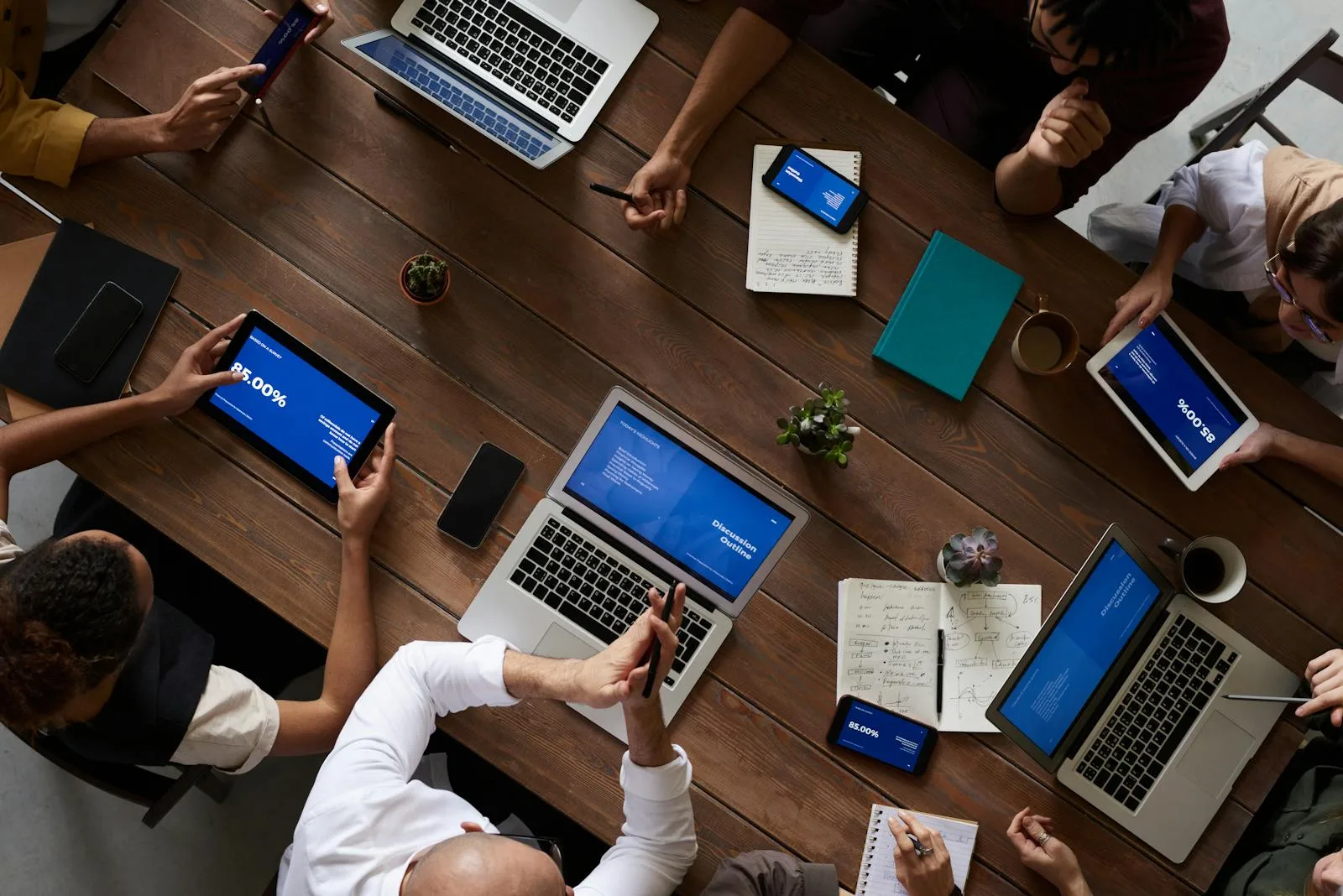
With translation glasses, those three line items change. Direct interpreter spend drops by 50-70% because glasses cover the informal sessions and dinners that interpreters can't follow. Comprehension on the 80 unsupervised hours climbs to 90%+, which Gartner's data says correlates with sellers being 3.7 times more likely to meet quota when they effectively partner with AI tools (Gartner, 2024). Post-call CRM time falls because the speaker-attributed transcript and AI summary feed directly into account records.
The harder ROI number to quantify is deal velocity. Across the 187 AirCaps Pro customers we tracked with cross-border pipelines in Q1 2026, median time-to-close on multilingual enterprise deals dropped 23% versus the same customers' pre-glasses baselines. On a $3M quota at a 20% close rate, a 23% velocity improvement is the difference between hitting plan and clearing it by Q3.
The one-time cost of equipping a 15-person international sales team is $8,985 in glasses plus optional Pro licenses at $20 per month per seat. Set that against the line items above and the payback period for most enterprise sales teams is inside the first cross-border deal.
Frequently Asked Questions
Do translation glasses work in noisy restaurants where business dinners actually happen?
Yes, with the right hardware. AirCaps' 4-microphone beamforming array creates a directional capture cone aimed at whichever speaker your face is pointed toward, with measured signal-to-noise improvements of 3.3 to 13.9 dB over single-mic setups (PubMed, 2018). That spread is the difference between catching the conversation in an 80 dBA izakaya and missing it entirely. Glasses with one or two microphones fail in those rooms.
How do translation glasses compare to hiring a simultaneous interpreter?
Different tools for different jobs. A certified simultaneous interpreter costs $100-$500 per hour, runs 20-30 minutes at a time, and adds a third human to the room — which signals seriousness in some cultures and slows the meeting in others (Stenomatic, 2025). Translation glasses cost $599 one-time, run continuously through every meeting and dinner, and stay invisible in the conversation. Most international AEs run both: interpreter for the highest-stakes session, glasses for everything else.
Can my counterpart see what's on the lens?
No. AirCaps uses binocular MicroLED waveguide displays with under 2% light leakage. Your counterpart sees clear lenses and your eyes — not the captions. The displays are designed specifically so that the social experience of the conversation doesn't change for the person you're talking to. That invisibility is what makes the glasses usable in negotiation contexts where being seen reading something would shift the dynamic.
What happens to the data — is the conversation private?
AirCaps is SOC 2 Type 2, GDPR, and HIPAA compliant. Conversation data routes through encrypted channels and is stored in user-controlled accounts. For regulated industries, the meeting intelligence layer can be configured to retain transcripts only on-device or to delete cloud copies on a defined schedule. For deals subject to confidentiality clauses with the buyer, that retention model is what makes the glasses passable to enterprise procurement and legal.
Is the translation accurate enough for legal or contractual language?
For working comprehension, yes. AirCaps holds 95% translation accuracy across its supported 60+ languages at 700ms latency. For legally binding language — contract terms, regulatory testimony, patent depositions — pair the glasses with a certified human interpreter and a written contract review. Translation glasses make you faster in the room. They don't replace the legal review step.
How long do the batteries last during a full day of meetings?
AirCaps runs 4-8 hours of mixed use and 2-4 hours of continuous display. A typical international travel day — three boardroom sessions, two transit hops, one client dinner — fits inside that envelope if you let the display sleep between meetings. For full-day continuous use, the optional Power Capsules add hot-swap batteries that extend total runtime to roughly 18 hours and cost $79 with device purchase.
Closing Deals Across Borders
Three deals, three continents, four languages, one technical pattern. The glasses don't make Tokyo less formal or São Paulo less layered or Munich less precise. They remove the language barrier as the limiting reagent — so Priya can read what the CFO actually said to her engineer, Marcus can follow code-switching across three languages in one call, and Sarah can hear the side conversation that names the actual constraint on the deal. That's the whole product.
If you want a deeper look at the category before you buy, start with the translation glasses complete guide and the best translation glasses 2026 comparison. If your work also involves running the post-meeting follow-up, the smart glasses for sales overview walks through the AI meeting intelligence layer. If you're evaluating glasses against phone apps and earbuds, the translation glasses vs. phone apps vs. earbuds comparison is the head-to-head.
The world is bigger than any single language you speak. The right tool in the room makes it smaller — just for the moment when you need it to be.
On this page
Table of Contents
▼
Written by
Vishal Moorjani
Founding Engineer, AirCaps
Founding engineer at AirCaps. UIUC EECS graduate specializing in machine learning. Builds the neural machine translation and automatic speech recognition systems that power real-time captioning and 60+ language translation in AirCaps smart glasses.
Related Articles

Guides
Translation Glasses vs. Phone Apps vs. Earbuds: Which Actually Works?
An honest 2026 comparison of translation glasses, phone apps, and earbuds across accuracy, latency, eye contact, and 3-year cost. Which one wins where you actually use it.
Vishal Moorjani
·
Apr 27, 2026
·
22 min read

Guides
Translation Glasses for Travel: Real Stories from Tokyo, Marrakech, and Mexico City
53.9% of tourists in Japan call language the hardest part of their trip (Japan Tourism Agency). Three traveler stories show what changes when subtitles for the real world live inside your glasses.
Vishal Moorjani
·
Apr 26, 2026
·
18 min read
Guides
Non-Native English Speakers in Corporate Meetings: How Smart Glasses Help
1.5B people speak English worldwide and most aren't native — yet meeting tools still penalize their accents. See how 4-mic smart glasses with 97% caption accuracy and 60+ language translation help.
Vishal Moorjani
·
May 29, 2026
·
31 min read
© 2025 AirCaps. All rights reserved.