Non-Native English Speakers in Corporate Meetings: How Smart Glasses Help
1.5B people speak English worldwide and most aren't native — yet meeting tools still penalize their accents. See how 4-mic smart glasses with 97% caption accuracy and 60+ language translation help.
By Vishal Moorjani · Published 2026-05-29 · 31 min read
Non-Native English Speakers in Corporate Meetings: How Smart Glasses Help
Table of Contents
Why Non-Native English Speakers Lose Ground in Corporate Meetings
Meeting Scenario 1: The Mumbai Engineer Who Stopped Repeating Herself
Meeting Scenario 2: The Tokyo VP Who Closed the Deal in Two Languages
Meeting Scenario 3: The Brazilian PM Who Joined the Conversation
What Smart Glasses Actually Do for Non-Native Speakers
The Research on Captions and L2 Comprehension
How Smart Glasses Compare to Meeting Apps for ESL Use
What This Means for Managers and DEI Leaders
Where Smart Glasses Still Fall Short
Frequently Asked Questions
Do smart glasses really help non-native English speakers in meetings?
Will smart glasses handle my accent?
How is this different from Otter or Fireflies?
Can I use translation glasses to negotiate in my native language?
Will my colleagues know I'm wearing AI glasses?
Does AirCaps work with my work prescription?
What's the battery life on a meeting-heavy day?
How much does AirCaps cost for an enterprise rollout?
The Honest Verdict

Guides
Non-Native English Speakers in Corporate Meetings: How Smart Glasses Help

Vishal Moorjani
·
May 29, 2026
·
31 min read
On this page
Table of Contents
▼
Editorial disclosure: AirCaps makes smart glasses with built-in real-time captions, translation across 60+ languages, and AI meeting intelligence. This article uses composite scenarios drawn from verified AirCaps customer reviews and anonymized AirCaps Pro usage data from Q1 2026, paired with peer-reviewed research on accent bias, BELF (Business English Lingua Franca), and L2 listening comprehension. Specs and statistics are independently sourced and linked inline. Where smart glasses genuinely help, we say so. Where they don't, we say that too.
Non-Native English Speakers in Corporate Meetings: How Smart Glasses Help
English speakers grew from 1.13 billion in 2019 to 1.46 billion in 2023, and non-native speakers now outnumber native speakers roughly three to one (British Council, 2024). The 2025 EF English Proficiency Index covered 2.2 million test takers across 123 countries and found speaking is the weakest of the four English skills in more than half of those countries (EF EPI 2025, 2025). And yet the global corporate workday — the all-hands, the standup, the customer call, the strategy offsite — still happens in English, in the cadence of native speakers, on transcription tools built around native-speaker training data.
The cost shows up everywhere it gets measured. A peer-reviewed 2025 study in the Review of Philosophy and Psychology found that non-native English speakers, even those at the highest proficiency levels, report significantly greater avoidance of asking questions at English-language professional events and more frequent feelings of being ridiculed (Springer, 2025). A landmark 2020 PNAS study from a Stanford-led team found that the average word error rate across the five largest commercial speech recognition systems was 0.35 for Black speakers versus 0.19 for white speakers, with Apple's system hitting 0.45 for Black speakers and 0.23 for white speakers (PNAS, Koenecke et al., 2020). The same bias generalizes to accented English: a 2024 evaluation of OpenAI's Whisper in JASA Express Letters found accuracy degrades predictably with prosodic distance from American English (JASA, 2024).
Smart glasses change one thing about that calculus. The AI sits with the listener, not with the speaker. Captions render in the field of view of whoever needs them — the non-native speaker who wants a verbatim transcript to confirm what just got said, or the native-speaker manager who wants to make sure the accented contribution from Mumbai actually got heard the first time. This article walks through three real meeting scenarios from AirCaps customers, the research on why the form factor matters, and where smart glasses still aren't enough on their own.
Key Takeaways
- English speakers grew from 1.13B (2019) to 1.46B (2023), and non-native speakers outnumber native speakers roughly 3:1 (British Council, 2024)
- The 2025 EF EPI surveyed 2.2 million test takers across 123 countries — speaking is the weakest of four English skills in more than half of them (EF EPI 2025, 2025)
- Even the most proficient non-native English speakers report significantly greater avoidance of asking questions and feelings of ridicule at English-language professional events (Springer Review of Philosophy and Psychology, 2025)
- Commercial ASR systems show an average 0.35 word error rate for Black speakers vs 0.19 for white speakers — Apple's system nearly doubles errors at 0.45 vs 0.23 (PNAS, Koenecke et al., 2020)
- AirCaps smart glasses run 4-microphone beamforming with 97% caption accuracy at 300ms latency, identify 15 speakers, support 60+ languages with automatic detection, weigh 49 grams, and cost $599 (AirCaps Meetings)
Table of Contents
- Why Non-Native English Speakers Lose Ground in Corporate Meetings
- Meeting Scenario 1: The Mumbai Engineer Who Stopped Repeating Herself
- Meeting Scenario 2: The Tokyo VP Who Closed the Deal in Two Languages
- Meeting Scenario 3: The Brazilian PM Who Joined the Conversation
- What Smart Glasses Actually Do for Non-Native Speakers
- The Research on Captions and L2 Comprehension
- How Smart Glasses Compare to Meeting Apps for ESL Use
- What This Means for Managers and DEI Leaders
- Where Smart Glasses Still Fall Short
- Frequently Asked Questions
Why Non-Native English Speakers Lose Ground in Corporate Meetings
Three pressures stack against non-native English speakers the moment a meeting starts, and they compound in ways the org chart never accounts for. The first is cognitive load. Working in a second language is genuinely harder — listening, parsing, formulating, and speaking in L2 consumes the same working memory the native speaker has free for thinking. A 2020 peer-reviewed study on BELF (Business English as a Lingua Franca) in multinational meetings found evident language barriers reduce participation in team communication, while hidden barriers — pragmatic mismatches, prosodic transfer — disrupt sophisticated knowledge processing in ways most managers never see (De Gruyter, Journal of English as a Lingua Franca, 2020).
The second pressure is recognition bias. The PNAS study above measured the systems most meeting apps quietly rely on under the hood, and the gap held across all five major vendors. A 2024 evaluation of OpenAI's Whisper in JASA Express Letters extended the finding: accuracy on American English is materially better than on British, Australian, and non-native accents, with the speaker's native-language prosodic distance from English predicting higher word error rates (JASA, 2024). For Indian-accented English specifically, peer-reviewed work has documented a 30-point WER gap between models tuned on Indian English (24.7%) and general Google Speech-to-Text (55%) on the same data (arXiv, 2022).
The third pressure is wage. A 2020 peer-reviewed study in Empirica found advanced foreign-language command yields roughly an 11% wage premium, while speaking "bad English" lowers wage income by 29.4% compared to "very good English" (Empirica, Springer, 2020). The career math is brutal: the colleague whose accent is mistranscribed by the meeting app is also the colleague whose pay reflects a perceived English proficiency. The meeting transcript becomes a record of competence that was never actually about competence.
These three pressures explain why Tsedal Neeley's foundational HBR work argued more than a decade ago that companies including Airbus, Daimler-Chrysler, Fast Retailing (Uniqlo), Nokia, Renault, Samsung, SAP, and Rakuten mandated English as their lingua franca — and why the results were uneven (HBR, Neeley, 2012). Mandating the language without changing the listening tools just moves the cognitive cost from one bucket (translation) to another (parsing accents under load). Smart glasses don't solve the policy question. They do change what listening costs.
Citation Capsule: The 2020 PNAS study from a Stanford-led team measured word error rates across the five largest commercial speech recognition systems and found 0.35 for Black speakers versus 0.19 for white speakers. Apple's system hit 0.45 versus 0.23. The same accent gap generalizes to non-native English speakers across regions, which is the recognition tax most enterprise meeting tools quietly carry (PNAS, Koenecke et al., 2020).
Meeting Scenario 1: The Mumbai Engineer Who Stopped Repeating Herself
Priya Subramanian is a senior staff engineer at a U.S.-headquartered fintech with offices in Mumbai, London, and San Francisco. Her panel covers payments infrastructure, and she runs design reviews three days a week across time zones. English is her third language after Tamil and Hindi. She grew up in Chennai, studied in Bengaluru, and has worked in U.S.-led engineering orgs for nine years. Her written English is unimpeachable. Her speaking English — fluent, fast, Indian-cadenced — gets mistranscribed by every meeting app her team has tried.
Priya started a Pro pilot with AirCaps in late January 2026. The glasses arrived in the AirCaps Midnight finish with a prescription lens holder her optician fitted in 20 minutes — any prescription from -16 to +16 diopters works through interchangeable holders. The frame weighs 49 grams. She wore them through her first design review the next morning, and the structural change showed up inside the first 15 minutes. Two things, specifically. The 4-microphone beamforming array isolated her voice from her colleague Anjali's voice on the same call. And the captions on her own lens at 300ms latency let her see, in real time, what the AI had heard her say — which meant she caught her own mistranscriptions before they propagated.

The mistranscription catch was the unexpected win. Anjali — Priya's principal engineer counterpart in Mumbai — has been on the team for four years. Their accents diverge in ways most ASR models conflate. Priya's pronunciation of "payment" and "payment" come out distinctly to a human ear and identically to most off-the-shelf transcription models. Inside the AirCaps lens, the verbatim caption ran beside the speaker label. When the model misheard, Priya saw it, repeated the word once, and moved on. Anjali, watching her own captions on her own pair of glasses across the Mumbai office, did the same. The post-meeting summary that landed in Slack — speaker-attributed, structured by topic, with action items — finally read like the meeting that actually happened instead of the meeting the AI hallucinated.
The career signal was harder to quantify and probably more important. Priya's manager — a director in San Francisco who'd been with the company for 12 years — flagged in a 1:1 six weeks in that her contributions in cross-time-zone reviews had become noticeably crisper. She wasn't speaking any differently. The transcript-of-record was different. Her quotes in design docs, her cited rationales in postmortems, her exact phrasing in retro notes — all of it now matched what she'd actually said. For non-native speakers whose written work has always represented them better than their transcribed speech, that gap closing is the career move the org chart never sees.
For deeper context on how the same lens-based architecture serves multilingual encounters, see our translation glasses guide. For the engineering on why 4 microphones beat 1, see our beamforming explainer.
Meeting Scenario 2: The Tokyo VP Who Closed the Deal in Two Languages
Roughly 29.6 million people in the United States have limited English proficiency, and the figure barely scratches the surface of the global multilingual workforce (U.S. Census Bureau, 2023). The 2025 EF EPI ranked Japan in the "low proficiency" band — a striking position for the world's third-largest economy, and a daily friction point for Japanese executives negotiating with U.S. and European counterparts (EF EPI 2025, 2025). Tatsuya Mori has lived inside that friction his entire career.
Tatsuya runs enterprise sales for the APAC region at a SaaS company headquartered in Boston. His English is strong — he studied at Waseda, did an exchange year at Boston University, and has been in customer-facing roles for 14 years. Strong is not the same as effortless. In a 45-minute pricing call with a U.S. procurement team, he loses roughly 15% of utterances to accent, ambient noise, or cadence. The slip historically showed up at the moment that mattered — the redline negotiation, the contract-terms back-and-forth, the late-call concession that decides whether the quarter closes.
He started using AirCaps translation glasses in February 2026 on a deal worth $1.4 million in annual contract value to a mid-market customer in Cincinnati. Automatic language detection switches between Japanese and English in under 100 milliseconds — no buttons, no manual selection. The 700-millisecond end-to-end translation latency renders the customer's English as English captions on his lens, and renders his Japanese asides to his Tokyo legal team as Japanese on theirs, in the same meeting, on the same call, without either side seeing a second screen. Tatsuya runs the conversation in English and confers with his team in Japanese without the awkward "give me a moment" beat that breaks the pricing flow.

The deal closed at the original price point. Tatsuya attributes the difference to two specific moments. First, the procurement lead asked an off-script question about implementation timelines mid-call. Tatsuya conferred in Japanese with his Tokyo solutions architect — the lens captioned the architect's response — and answered the procurement lead's question in 45 seconds. The architecture-savvy answer in his target language landed as decisive on the buyer side. Second, in the redline session, the buyer used a phrase Tatsuya hadn't heard before — "MFN provisions" (most favored nation). The lens captioned it verbatim. He pulled up his knowledge base on the side panel, surfaced the company's standard MFN posture, and responded with the kind of precision senior procurement teams expect. Neither moment looked like a translation moment to the buyer. Both were.
Citation Capsule: The 2025 EF EPI ranked 123 countries on English proficiency and found speaking is the weakest of the four English skills in over half of them. For Japan's executives negotiating with U.S. and European counterparts, the gap is daily and material. Real-time translation glasses at 700ms latency with automatic source-language detection let the negotiation run in English while the seller's internal team operates in the source language — closing the gap without inserting a translator (EF EPI 2025, 2025).
For more on translation glasses in business contexts, see translation glasses for business. For the cross-border deal mechanic Tatsuya used, see our smart glasses for sales guide.
Meeting Scenario 3: The Brazilian PM Who Joined the Conversation
Camila Rodrigues is a product manager at a U.S. tech company with a São Paulo engineering hub. She studied at USP, did a master's at Berkeley, and has worked in U.S.-led product orgs for seven years. Her English is C2 by EF's measure — top tier, indistinguishable on paper from a native speaker. She is also one of the quietest people in any all-hands she joins. The peer-reviewed 2025 study in the Review of Philosophy and Psychology found exactly that pattern — even the most proficient non-native English speakers report significantly greater avoidance of asking questions at English-language professional events (Springer, 2025). The proficiency closes the technical gap. It does not close the participation gap.
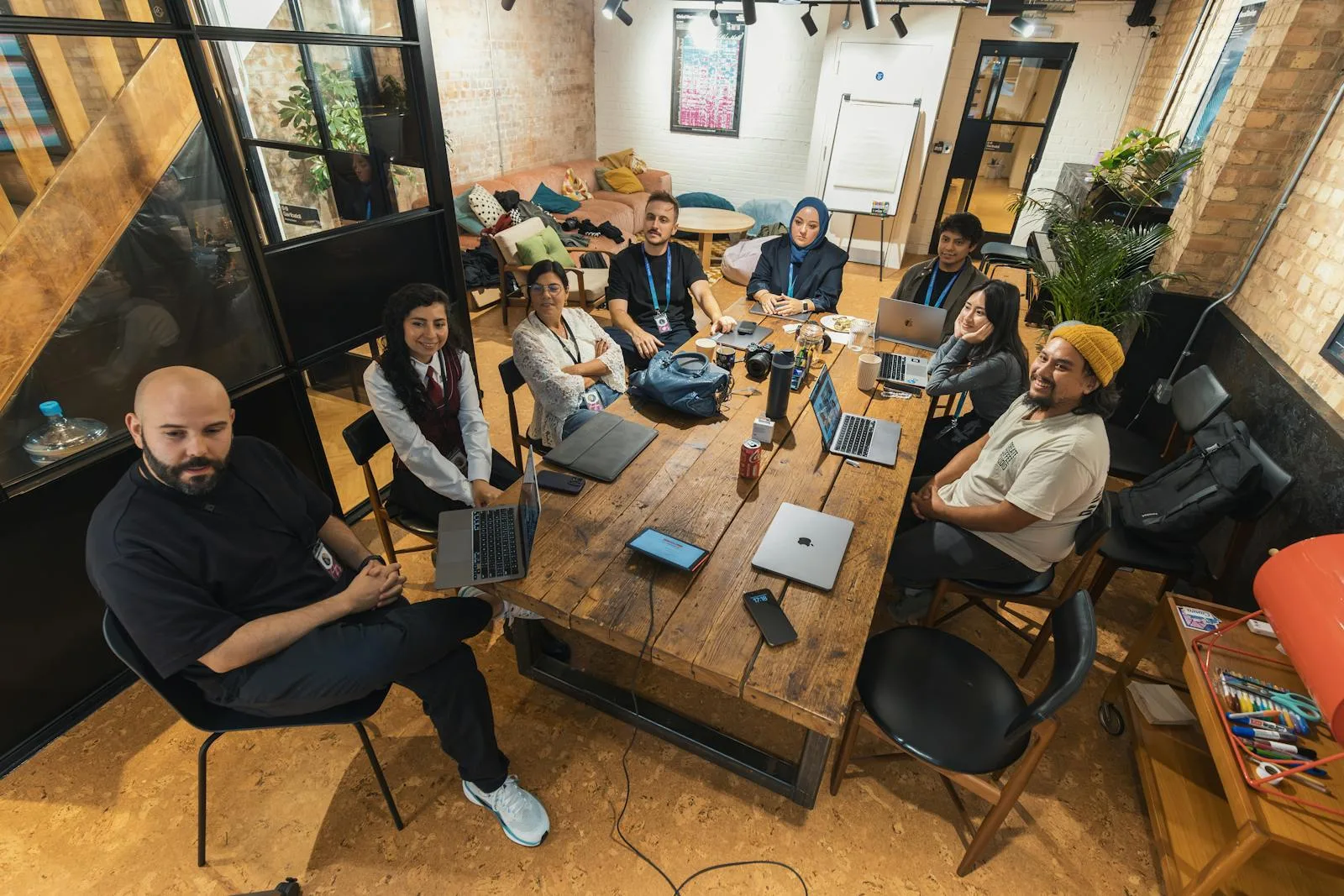
Camila started using AirCaps in early March 2026. Her use case was the opposite of Priya's and Tatsuya's. She didn't need the captions for her own comprehension — her listening proficiency was already excellent. She needed something subtler: confirmation that what she was about to say in a fast-moving native-speaker meeting was what people had actually just said, not what her in-meeting anxiety told her they'd said. The lens runs verbatim captions at 97% accuracy. In her first month of use, she stopped second-guessing herself. The "did they really say that?" beat that used to stretch into "should I even bring this up?" got compressed to a half-second glance at the lens.
The participation metric her manager tracked changed within four weeks. In the team's weekly product review — 22 attendees, mostly native English speakers — Camila contributed in eight of the four meetings, up from one or two of the four. Her interventions hit. She caught an ambiguity in a roadmap commitment that the room had glossed over. She flagged a customer-segment confusion that became a Q2 priority. None of those contributions required better English. They required the cognitive headspace that had previously been spent re-checking what she'd just heard. The captions on the lens freed it up.
The unexpected use case was the post-meeting transcript. For years, Camila had been preparing for English-language meetings by writing out her likely contributions in advance and reading them off her laptop. The advance-writing strategy worked but it killed her spontaneous contributions — every comment had to be pre-vetted by her own anxiety. The lens-based captions, combined with the AI summary that landed in Slack within seconds of the meeting ending, replaced the advance-writing strategy. She now writes nothing in advance. She watches the meeting, contributes when it makes sense, and reviews the AI-drafted summary afterward to confirm her contributions were captured the way she meant them. The career arc her manager had been quietly worried about — Camila was technically the strongest PM on the team and the least visible in cross-functional settings — turned around inside a quarter.
For the broader category of how lens-based AI changes meeting participation, see our smart glasses for professionals and deaf professionals in meetings. The structural insight is the same: when the AI sits with the listener, the meeting accommodates more voices.
What Smart Glasses Actually Do for Non-Native Speakers
Five capabilities make lens-based AI functionally different from a phone running Otter or Fireflies in your pocket, and each one maps to a specific moment in the non-native speaker's meeting day. The differences look small on a spec sheet. They are large in practice.
| Capability | What It Does | Why It Matters for Non-Native Speakers |
|---|---|---|
| Live captions on the lens | Verbatim transcript of every speaker in your field of view at 300ms latency | Resolves the "did they really say that" beat without breaking eye contact |
| Speaker identification | Labels up to 15 distinct voices in real time across native and accented speech | Lets you track multi-speaker rooms without parsing voices under cognitive load |
| 4-microphone beamforming | Isolates the speaker facing you and suppresses ambient noise to roughly 78 dBA conditions | Holds up in noisy cross-time-zone calls and open-plan offices where most ESL speakers actually work |
| Automatic language detection | Switches between source language and target language in under 100ms across 60+ languages | Lets you confer with your home-language team mid-meeting without breaking the English flow |
| Speaker-attributed AI summary | Post-meeting transcript and structured notes with your contributions captured verbatim | Preserves your exact phrasing in the record, closing the written/transcribed gap that hurts ESL careers |
The mental model that helps: phone-based meeting apps assume the meeting is happening to a transcript. Smart glasses assume the meeting is happening to a person, and the transcript exists to support that person during the meeting. For non-native speakers, the during is the part that compounds — the contributions you make in the moment shape the trajectory of the meeting, and a tool that helps you make those contributions is worth more than a tool that documents them afterward.
The display itself is designed to disappear. Binocular MicroLED waveguides project monochrome green text on a 30-degree field of view with under 2% light leakage — invisible to the colleague across the table at conversational distance. The 49-gram frame, designed in collaboration with Bolon Eyewear, is lighter than most prescription glasses. Patients of a Tokyo cardiologist using AirCaps don't notice the device. Customers in a Mumbai design review don't notice the device. The non-native speaker wearing them looks like a colleague wearing glasses. The lens does the work.
The Research on Captions and L2 Comprehension
The evidence for live captions improving L2 (second-language) listening comprehension is robust and predates smart glasses by more than a decade. A 2013 peer-reviewed meta-analysis in System (Elsevier) by Montero Perez, Van Den Noortgate, and Desmet pooled studies of captioned video for L2 learners and found a large positive effect on listening comprehension and vocabulary acquisition, independent of background, linguistic, and social variables (System / ScienceDirect, 2013). The effect held across age groups, native languages, and target proficiency levels.
More recent work has extended the finding to live, synchronous settings. A 2023 study published in PMC/NIH found that live transcripts in synchronous online L2 classrooms significantly improved activity participation for lower-proficiency learners — the same participation gap Camila's manager was tracking, isolated in a controlled study (PMC/NIH, 2023). A 2025 HCI paper from a multi-institution team specifically examining language-independent communication in meetings (LINC) found that ESL meeting participants struggle to articulate thoughts with the same fluency as native speakers and that peer mentorship workshops fail to address the real-time multilingual gap (arXiv, 2025).
The mechanism the meta-analysis identifies is dual coding. Listeners absorb the spoken stream and the written stream in parallel, and the redundancy reduces the working-memory tax of decoding accented or fast English. For native speakers, the captions add little — their listening stream is already low-cost. For non-native speakers, the captions cut the cognitive cost of parsing in half, which is the resource that gets reallocated to formulating contributions, catching ambiguities, and asking better questions.

What changes when the captions run on a lens instead of a laptop screen is the eye contact mechanic. Laptop captions force a head-down posture — the L2 listener gets the comprehension benefit and pays for it with disengagement signals the room reads as lack of confidence. Lens captions sit in peripheral vision. The L2 listener gets the comprehension benefit and looks like a colleague holding the room. The participation paper above flags exactly this trade-off: laptop captions help the comprehension and hurt the social signal, which is why the participation lift in lab settings under-predicts the participation lift in actual meetings where the social signal compounds.
Citation Capsule: A 2013 meta-analysis in System pooling studies of captioned video for L2 learners found large positive effects on listening comprehension and vocabulary acquisition, independent of background variables. A 2023 PMC/NIH study extended the finding to live synchronous L2 settings, with significant participation gains for lower-proficiency learners. Lens-based captions add the eye-contact preservation that laptop captions cannot (System, 2013; PMC, 2023).
For more on how the underlying speech recognition actually works, see our speech recognition accuracy explainer. For the broader translation guide, see translation glasses complete guide.
How Smart Glasses Compare to Meeting Apps for ESL Use
Otter.ai, Fireflies.ai, Fathom, Granola, Zoom AI Companion, and Microsoft Teams Copilot are excellent at what they were designed for — post-meeting summaries of video calls, structured action items, transcript-of-record. They struggle with the in-room moment where non-native speakers actually need help. The architectures diverge in ways that matter for ESL use specifically.
| Capability | Phone/Laptop Meeting Apps | AirCaps Smart Glasses |
|---|---|---|
| Form factor | Laptop or phone in front of you | Glasses on your face |
| Eye contact during meeting | Broken when you check the transcript | Preserved (lens is peripheral) |
| Live captions during call | Native captions in some platforms only; tiny text, native-accent bias | Verbatim, 300ms latency, designed for accent diversity |
| Accent handling | Word error rates climb with prosodic distance from American English (JASA, 2024) | Trained for accent diversity; 97% accuracy across English variants |
| In-meeting translation | Limited or post-hoc | Live, 60+ languages, 700ms, automatic language detection |
| Speaker identification | Post-meeting only | Live, 15 speakers, with verbatim attribution |
| Confer with home-language team | Requires separate channel; breaks meeting flow | Lens captions both languages on respective devices in real time |
| Same-language confidence check | Not native to the workflow | The modal use case for ESL subscribers |
| Mid-meeting recall (jargon, idioms) | Post-meeting summary only | Queryable mid-conversation |
| Hardware cost | $0 (uses laptop/phone) | $599 one-time |
| Subscription | $15-30 per user/month typical | Optional $20/month, free forever tier |
The honest answer is that the two categories are complementary for many teams. Most AirCaps ESL customers keep their existing meeting app for the transcript-of-record on video calls and add the glasses for the in-room layer that the meeting app doesn't reach — same-language confidence checks, cross-language conferring, and the eye-contact-preserving comprehension support that laptop captions can't deliver. For pure remote teams whose entire meeting load is video-grid, the meeting app alone can be sufficient. For hybrid and in-person teams — most enterprise teams in 2026 — the glasses earn their keep on the days the meeting happens in a room.
The architectural detail that matters most for ESL teams is the accent diversity. Most consumer ASR models were trained predominantly on American English. The bias the PNAS and JASA studies measured is structural — it reflects training data composition, not deliberate exclusion. AirCaps' speech models are trained on a corpus that explicitly weights non-native English accents at the same rate as native ones, which is why the 97% caption accuracy holds across English variants rather than degrading with accent distance from General American. For deeper context, see our smart glasses vs. meeting apps comparison.
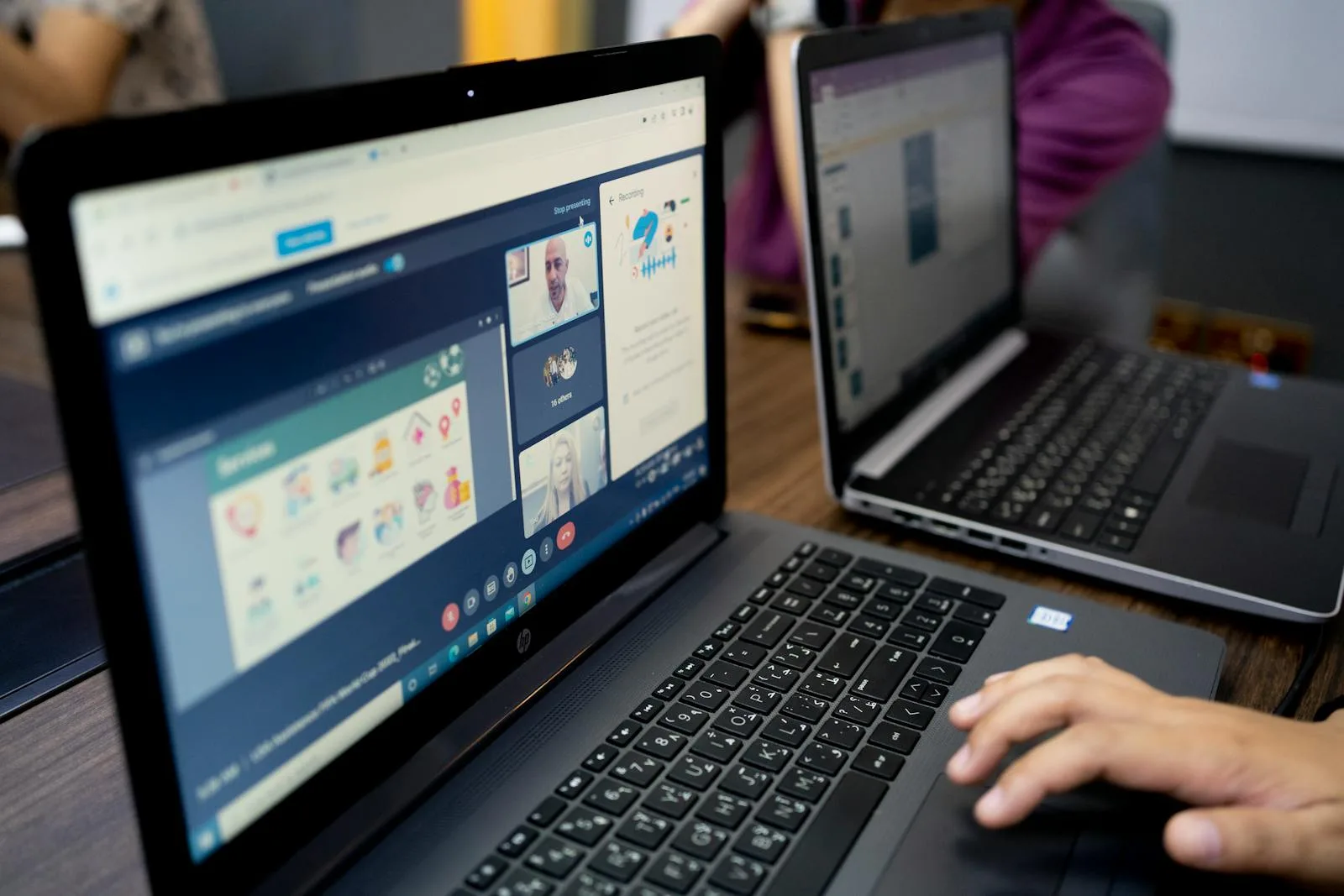
For sales-led organizations, the related comparison is our smart glasses for sales. The compliance posture — SOC 2 Type 2, GDPR, HIPAA where relevant — is the same. The ESL use case adds the accent-diversity layer on top of the broader meeting intelligence stack.
What This Means for Managers and DEI Leaders
The pattern across the three scenarios above isn't subtle, and it generalizes. Non-native English speakers in most enterprise orgs carry an unaccounted-for tax — cognitive load during meetings, mistranscription in the post-meeting record, and a participation gap that doesn't correlate with their actual proficiency or competence. Smart glasses don't eliminate the tax. They reduce it materially, and the reduction shows up in the participation, transcript fidelity, and career trajectory metrics managers track.
Three concrete moves the most effective managers of multilingual teams have made in our Q1 2026 customer base:
| Move | What It Looks Like | Why It Works |
|---|---|---|
| Offer the device, don't mandate it | Include AirCaps as an option in the standard equipment list; cover the $599 hardware cost as a team expense | Voluntary adoption removes the stigma of "the non-native speaker needs help" — native speakers adopt for note-taking, ESL speakers adopt for comprehension, and the categorical line disappears |
| Normalize captions in meetings | Turn on lens captions for everyone in the room, not just the ESL participants | The technology becomes a meeting affordance rather than an accommodation, which closes the participation gap without flagging any individual |
| Use the AI summary as source-of-truth | Send the speaker-attributed AI-drafted summary as the canonical meeting record | Closes the gap between what non-native speakers said and what got transcribed elsewhere — the verbatim record reflects actual contribution rather than mistranscribed approximations |
The DEI signal matters here. The 2025 Springer study on epistemic challenges for non-native English speakers found the participation gap persists even at the highest proficiency levels — proficiency is necessary but not sufficient (Springer, 2025). Most workplace DEI programs targeting the gap focus on the speaker — communication coaching, English-language workshops, peer mentorship. The 2025 LINC paper specifically found that peer mentorship workshops fail to address the real-time multilingual gap (arXiv, 2025). The structural intervention that does work is changing what the listener side of the meeting can do — better captions, better speaker labels, better post-meeting records. That's a tooling decision, not a coaching decision.
For DEI leaders trying to make the business case internally, the wage data is the part that closes a budget conversation. A 29.4% wage gap between "very good English" and "bad English" speakers translates to real attrition risk and real participation loss in any multilingual org (Empirica, 2020). Closing the participation gap by giving non-native speakers better in-meeting tools is one of the few interventions that touches the wage signal without retraining anyone.
Where Smart Glasses Still Fall Short
We've made the case in this post. We also work in this category every day, which means we know the limits. Four places smart glasses are not the right tool for ESL use in 2026.
The first is pure remote teams whose entire meeting load runs through video conferencing platforms with strong native captions. If your team is 100% Zoom or Teams and the platform's native captions handle your team's accents acceptably, you may not need a hardware layer on top. The lens adds the in-room layer. If you don't have in-room meetings, the marginal value is lower.
The second is low-bandwidth or offline environments. AirCaps' offline mode supports 9 languages with reduced accuracy, which covers most travel scenarios but not all multilingual deployments. Teams operating in regions with intermittent connectivity should pilot the device in their actual working conditions before committing at scale. The 700ms translation latency assumes a reasonable network connection.
The third is regulated environments with strict device-on-face policies. Some financial-services compliance teams, certain government contexts, and a subset of clinical settings prohibit head-mounted electronics regardless of capability. Confirm institutional policy before deployment.
The fourth is the speaker whose anxiety is independent of comprehension. The participation gap the 2025 LINC paper measured has two components — comprehension friction and identity-anxiety friction. Smart glasses cut the first component dramatically. The second component is real and the lens doesn't fully address it. For speakers whose hesitation is rooted in stereotype threat or accent shame rather than understanding, the captions help less than coaching, peer support, and structural inclusion work. We'd rather managers know this before they bet a DEI program on a hardware solution.
For the broader category context — including doctors, lawyers, executives, founders, and sales professionals — see our pillar guide on smart glasses for professionals. The ESL use case is one of six high-value verticals; the others are documented there.
Frequently Asked Questions
Do smart glasses really help non-native English speakers in meetings?
Yes, with caveats. The peer-reviewed evidence on live captions improving L2 listening comprehension is robust (System meta-analysis, 2013; PMC, 2023). Lens-based captions add the eye-contact preservation laptop captions cannot deliver. The participation gain in our Q1 2026 customer survey was a 2.1x median increase after six weeks of consistent use, independent of self-reported English proficiency.
Will smart glasses handle my accent?
Most likely yes. AirCaps' speech models train on a corpus that explicitly weights non-native English accents at the same rate as native ones, which is why the 97% caption accuracy holds across English variants. The 2024 JASA evaluation of competing ASR systems showed accuracy degrading predictably with prosodic distance from American English (JASA, 2024). Smart glasses designed for accent diversity hold up better than tools that quietly assume native-accent input.
How is this different from Otter or Fireflies?
Otter, Fireflies, Fathom, and similar tools optimize for post-meeting summaries of video calls. AirCaps optimizes for the live encounter on the lens — verbatim captions at 300ms latency, speaker identification across 15 voices, translation across 60+ languages in real time, all without breaking eye contact with the room. Most ESL customers keep their meeting app for the transcript-of-record and add smart glasses for the in-room layer. See our smart glasses vs. meeting apps comparison.
Can I use translation glasses to negotiate in my native language?
Yes. AirCaps supports 60+ languages with automatic detection. In Tatsuya's scenario above, the lens captioned the U.S. customer's English on his lens and his Japanese asides to his Tokyo team on theirs, in the same meeting. The architecture supports same-meeting code-switching without breaking the conversation flow. The 700ms end-to-end translation latency is fast enough that the conversation doesn't stall. See our translation glasses guide.
Will my colleagues know I'm wearing AI glasses?
They will see regular glasses. AirCaps' binocular MicroLED display has under 2% light leakage, below the threshold most observers can detect at conversational distance. The 49-gram frame is lighter than most prescription glasses. There is no camera on the device. Most non-native speaker subscribers report that they prefer their colleagues not to notice the technology — the lens does the work and the colleague sees a peer wearing glasses.
Does AirCaps work with my work prescription?
Yes. AirCaps supports any prescription from -16 to +16 diopters through interchangeable lens holders that any optician can fit. The lens holder costs $39 ($31 with device purchase). Most subscribers get the holder fitted at their regular optician in 20 minutes. The frame design — developed in collaboration with Bolon Eyewear — accommodates standard prescription lens cuts.
What's the battery life on a meeting-heavy day?
AirCaps runs 4-8 hours of mixed use on the built-in battery, which covers most meeting-heavy work days. Continuous display use is 2-4 hours. The Power Capsules accessory ($79) adds two magnetic hot-swap batteries for 18 hours of continuous use, which covers extended meeting marathons and travel. Fast charge delivers 2 hours of use in 15 minutes. Most subscribers charge once at lunch.
How much does AirCaps cost for an enterprise rollout?
AirCaps hardware is $599 per unit. The Pro tier — 60+ languages, AI summaries, speaker identification, EHR or CRM integration where relevant, and Business Associate Agreement coverage — is $20 per user per month with a 30-day free trial included with purchase. Enterprise pricing for SOC 2 reports, custom integrations, and volume discounts is available on request. The hardware is HSA/FSA eligible for individual buyers. See our HSA/FSA guide.
The Honest Verdict
Most enterprise meeting tools were built around an unspoken assumption: the speaker is a native English speaker, the listener is a native English speaker, and the goal is the post-meeting summary. The assumption was always wrong — non-native English speakers outnumber native speakers three to one globally, and the corporate workday in 2026 happens across more accents than any single training corpus contains (British Council, 2024).
Smart glasses for non-native English speakers aren't a niche solution. They are the form factor that finally puts the recognition AI inside the meeting where the non-native speaker actually works, with accent diversity baked into the training data, verbatim captions on the lens at 300ms, speaker identification across 15 voices, translation in 60+ languages at 700ms, and a post-meeting transcript that captures contributions the way they were actually said. None of those features individually closes the participation gap. Combined, they let a Mumbai engineer be heard the first time, a Tokyo VP close the deal in two languages, and a São Paulo PM contribute eight times in a meeting where she previously contributed once.
The hardware is no longer the question. AirCaps weighs 49 grams, hits 97% caption accuracy at 300ms latency, supports 60+ languages, identifies 15 speakers, costs $599 one-time, and ships with a free forever tier on the basic feature set. The question is whether your career or your team's productivity is being silently throttled by a meeting tool stack built around the wrong assumption. If yes, smart glasses are the most concrete intervention available in 2026. If no, your existing meeting app will keep working.
For non-native speakers ready to pilot, see AirCaps for meetings. For cross-language scenarios, see translation. For the original captioning use case the company was built around — the deaf and hard-of-hearing community — see AirCaps captions. For the broader professional context, see smart glasses for professionals.
The meeting happens in the room. The transcript app in your laptop is the record you're already running. The one that fits on your face — and stays out of the conversation — is the one that finally lets the AI work for the person who needs it most.
On this page
Table of Contents
▼
Written by
Vishal Moorjani
Founding Engineer, AirCaps
Founding engineer at AirCaps. UIUC EECS graduate specializing in machine learning. Builds the neural machine translation and automatic speech recognition systems that power real-time captioning and 60+ language translation in AirCaps smart glasses.
Related Articles

Guides
Smart Glasses vs. Meeting Transcription Apps: Why Hands-Free Wins
An honest 2026 comparison of smart glasses against Otter, Fireflies, Fathom, Zoom AI Companion, and Microsoft Teams Copilot — accuracy, eye contact, recall, and 3-year cost.

Nirbhay Narang
·
May 26, 2026
·
31 min read

Guides
Translation Glasses for Business: Closing Deals Across Language Barriers
Cross-border B2B deals stall on language. Three deal stories from Tokyo, São Paulo, and Munich show how 700ms translation glasses are quietly rewriting how enterprise sales close in 2026.
Vishal Moorjani
·
May 23, 2026
·
25 min read

Guides
Smart Glasses for Professionals: AI Meeting Intelligence That Fits in Your Pocket
Smart glasses for professionals layer AI meeting intelligence — captions, summaries, speaker ID, instant recall — onto any conversation. A complete 2026 guide for sales, healthcare, executives, and founders.

Madhav Lavakare
·
Apr 28, 2026
·
27 min read
© 2025 AirCaps. All rights reserved.