Are Captioning Glasses Covered by Insurance or Medicare? The 2026 Guide
Original Medicare doesn't cover hearing aids — but 98% of Medicare Advantage plans do. Learn how captioning glasses fit insurance, Medicaid, VA, and HSA/FSA coverage in 2026.
By Madhav Lavakare · Published 2026-06-25 · 22 min read
Do Insurance or Medicare Cover Captioning Glasses in 2026?
Table of Contents
Does Original Medicare Cover Captioning Glasses?
What About Medicare Advantage Plans?
Does Private Insurance Cover Hearing Devices?
Will Medicaid Pay for Captioning Glasses?
How Does the VA Handle Captioning Glasses for Veterans?
Can Your Employer Cover Captioning Glasses as an ADA Accommodation?
HSA and FSA: The Most Reliable Path to Coverage
What Documents Strengthen Every Coverage Claim?
What Happens If Your Claim Gets Denied?
Frequently Asked Questions
Are captioning glasses considered hearing aids for insurance purposes?
Will my Medicare Advantage plan cover AirCaps specifically?
Do I need an audiologist referral to use HSA/FSA funds for captioning glasses?
Can veterans get captioning glasses for free through the VA?
What if my employer denies the ADA accommodation request?
How long does the reimbursement process take?
Start Your Coverage Path Today

Guides
Are Captioning Glasses Covered by Insurance or Medicare? The 2026 Guide

Madhav Lavakare
·
June 25, 2026
·
22 min read

On this page
Table of Contents
▼
Editorial disclosure: AirCaps manufactures smart captioning glasses. This guide covers general insurance, Medicare, and benefits rules and references our product alongside that landscape. Coverage rules change frequently and vary by plan — confirm specifics with your insurer, plan administrator, or tax professional before purchase.
Do Insurance or Medicare Cover Captioning Glasses in 2026?
Short answer: rarely under traditional health insurance, but more often than people think through Medicare Advantage, VA benefits, Medicaid in select states, and HSA/FSA accounts. Original Medicare (Parts A and B) does not cover hearing aids or routine hearing exams — and that exclusion extends to captioning glasses (Medicare.gov, 2025). However, 98% of individual Medicare Advantage plans now include hearing benefits (KFF, 2026), and over 1.5 million veterans receive VA disability compensation for hearing loss (VA Annual Benefits Report, 2024). With the right paperwork — a Letter of Medical Necessity, an audiologist's diagnosis, and your plan's specific durable medical equipment forms — many buyers find a path to partial or full reimbursement.
This guide walks through every coverage route: Medicare, Medicare Advantage, private insurance, Medicaid, VA, ADA workplace accommodations, and HSA/FSA. You'll learn what each program does (and doesn't) cover, the documents you need, and how to argue for reimbursement when a plan administrator says no.
Key Takeaways
- Original Medicare excludes hearing aids and routine hearing exams — captioning glasses fall under the same exclusion (Medicare.gov, 2025)
- 98% of individual Medicare Advantage plans include hearing benefits, with allowances typically ranging $500-$3,000 per 1-2 year benefit period (KFF, 2026)
- Only 5 states (Arkansas, Connecticut, Illinois, New Hampshire, Rhode Island) require private health insurance to cover hearing aids for adults (ASHA, 2025)
- 81% of veterans diagnosed with hearing loss receive their hearing aids through the VA, which operates the largest audiology service in the country (PubMed/VA Research, 2025)
- 49.4% of workplace accommodations cost employers nothing — making captioning glasses a strong ADA accommodation candidate for deaf and hard-of-hearing employees (Job Accommodation Network, 2024)
Table of Contents
- Does Original Medicare Cover Captioning Glasses?
- What About Medicare Advantage Plans?
- Does Private Insurance Cover Hearing Devices?
- Will Medicaid Pay for Captioning Glasses?
- How Does the VA Handle Captioning Glasses for Veterans?
- Can Your Employer Cover Captioning Glasses as an ADA Accommodation?
- HSA and FSA: The Most Reliable Path to Coverage
- What Documents Strengthen Every Coverage Claim?
- What Happens If Your Claim Gets Denied?
- Frequently Asked Questions
Does Original Medicare Cover Captioning Glasses?
No — Original Medicare (Parts A and B) does not cover hearing aids, routine hearing exams, or assistive listening devices like captioning glasses (Medicare.gov, 2025). This exclusion has been in place since Medicare's founding in 1965 and remains a major coverage gap. Medicare Part B will only pay for diagnostic hearing exams when ordered by a doctor to evaluate a medical condition — and the device itself is your responsibility.
Why doesn't Medicare cover hearing technology? Hearing aids are explicitly excluded under Section 1862(a)(7) of the Social Security Act. The statute treats hearing aids as a separate category from durable medical equipment (DME), which is what Medicare typically reimburses for wheelchairs, oxygen, and home medical devices. Captioning glasses sit in an awkward category — they're newer than the statute, and CMS hasn't published specific guidance on smart glasses as assistive devices.
There's one narrow exception worth knowing. If your doctor orders a hearing evaluation because you're being assessed for a condition like sudden hearing loss, Meniere's disease, or vestibular issues, Medicare Part B may cover the diagnostic exam (not the device). That diagnosis can then anchor a Letter of Medical Necessity for HSA/FSA reimbursement or an ADA accommodation request — even if Medicare itself won't pay for the glasses.
For the 50+ million Americans with hearing loss who rely on Original Medicare, this means assistive technology is largely out of pocket unless you find another funding route. Adults with untreated hearing loss incur 46% higher healthcare costs over 10 years — about $22,434 more per person (Johns Hopkins Bloomberg School of Public Health, 2018). The fact that Medicare won't fund prevention or mitigation is part of why so many seniors leave hearing loss untreated.
What About Medicare Advantage Plans?
Medicare Advantage is where coverage gets interesting. In 2026, 98% of individual Medicare Advantage plans offer some form of hearing benefit, up from 97% the year before (KFF, 2026). More than 34 million beneficiaries — roughly 54% of the eligible Medicare population — are enrolled in Advantage plans (KFF, 2025). For this audience, captioning glasses become a real possibility when framed as hearing assistive technology.
Most Medicare Advantage hearing allowances range from $500 to $3,000 per benefit period (typically 1-2 years), with the allowance applying to hearing aids and related assistive devices (KFF, 2026). Whether captioning glasses qualify depends on three things: how your plan defines "hearing aid," whether your audiologist will document medical necessity, and whether the device manufacturer can supply the documentation insurers expect.
| Plan Type | Hearing Coverage | Typical Allowance | Captioning Glasses Eligible? |
|---|---|---|---|
| Original Medicare (A+B) | None for devices | $0 | No — fully out of pocket |
| Medicare Advantage (98% of plans) | Hearing aids + exams | $500-$3,000 per 1-2 years | Sometimes — varies by plan language |
| Medicare Supplement (Medigap) | Fills gaps in Original Medicare only | $0 for hearing devices | No — Medigap follows Medicare exclusions |
| Special Needs Plans (SNPs) | Often expanded hearing benefits | Up to $4,000+ per period | More likely — broader assistive device language |
Here's the practical move: call your Medicare Advantage member services line and ask two specific questions. First, "Does my plan cover assistive listening devices or speech-to-text devices for hearing loss?" Second, "What documentation do you require for a non-hearing-aid assistive device?" The answer to the second question is more important than the first — even if the plan doesn't have a "captioning glasses" category, they often have a generic assistive device path.
If your plan uses a specific hearing benefit administrator (often TruHearing, NationsHearing, or UnitedHealthcare Hearing), you may need to purchase through their network. AirCaps is sold direct-to-consumer at $599, which can complicate network purchases — but the receipt and Letter of Medical Necessity still support reimbursement claims after the fact.
Does Private Insurance Cover Hearing Devices?
Most private insurance plans do not cover hearing aids or captioning glasses for adults — only 5 states (Arkansas, Connecticut, Illinois, New Hampshire, Rhode Island) require private health insurance to cover hearing aids for adults of any age (ASHA, 2025). The remaining 45 states only require pediatric coverage, or have no mandate at all. This makes private insurance the most variable and often the least reliable coverage path.
Illinois has become a notable exception. As of January 1, 2025, Illinois law requires private health plans to cover one hearing aid per ear every 24 months, with no age limits and no dollar caps in many plans (ASHA, 2025). The mandate's language refers to "hearing aids," not specifically captioning glasses — but a plan administrator who reads the statute narrowly may exclude smart glasses while a more flexible administrator may treat them as a covered assistive device.
What about employer-sponsored plans? Some larger employers add hearing benefits as a voluntary supplement, often through carriers like Cigna, Aetna, or Blue Cross Blue Shield. These benefits usually appear as a fixed annual dollar amount ($500-$2,500), reimbursable for hearing aids, batteries, and sometimes assistive listening devices. Captioning glasses fit the "assistive listening device" category in language, even if they don't fit the engineering definition (they show text, not amplify sound).

When checking your private plan, request the Summary of Benefits and Coverage and search for these specific terms: "hearing aid," "assistive listening device," "augmentative communication device," and "durable medical equipment." Augmentative and Alternative Communication (AAC) devices are especially relevant — captioning glasses arguably function as AAC equipment for people with hearing loss who use text as their primary communication mode in noisy environments. The AirCaps captioning system delivers 97% accuracy with 300ms latency through 4-microphone beamforming, which is the kind of technical specification an audiologist can use to justify an AAC classification.
The honest truth: private insurance reimbursement for captioning glasses is unpredictable. You may get full coverage, partial coverage, or a flat denial — and two people with the same plan can get different answers depending on which claims reviewer handles the case. Filing the claim with thorough documentation is worth the effort, but plan on paying out of pocket as the default expectation.
Will Medicaid Pay for Captioning Glasses?
Medicaid coverage for hearing devices varies dramatically by state — and captioning glasses live in a gray area where some states might cover them under existing hearing aid benefits and others won't. The number of states providing Medicaid hearing aid coverage for adults increased substantially between 2017 and 2023, but the benefit remains "optional" under federal Medicaid law (Health Affairs, 2025). This means each state gets to decide whether to cover hearing technology for adults — and what counts as a covered device.
For children under 21, the federal Early and Periodic Screening, Diagnostic, and Treatment (EPSDT) benefit requires Medicaid to cover medically necessary hearing services. This includes hearing aids, cochlear implants, and assistive technology when a doctor documents need. Captioning glasses for a deaf or hard-of-hearing child fit cleanly within EPSDT — though most state Medicaid programs haven't published specific captioning glasses policy.
For adults, the patchwork is harder to navigate. States like New York, Vermont, and California cover hearing aids for adult Medicaid recipients with annual or per-period dollar limits. States like Texas, Florida, and Georgia historically don't cover adult hearing aids at all. Whether captioning glasses fit a state's "hearing aid" definition or qualify under a separate "assistive technology" or "durable medical equipment" category requires reading your state's specific Medicaid manual.
| State Approach | Coverage Pattern | How Captioning Glasses Are Treated |
|---|---|---|
| Hearing aids covered for adults (e.g., NY, VT, CA, OR) | Annual dollar cap or per-ear limit | May be covered under "hearing aid" or "ALD" line item — varies |
| Hearing aids covered only for children | EPSDT benefit applies to under-21 only | Strong coverage path for kids, none for adults |
| Hearing aids excluded for all adults | No state coverage | Try ADA workplace accommodation or HSA/FSA instead |
| Managed Medicaid through MCO | Coverage depends on the MCO contract | Each MCO sets policy — call member services to confirm |
If you're on Medicaid, your first call should be to your state Medicaid office (or your managed care organization if your state uses MCOs). Ask specifically: "Does my plan cover augmentative communication devices or assistive technology for hearing loss?" Even if hearing aids aren't covered, AAC and assistive technology benefits sometimes are — and captioning glasses fit those categories better than the term "hearing aid."
How Does the VA Handle Captioning Glasses for Veterans?
Veterans have the best hearing technology coverage of any group in the United States. Over 1.5 million veterans receive VA disability compensation for hearing loss, and 3.2+ million receive compensation for tinnitus — these are the #1 and #5 most common service-connected disabilities (VA Annual Benefits Report, 2024). Among veterans with an incident hearing loss diagnosis, 81% acquire hearing aids through the VA (PubMed/VA Research, 2025). The VA is also the largest employer of audiologists in the United States, with roughly 1,400 audiologists across 650+ sites of care (VA Rehabilitation and Prosthetic Services, 2025).
Here's the key distinction for captioning glasses: the VA provides hearing aids and assistive listening devices through its prosthetics service, which has broader purchasing authority than Medicare's DME category. When a VA audiologist documents that captioning glasses are medically necessary — particularly for a veteran whose hearing aids fail in noise or who has profound hearing loss — the VA can authorize purchase through prosthetics. This isn't automatic, but it's a real pathway.

Veterans should request a hearing evaluation at their nearest VA Medical Center audiology department. If the audiologist confirms hearing loss meets the VA's coverage threshold, they can prescribe hearing aids, FM systems, or assistive listening devices — and increasingly, captioning glasses for veterans whose communication needs exceed what amplification alone can solve. The 4-microphone beamforming in AirCaps captioning glasses directly addresses one of the most common veteran hearing complaints: difficulty hearing speech in noisy environments like restaurants, family gatherings, and group meetings.
If you're a veteran with service-connected hearing loss, your coverage path is the cleanest of any audience covered in this guide. Even when the VA doesn't directly purchase the glasses, your disability compensation, ChampVA benefits, or a VA Letter of Medical Necessity can support every other reimbursement path — private insurance, employer accommodations, and HSA/FSA claims. Veterans with non-service-connected hearing loss may still qualify for VA audiology services through Priority Group 5 or 6, depending on income and disability status.
Can Your Employer Cover Captioning Glasses as an ADA Accommodation?
The Americans with Disabilities Act (ADA) requires employers with 15 or more employees to provide reasonable accommodations for workers with disabilities — including hearing loss. The good news for budget-conscious employers: 49.4% of workplace accommodations cost employers nothing, and the majority of those that do cost something come in under $500 (Job Accommodation Network, 2024). At $599, AirCaps falls at the upper end of that "low-cost accommodation" range — well within what HR teams routinely approve.
How does this work in practice? An employee with documented hearing loss requests captioning glasses as a reasonable accommodation under the ADA. The employer engages in the interactive process: reviewing the request, exploring whether the device addresses the job-related limitation, and deciding whether to provide it. For deaf and hard-of-hearing professionals in meeting-heavy roles, captioning glasses solve a specific problem — they let employees follow conversations in real time without requiring an interpreter or note-taker.
The Job Accommodation Network (JAN), funded by the Department of Labor, recommends captioning and speech-to-text technology as a top accommodation category for hearing loss. Their published guidance specifically supports devices that "convert speech to text in real time" — language that maps directly to what captioning glasses do. When you request the accommodation, cite JAN's guidance and reference the device's technical capabilities. The AirCaps meeting intelligence feature is particularly relevant here: it provides real-time captions, speaker identification for up to 15 people, and structured meeting summaries — all of which support a deaf or hard-of-hearing employee's full participation in professional settings.
What does the request look like? A simple letter to your employer's HR or accessibility coordinator stating: (1) you have a documented hearing impairment, (2) the impairment limits your ability to participate in meetings, calls, and group conversations, and (3) captioning glasses would provide an effective accommodation. Attach a Letter of Medical Necessity from your audiologist or ENT. Most employers will approve a one-time $599 purchase faster than they'd approve ongoing interpreter services, which run $50-$150 per hour.
Here's a perspective that often surprises HR teams: captioning glasses can replace or supplement CART (Communication Access Realtime Translation) services, which typically cost $100+ per hour. A single captioning glasses purchase pays for itself after about 6 hours of comparable CART use. That math makes the accommodation approval easier — it's not an ongoing expense, it's a one-time investment that pays back in months.
HSA and FSA: The Most Reliable Path to Coverage
For people without strong insurance coverage paths, HSA and FSA accounts remain the most consistent way to use pre-tax dollars for captioning glasses. IRS Publication 502 explicitly lists hearing aids, batteries, repairs, and maintenance as qualified medical expenses (IRS, 2025) — and "special telephone equipment that lets a person who is deaf, hard of hearing, or has a speech disability communicate" is also listed. Captioning glasses fit that second category cleanly, especially with a Letter of Medical Necessity.
The numbers matter here. In 2025, HSA contribution limits were $4,300 (individual) and $8,550 (family); FSA limits were $3,300. At $599, AirCaps fits within a fraction of either annual limit — and HSA funds roll over indefinitely while FSA funds are typically use-it-or-lose-it. We covered the mechanics in detail in our HSA/FSA guide for smart glasses, including step-by-step purchase instructions, tax savings calculations, and how to request a Letter of Medical Necessity from your audiologist.
If you're choosing between coverage paths and your insurance options are limited, HSA/FSA is the highest-confidence route. There's no plan administrator who can deny you on a technicality, no network restriction, no prior authorization requirement. As long as you have a documented hearing condition and an LMN, the IRS rules support the purchase — and the tax savings (typically $150-$200 on a $599 device, depending on your bracket) effectively give you a 25-35% discount on the device.
What Documents Strengthen Every Coverage Claim?
Five documents make every coverage path easier — Medicare Advantage, private insurance, Medicaid, VA, ADA accommodations, and HSA/FSA. Gather these once, then use them everywhere.
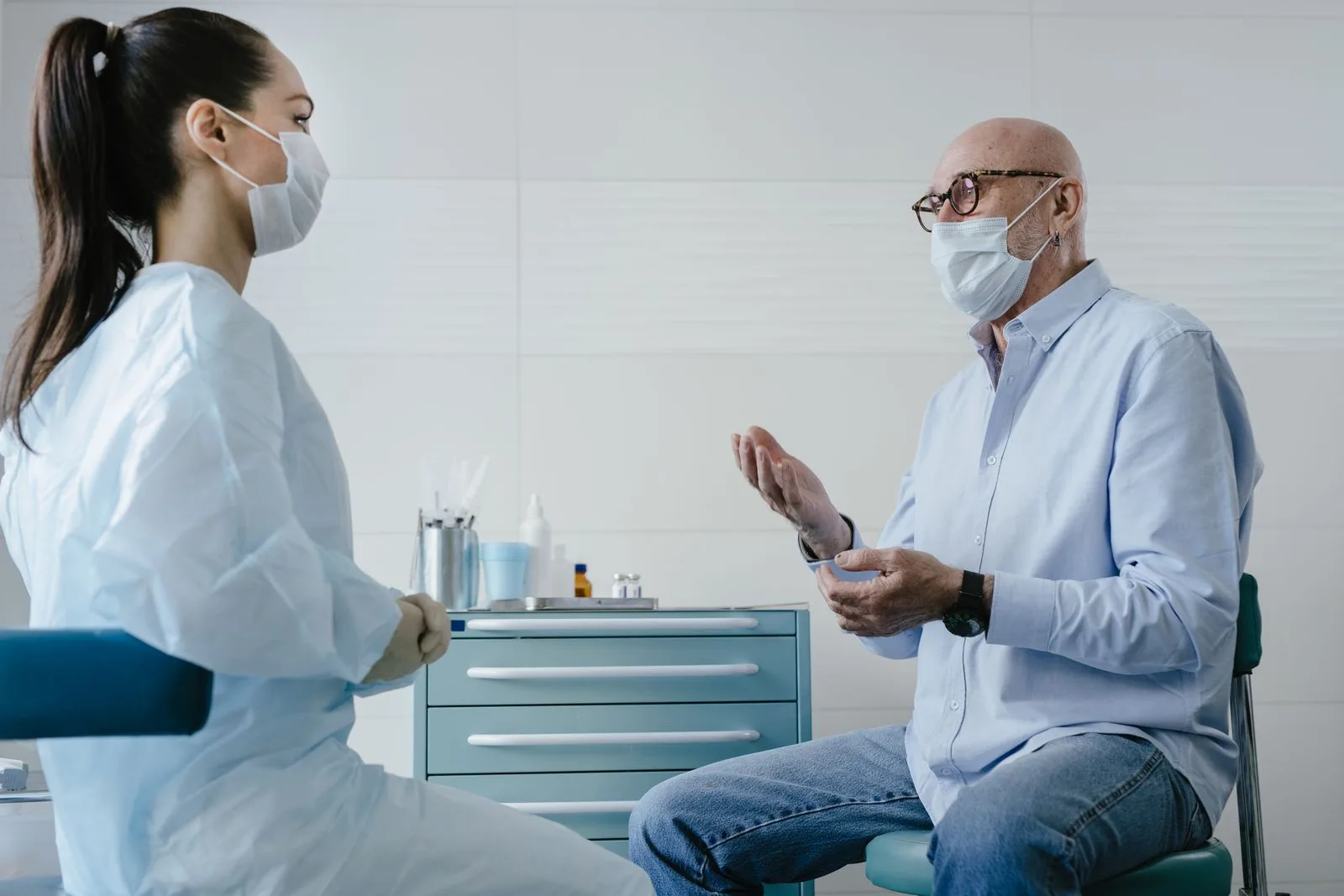
The Letter of Medical Necessity is the single most important document. A signed LMN from your audiologist, ENT, or primary care physician should include your diagnosis with ICD-10 code (H90 for sensorineural hearing loss is the most common), a statement that captioning glasses are medically necessary, the specific product name, duration of prescribed use, and the provider's credentials and signature. Most healthcare providers will write this during a regular appointment at no extra charge.
A recent audiogram showing your hearing thresholds is the second key document. Insurance reviewers want to see the audiometric evidence: pure-tone air conduction thresholds at 250 Hz through 8000 Hz, speech reception thresholds, and word recognition scores. An audiogram showing speech-in-noise difficulties is particularly powerful because it documents exactly the problem captioning glasses solve.
| Document | Where to Get It | What It Proves |
|---|---|---|
| Letter of Medical Necessity | Audiologist, ENT, or PCP | Device is medically required for diagnosed condition |
| Recent Audiogram | Audiologist (results from hearing test) | Documented severity and pattern of hearing loss |
| ICD-10 Diagnosis Code | Healthcare provider's records | Specific hearing condition for insurance coding |
| Product Specifications | Manufacturer (AirCaps spec sheet) | Technical capabilities and intended medical use |
| Itemized Receipt | AirCaps order confirmation | Proof of purchase for reimbursement claims |
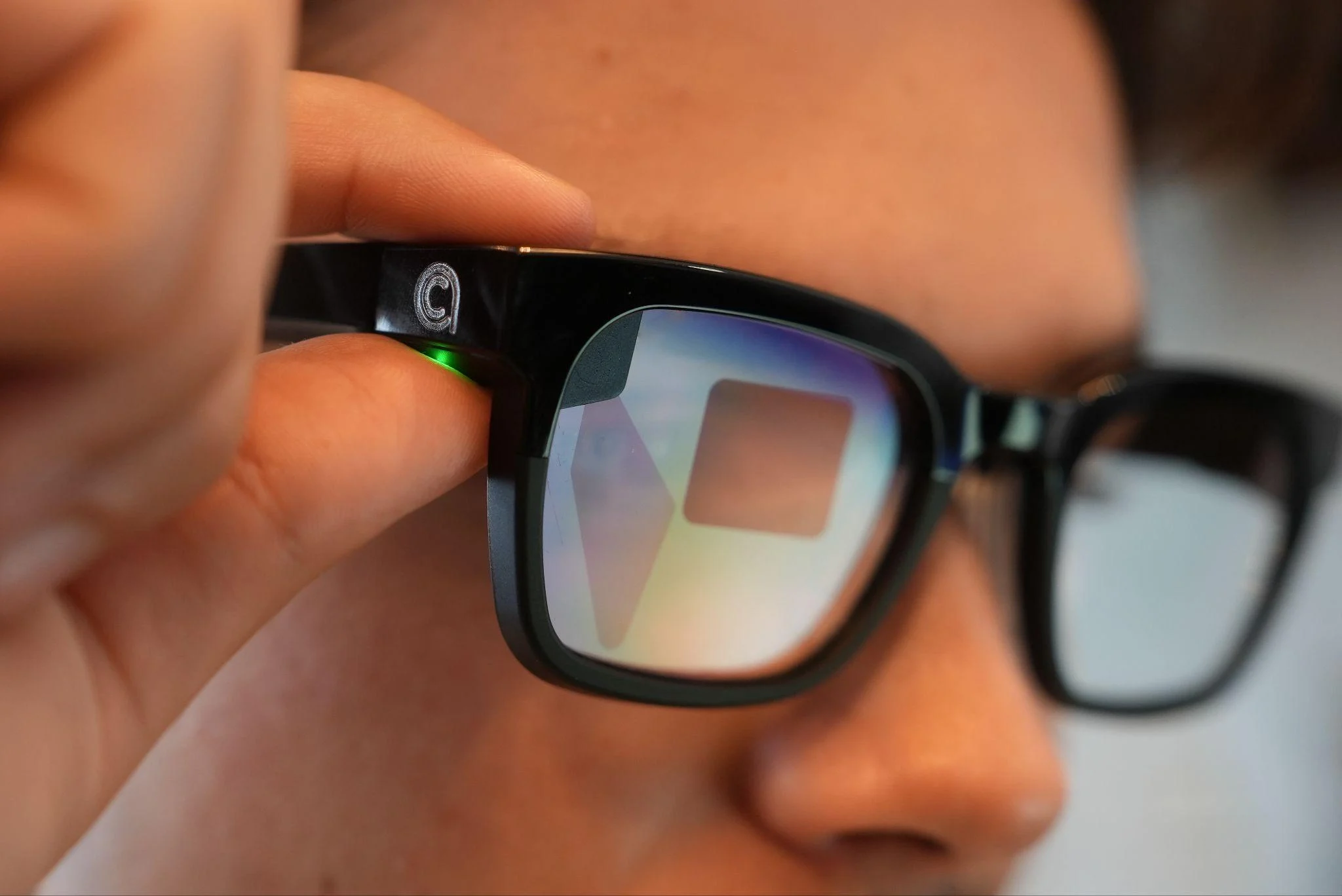
The product specification sheet matters more than people expect. Reviewers often have no idea what captioning glasses do — they need a clear technical description: 4-microphone beamforming for noise rejection, 97% caption accuracy, 300ms latency, binocular MicroLED display with 30-degree field of view, 49g weight, FCC and CE certifications. Pulling these specs directly from the manufacturer's documentation positions the device as a serious medical-grade product rather than a consumer gadget.
Keep digital copies of everything in a folder labeled with your name and the date of purchase. When a plan administrator requests additional information (and they often do), responding within 48 hours with complete documentation dramatically increases approval rates. Slow responses are the most common reason reimbursement claims get denied — not actual ineligibility.

What Happens If Your Claim Gets Denied?
Most insurance denials for assistive technology are reversible — and the first denial often isn't really a denial, it's a request for more information. When your claim comes back rejected, the first step is to request the denial reason in writing. Federal law requires insurers to provide written denial explanations under ERISA (for employer plans) and similar state-level mandates (for individual plans). Read the denial carefully — usually it cites a specific policy section or missing document.
The most common denial reasons and how to address them: "Not a covered device" usually means the reviewer didn't recognize captioning glasses as an assistive device. Respond with the LMN, audiogram, and product specifications, and request reconsideration under your plan's "assistive listening device" or "augmentative communication device" provisions. "Experimental or investigational" is sometimes used for newer technologies. Respond with FCC and CE certification documentation, peer-reviewed research on real-time captioning effectiveness, and the device's classification under existing IRS Publication 502 categories.
"Out of network" denials apply when your plan requires purchases through specific hearing benefit administrators. The reconsideration argument here is that the specific device (with documented features like 4-mic beamforming and 97% accuracy) isn't available through the in-network provider. If your plan has out-of-network reimbursement at a reduced rate, you may still get partial coverage.
Here's the most important number to know: roughly 40-60% of initial insurance denials for assistive technology are overturned on appeal when the appeal includes complete documentation. The internal appeal is your first step, and federal law requires insurers to complete most internal appeals within 30-60 days. If the internal appeal fails, you can request an external review by an independent third party — which insurers must accept under the Affordable Care Act.
Don't take a first denial as final. The administrative effort to file an appeal is usually 1-2 hours of paperwork — and the financial upside of a reversed denial often exceeds $500. Worth the time? Almost always.
Frequently Asked Questions
Are captioning glasses considered hearing aids for insurance purposes?
Not technically — but the distinction works in your favor when used correctly. Captioning glasses display text rather than amplifying sound, so they fall outside the strict definition of "hearing aid" in most insurance policies. However, they qualify as assistive communication devices under IRS Publication 502 and ADA accommodation guidelines, which are often broader categories than hearing aid coverage. Cite the broader categories when filing claims.
Will my Medicare Advantage plan cover AirCaps specifically?
Coverage depends on your plan's language. 98% of individual MA plans offer hearing benefits in 2026, but each plan defines "hearing aid" or "assistive listening device" differently (KFF, 2026). Call your plan's member services and ask specifically about assistive listening devices and augmentative communication devices. If your plan has a flat dollar allowance ($500-$3,000 per benefit period), you may be able to apply it to AirCaps with a Letter of Medical Necessity.
Do I need an audiologist referral to use HSA/FSA funds for captioning glasses?
A referral isn't required, but a Letter of Medical Necessity from an audiologist, ENT, or primary care physician strengthens your claim significantly. Most HSA/FSA administrators will accept the purchase without an LMN if the product is in their pre-approved category, but for newer technologies like captioning glasses, documentation prevents future audit questions. The 15-minute conversation with your doctor is worth the protection.
Can veterans get captioning glasses for free through the VA?
Veterans with service-connected hearing loss can request a hearing evaluation at their VA Medical Center's audiology department, and the audiologist can prescribe assistive listening devices through VA prosthetics. 81% of veterans diagnosed with hearing loss acquire hearing aids through the VA (PubMed, 2025). Captioning glasses aren't a standard VA-issued device yet, but a documented medical need can support either VA purchase or reimbursement.
What if my employer denies the ADA accommodation request?
Most employers approve reasonable accommodations under $500, and captioning glasses fall in this range. If denied, request the denial in writing and cite the Job Accommodation Network's published guidance supporting speech-to-text devices (Job Accommodation Network, 2024). You can file a complaint with the EEOC if you believe the denial violates the ADA. Most employers reverse denials once they see how affordable the accommodation is compared to ongoing interpreter or CART services.
How long does the reimbursement process take?
Timing varies by coverage path. HSA/FSA debit card purchases are instant. Reimbursement claims through HSA/FSA administrators typically process in 5-10 business days. Medicare Advantage and private insurance reimbursements can take 30-60 days for initial review, plus another 30-60 days if you need to appeal. VA prosthetics requests through your audiologist can take 4-8 weeks for approval and fulfillment.
Start Your Coverage Path Today
Here's the practical sequence: get an audiogram and Letter of Medical Necessity from your audiologist, contact your insurance plan to confirm hearing benefit specifics, gather your documentation, and choose your coverage path based on what your plan actually covers. For most readers, the highest-confidence routes are HSA/FSA (universal, no plan-specific restrictions), Medicare Advantage hearing benefits (if you're 65+), VA prosthetics (for veterans), and ADA workplace accommodations (for employed adults with documented hearing loss).
AirCaps captioning glasses cost $599, weigh 49 grams, and deliver 97% caption accuracy with 300ms latency through 4-microphone beamforming. The binocular MicroLED display shows real-time captions in your field of view without others noticing. They work as your prescription glasses with any prescription from -16 to +16 diopters through interchangeable lens holders. Every spec and feature supports the medical-device classification that makes insurance, Medicare, and accommodation claims defensible.
The coverage system isn't designed to make this easy — but it's designed to be navigable with the right documentation. Audiologists know how to write LMNs. HR teams know how to approve ADA accommodations. HSA/FSA administrators know how to process medical device receipts. You just need to ask in their language.
Explore AirCaps captioning glasses to see the full spec sheet and reviews from 5,000+ customers, or visit the AirCaps shop to purchase using your HSA/FSA debit card. For translation and meeting use cases, see AirCaps real-time translation and AirCaps meeting intelligence.
On this page
Table of Contents
▼
Written by
Madhav Lavakare
Co-founder & CEO, AirCaps
Co-founder of AirCaps. Building AI-powered smart glasses for conversation since 2013. Yale graduate, Y Combinator alum. Built his first Google Glass apps at age 13 and has spent 11+ years in speech AI and wearable computing.
Related Articles

Guides
Caption Glasses vs. Hearing Aids: What's the Difference?
Hearing aids amplify sound; caption glasses show real-time text. Learn how they differ, where each excels, and whether you might benefit from both.

AirCaps Team
·
Sep 17, 2026
·
9 min read
Guides
How Do Captioning Glasses Work? A Guide to Real-Time Captions
How do captioning glasses turn speech into text you can read? A plain-language walkthrough of microphones, AI transcription, latency, and displays.
AirCaps Team
·
Sep 9, 2026
·
13 min read

Guides
Best Caption Glasses for Deaf and Hard-of-Hearing People: What to Look For
Comparing caption glasses for deaf and hard-of-hearing users? Here's what actually matters - accuracy, latency, display, battery, and more - before you buy.
AirCaps Team
·
Aug 27, 2026
·
12 min read
© 2025 AirCaps. All rights reserved.