Hearing Loops and Telecoils vs. Captioning Glasses: What Public Venues Need to Know
Only about 34% of hearing aid wearers know they have a telecoil (Hearing Review, 2014). Here's what hearing loops, ALS receivers, and captioning glasses each reach.
By Madhav Lavakare · Published 2026-08-01 · 22 min read
Hearing Loops, ALS Receivers, and Captioning Glasses Are Not Competing for the Same Job
Table of Contents
How Do Hearing Loops and Telecoils Actually Work?
What Does the ADA Actually Require From a Venue?
How Many People in Your Audience Can a Hearing Loop Actually Reach?
What Do Hearing Loops Cost to Install and Certify?
Where Do Captioning Glasses Fit, and Where Do They Not?
Loops vs. Receivers vs. Captioning Glasses vs. Auracast
Is Auracast Going to Replace Telecoils?
What Should a Venue Actually Do in 2026?
Frequently Asked Questions
Does installing a hearing loop reduce the number of receivers a venue must provide?
What percentage of hearing aids still have a telecoil?
Can captioning glasses satisfy a venue's ADA obligation?
How much does a hearing loop cost for a mid-size church or auditorium?
Should a venue wait for Auracast instead of installing a loop now?
What reaches people with hearing loss who don't wear hearing aids?

Guides
Hearing Loops and Telecoils vs. Captioning Glasses: What Public Venues Need to Know

Madhav Lavakare
·
August 1, 2026
·
22 min read
On this page
Table of Contents
▼
Editorial disclosure: AirCaps makes captioning smart glasses, which is one of the technologies compared in this article. We reference AirCaps specifications where they bear on a venue's decision, and we say plainly where a hearing loop is the better answer — for many assembly areas, it is. Every statistic below is independently sourced and linked inline. Nothing here is legal advice; ADA compliance questions should go to an accessibility consultant or counsel.
Hearing Loops, ALS Receivers, and Captioning Glasses Are Not Competing for the Same Job
A hearing loop broadcasts a venue's sound system directly into a hearing aid's telecoil, and among people who can use one, it is overwhelmingly the preferred technology — in a survey of 866 hearing aid and cochlear implant users, 86% rated their listening experience an 8 or higher out of 10 in a looped venue, against just 13.5% in an unlooped one (Hearing Review, 2014). That result is not in dispute. The complication is the phrase "among people who can use one."
A loop only reaches someone who owns a hearing aid, whose hearing aid contains a telecoil, and who knows the telecoil exists and how to switch it on. Each of those conditions removes a large share of the room. Captioning glasses answer a different question — what does someone do who has hearing loss but no hearing aid, or a hearing aid without a telecoil, or who is sitting in the 40% of your building that isn't an assembly area at all?
This guide is written for the person who has to make the call: a facilities director, an accessibility coordinator, a house of worship building committee, a theater manager. It covers what the ADA actually requires, what each technology costs, how many people in a real audience each one reaches, and how the four options — loops, FM/IR receivers, captioning glasses, and Auracast — fit together rather than replace each other.
Key Takeaways
- In looped venues, 86% of hearing device users rated their listening 8 or higher out of 10, versus 13.5% in unlooped venues (Hearing Review, 2014) — loops work extremely well for the people they reach
- About 70% of hearing aids contain a telecoil (HLAA, 2025), but only about 34% of wearers know theirs has one (Hearing Review, 2014)
- Only around 16% of US adults aged 20 to 69 who could benefit from hearing aids have ever used them, and fewer than 1 in 3 adults over 70 (NIDCD, 2024) — most people with hearing loss in your building are not wearing a device at all
- ADA Table 219.3 sets required receiver counts by seat count, and Exception 2 waives the hearing-aid-compatible receiver requirement entirely if all seats are served by an induction loop (2010 ADA Standards, 2010)
- Loop installation runs roughly $5,000 for a small room to $75,000 and up for a stadium, plus $500 to $2,000 for IEC 60118-4 certification (HearingAidCostGuide, 2025)
- AirCaps captioning glasses deliver 97% accuracy at 300ms latency from a 4-microphone beamforming array, weigh 49 grams, and cost $599 with no required subscription — they travel with the person instead of living in the building
Table of Contents
- How Do Hearing Loops and Telecoils Actually Work?
- What Does the ADA Actually Require From a Venue?
- How Many People in Your Audience Can a Hearing Loop Actually Reach?
- What Do Hearing Loops Cost to Install and Certify?
- Where Do Captioning Glasses Fit, and Where Do They Not?
- Loops vs. Receivers vs. Captioning Glasses vs. Auracast
- Is Auracast Going to Replace Telecoils?
- What Should a Venue Actually Do in 2026?
- Frequently Asked Questions
How Do Hearing Loops and Telecoils Actually Work?
A hearing loop is a copper wire run around the perimeter of a seating area, driven by a dedicated amplifier that converts the venue's audio feed into a magnetic field. Any hearing device with a telecoil inside that field picks the signal up directly. About 70% of hearing aids contain a telecoil (HLAA, 2025), and the physics involved is old, unglamorous, and remarkably robust.
The appeal is that the loop bypasses the room. No microphone means no reverberation, no HVAC rumble, no coughing three rows back. The sound arrives at the hearing aid as clean as it left the mixing desk, already shaped by the wearer's own prescription. That's why loop users rate the experience so highly — it isn't amplification, it's a direct line.
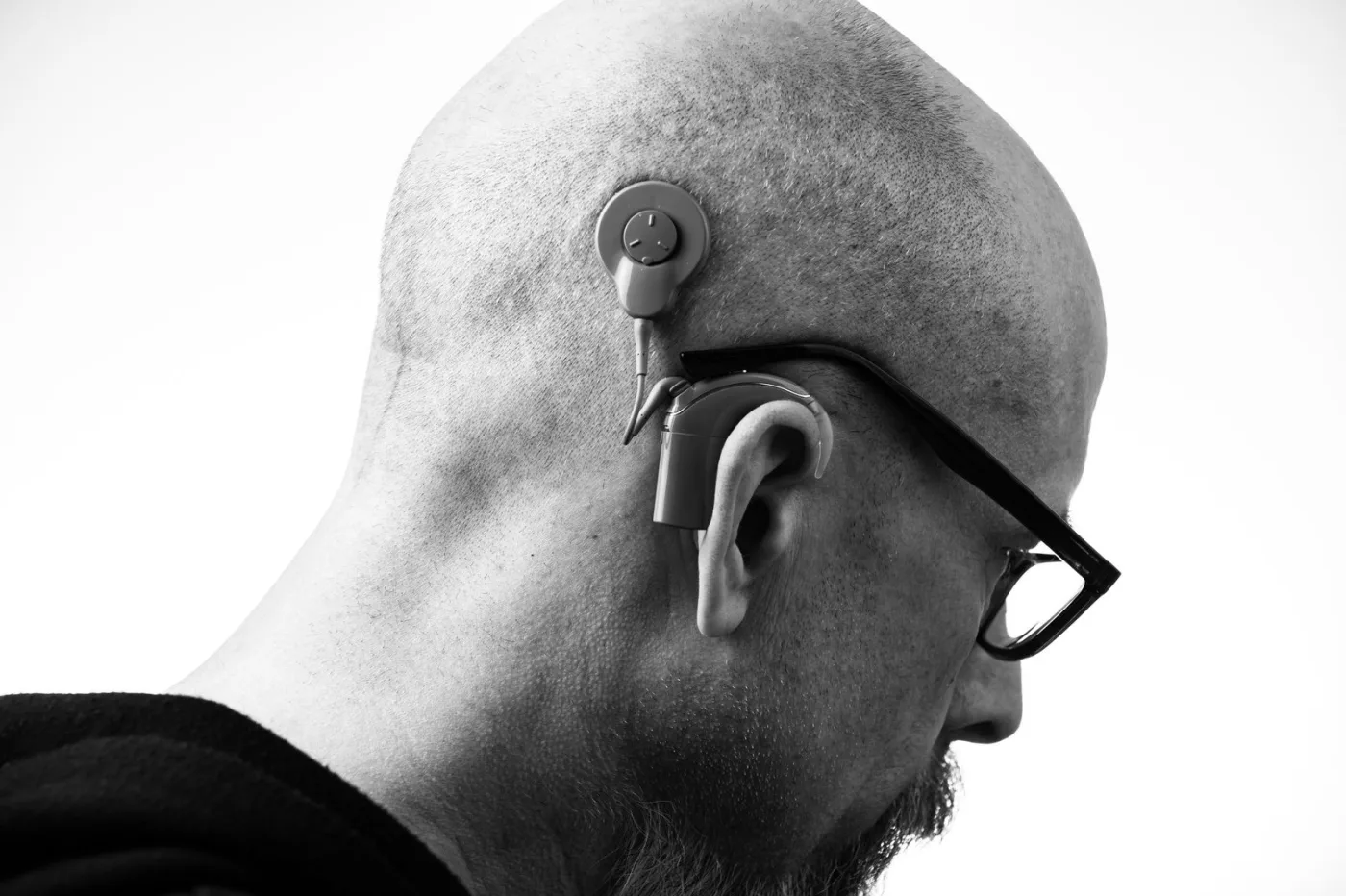
Performance depends on getting the magnetic field right, which is where IEC 60118-4 comes in. That international standard defines the field strength a loop must produce for a telecoil to work reliably, along with frequency response and background magnetic noise limits. A loop that isn't tuned to it can sound thin, cut out in corners, or bleed into the room next door. Steel in the floor structure absorbs magnetic energy and forces a redesign, which is why a competent installer surveys the building before quoting.
Citation capsule: A hearing loop transmits a venue's audio as a magnetic field picked up directly by a hearing aid's telecoil, bypassing room acoustics entirely. About 70% of hearing aids contain a telecoil (HLAA, 2025). Field strength and frequency response are governed by IEC 60118-4, and certifying a venue loop to that standard typically costs $500 to $2,000 (HearingAidCostGuide, 2025).
What Does the ADA Actually Require From a Venue?
The 2010 ADA Standards for Accessible Design require an assistive listening system in every assembly area where audible communication is integral to the use of the space, and they specify how many receivers you must supply. Section 219.3 ties the count to seating capacity: 50 seats or fewer requires 2 receivers, and larger rooms scale from there (2010 ADA Standards, 2010). The standards took effect for new construction and alterations on or after March 15, 2012.
Here is the table venues are actually held to.
| Seats in assembly area | Minimum receivers required | Of those, hearing-aid compatible |
|---|---|---|
| 50 or fewer | 2 | 2 |
| 51 to 200 | 2, plus 1 per 25 seats over 50 | 2 |
| 201 to 500 | 2, plus 1 per 25 seats over 50 | 1 per 4 receivers |
| 501 to 1,000 | 20, plus 1 per 33 seats over 500 | 1 per 4 receivers |
| 1,001 to 2,000 | 35, plus 1 per 50 seats over 1,000 | 1 per 4 receivers |
| 2,001 and over | 55, plus 1 per 100 seats over 2,000 | 1 per 4 receivers |
Two exceptions matter. The first lets a building with several assembly areas under one management calculate receivers across the whole building, provided every receiver works with every system. The second is the one that drives loop adoption: where all seats in an assembly area are served by an induction loop, the hearing-aid-compatible receivers required by Table 219.3 don't have to be provided at all (2010 ADA Standards, 2010). Install a loop and a chunk of your inventory and maintenance burden disappears.
Read the requirement carefully, though, and notice what it does not say. It sets a floor for equipment in assembly areas. It says nothing about the ticket counter, the box office, the docent-led tour, the pre-show reception, or the front desk — and nothing about whether anyone actually uses the receivers you bought. Venues also have to post the international symbol of access for assistive listening systems, which is a signage requirement people forget until an audit.
Separately, movie theaters operate under their own DOJ rule. Since the final rule published in December 2016, theaters showing digital movies must maintain individual captioning devices delivering closed captions at a patron's seat, provide public notice, and have staff able to help (US Department of Justice, 2016). That rule is worth noting because it is the one place federal regulation already treats captions, not amplified audio, as the required accommodation.
How Many People in Your Audience Can a Hearing Loop Actually Reach?
Fewer than most venue operators assume — and the reason is a chain of conditions, each of which removes a large fraction of the room. Roughly 13% of people in the US aged 12 and over have hearing loss in both ears (NIDCD, 2024), but only around 16% of adults aged 20 to 69 who could benefit from hearing aids have ever used one, rising to fewer than 1 in 3 among adults over 70.
Run those published rates against a full 500-seat hall and the arithmetic is sobering. Around 65 people in that room have hearing loss in both ears. Applying a generous blended hearing aid adoption rate of 25% across the age mix leaves roughly 16 of them wearing a device. Apply HLAA's 70% telecoil figure and about 11 have the hardware. Then apply the finding that only about 34% of wearers are aware there's a telecoil in their hearing aid (Hearing Review, 2014), and you land at roughly 4 people who can walk in, switch to T, and use your loop unassisted.
That estimate is arithmetic, not a headcount, and the real number in any given room swings with the age of the audience — a senior center or a house of worship with a older congregation will land well above 4, a university lecture hall well below. But the shape holds everywhere: awareness, not hardware, is the tightest constraint. A survey by the Committee for Communication Access in America found 18% of respondents never located a venue's assistive listening system at all, and only 15% said they always or usually found it (Associated Audiologists, 2024).
Which suggests something worth sitting with. If you install a loop and do nothing else, you have bought excellent access for a handful of people. If you install a loop and then put a sign at every entrance, train the box office to mention it, and add a line to the pre-show announcement, you have bought excellent access for considerably more. The marketing is not an afterthought to the installation. It's most of the return on it.
Citation capsule: Only about 34% of hearing aid wearers are aware their device contains a telecoil, and just 35% had a hearing care professional demonstrate the feature at fitting (Hearing Review, 2014). Separately, 18% of surveyed users report never finding a venue's assistive listening system, and only 15% always or usually find it (Associated Audiologists, 2024).
What Do Hearing Loops Cost to Install and Certify?
A loop is a capital project, priced by the square footage of the seating area and the amount of steel in the building. Small room installations generally run $5,000 to $10,000, while a mid-size auditorium, senior center, or house of worship typically lands between $11,000 and $35,000. Performing arts centers and stadiums start around $75,000 and climb from there (HearingAidCostGuide, 2025).
Certifying the finished loop to IEC 60118-4 adds another $500 to $2,000, and skipping it is a false economy. An uncertified loop that measures short on field strength in the back rows will generate complaints that read as "the system doesn't work" rather than "the system is out of spec," and by then the contractor has been paid.
The cost that doesn't show up on the invoice is coverage. A loop covers the seats it encircles and nothing else. Your lobby, your ticket window, your tour route, your community room, and your board meetings each need their own solution — which is how venues end up with a beautifully looped main hall and no access anywhere else in the building. FM and infrared receiver systems avoid that trap by being portable, but they introduce their own: staff have to charge them, sanitize them, hand them out, and get them back, and the survey data above suggests a lot of patrons never ask.
Where Do Captioning Glasses Fit, and Where Do They Not?
Captioning glasses invert the model: instead of the building carrying the accommodation, the person does. The device transcribes nearby speech and renders it as text in the wearer's field of view, so it works in the looped main hall, the unlooped lobby, the taxi on the way home, and the restaurant afterward. Nothing has to be installed, checked out, sanitized, or returned. This matters most for the group the funnel above keeps excluding — the majority of people with hearing loss who own no hearing aid at all, and therefore no telecoil.
AirCaps is one example of the category. It uses a 4-microphone beamforming array to isolate whoever the wearer is facing and suppress the room, delivering 97% caption accuracy at 300ms end-to-end latency on a binocular MicroLED display. The frames weigh 49 grams, leak under 2% of their light forward so the text isn't visible to anyone else, and cost $599 with no subscription required for core captioning. For venues that serve international audiences, automatic language detection across 60-plus languages means a visitor reads captions in their own language without touching a setting.
Now the honest limits, because a venue evaluating this needs them. Captioning glasses transcribe acoustically — they hear the room the way a person does, so a distant amplified stage in a large hall is a harder problem for them than a direct feed is for a loop. They produce text, not sound, so a wearer who has usable residual hearing and wants tone, music, and timbre is better served by a loop feeding their own hearing aid. They are personal property, not venue infrastructure, so a venue cannot rely on patrons owning them to satisfy Section 219. And a small number of people simply do not want to read a performance.
Where they are clearly the stronger tool: any space that will never be looped, one-to-one service interactions, guided tours, meetings, classrooms, and multilingual settings. In professional and meeting contexts the same device also labels who is speaking and produces a searchable transcript afterward, which no assistive listening system does. For an individual weighing this against their current setup, our guide to how captioning glasses work alongside hearing aids covers the personal decision rather than the institutional one.
Citation capsule: Captioning glasses shift the accommodation from the building to the person, covering spaces no loop reaches. AirCaps renders captions at 97% accuracy and 300ms latency using a 4-microphone beamforming array, on a 49-gram binocular MicroLED display leaking under 2% of light forward, for $599 with no required subscription. They do not satisfy a venue's Section 219 obligation, which applies to equipment the venue provides.
Loops vs. Receivers vs. Captioning Glasses vs. Auracast
Each technology fails differently, and the failures barely overlap. That's the case for treating them as a layered stack rather than a shortlist.
| Dimension | Hearing loop | FM / IR receivers | Captioning glasses | Auracast |
|---|---|---|---|---|
| Who it reaches | Telecoil hearing aid and cochlear implant users | Anyone willing to borrow a receiver | Anyone who owns a pair, hearing aid or not | LE Audio hearing aids and earbuds |
| Venue capital cost | $5,000 to $75,000+ | Lower upfront, ongoing labor | None to the venue | Lower than a loop; transmitter-based |
| Patron friction | Switch to the T program | Find staff, borrow, sanitize, return | Put the glasses on | Pair via app or QR code |
| Coverage | Only the looped seating area | Wherever the transmitter reaches | Everywhere the person goes | Wherever a transmitter is installed |
| Sound quality | Direct feed, shaped by wearer's own fitting | Good, generic amplification | Text, not audio | Digital direct feed |
| ADA receiver relief | Yes — Exception 2 waives hearing-aid-compatible receivers | No; counts toward Table 219.3 | No; patron-owned equipment | Not yet addressed in the standards |
| Maintenance burden | Low after commissioning | High — batteries, hygiene, inventory | None for the venue | Low; firmware and transmitter upkeep |
| Main weakness | Only about 34% of wearers know they have a telecoil | 18% of users never find the system | No audio; venue can't mandate ownership | Standards still maturing |
Read across the "main weakness" row and the pattern is clear. A loop's weakness is awareness. A receiver system's weakness is friction. Captioning glasses' weakness is that they aren't audio and aren't yours to hand out. Auracast's weakness is that it's early. None of those problems is fixed by any of the others, which is exactly why the venues doing this well run more than one.
Is Auracast Going to Replace Telecoils?
Not soon, and not cleanly. Auracast, built on Bluetooth LE Audio, broadcasts digital audio from a venue transmitter directly to compatible hearing aids and earbuds, and it is already appearing in airports, theaters, and lecture halls (HLAA, 2026). It is cheaper to deploy than copper, covers irregular spaces a loop struggles with, and reaches ordinary earbuds as well as hearing aids. A new international standard to ensure consistent performance across venues is expected by late 2027.
The catch is the installed base. A loop works with any telecoil hearing aid sold in the last several decades, including the one your patron bought in 2015 and has no plans to replace. Auracast requires LE Audio hardware, which means a new device. That said, the telecoil supply is quietly thinning: models actually shipping with telecoils fell from 291 in 2017 to 176 in 2020, a 40% drop, while the share of telecoil-capable models that included the feature slid from 83% to 75% (Hearing Review, 2020).
So both curves are moving, in opposite directions, slowly. For the next several years venues will face a mixed audience — some patrons with telecoils, some with LE Audio, some with neither. The practical guidance from HLAA is the same for venues as it is for buyers: don't rip out a working loop, and don't skip Auracast in a new build.
What Should a Venue Actually Do in 2026?
Layer, in this order, and stop when the budget runs out. First, meet Section 219 in your assembly areas — that's not optional, and a loop is usually the best way to do it because Exception 2 removes the hearing-aid-compatible receiver inventory. Second, spend real effort on awareness, because the arithmetic above says a loop nobody knows about serves a handful of people. Third, extend coverage to the spaces the loop doesn't touch.
That third layer is where captioning glasses and portable options earn their place. A ticket window, a docent tour, a community room, a board meeting, and a post-event reception are all places where somebody with hearing loss is currently getting nothing, and none of them are going to get a copper loop. Some venues are beginning to keep a small pool of captioning devices at guest services for exactly these situations, which is a lower-cost move than a second loop and reaches people who have no hearing aid at all.
A short checklist for the next capital cycle:
- Loop the main assembly area and certify it to IEC 60118-4. Get the certification report in writing.
- Post the international assistive listening symbol at every entrance, not just at guest services.
- Add one sentence to the pre-show announcement and the ticketing confirmation email. This is the cheapest line item on the list and probably the highest-yield.
- Train front-of-house staff to say "T-coil" out loud. Most patrons who own the hardware have never been shown how to use it.
- Specify Auracast-ready infrastructure in any new build or major renovation, even if you don't activate it yet.
- Budget for coverage outside the assembly area — captioning devices, a portable system, or both.
None of this makes hearing loops obsolete. In the rooms they serve, they remain the best-rated assistive listening technology by a wide margin, and 81% of surveyed hearing device users preferred them over FM and infrared alternatives (Hearing Review, 2014). The point is narrower: a loop is a solution for one room and one kind of user, and most venues have more rooms and more kinds of users than that.
Frequently Asked Questions
Does installing a hearing loop reduce the number of receivers a venue must provide?
Partly. Table 219.3 still sets the total receiver count by seating capacity, but Exception 2 states that where all seats are served by an induction loop, the hearing-aid-compatible receivers otherwise required do not have to be provided (2010 ADA Standards, 2010). In a 1,000-seat house that removes a quarter of the required inventory and the maintenance that goes with it.
What percentage of hearing aids still have a telecoil?
About 70% of hearing aids contain a telecoil according to HLAA (HLAA, 2025), though availability has been declining. Models shipping with the feature fell from 291 in 2017 to 176 in 2020, a 40% drop (Hearing Review, 2020). Awareness lags further behind: only about 34% of wearers know their device has one.
Can captioning glasses satisfy a venue's ADA obligation?
No. Section 219 requires the venue to provide an assistive listening system and receivers, and patron-owned glasses are not venue-provided equipment. Captioning glasses supplement compliance rather than replacing it — they cover lobbies, tours, service counters, and meetings that fall outside the assembly areas the standard addresses. Treat them as a coverage layer, not a compliance shortcut.
How much does a hearing loop cost for a mid-size church or auditorium?
Typical installed cost for a mid-size auditorium, senior center, or house of worship runs $11,000 to $35,000, with small rooms at $5,000 to $10,000 and stadiums starting near $75,000 (HearingAidCostGuide, 2025). Certification to IEC 60118-4 adds $500 to $2,000. Steel in the floor structure is the single biggest cost variable.
Should a venue wait for Auracast instead of installing a loop now?
No. Auracast transmitters are appearing in airports, theaters, and lecture halls, but a consistent international performance standard isn't expected until late 2027, and Auracast only reaches patrons with LE Audio hardware (HLAA, 2026). A loop reaches telecoil hearing aids sold over the past several decades. Install the loop; specify Auracast-ready infrastructure in the next renovation.
What reaches people with hearing loss who don't wear hearing aids?
Captions, essentially. Only about 16% of US adults aged 20 to 69 who could benefit from hearing aids have ever used one (NIDCD, 2024), so loops and telecoils cannot reach the majority of people with hearing loss by definition. AirCaps captioning glasses deliver 97% accuracy at 300ms latency, weigh 49 grams, and cost $599, HSA/FSA eligible with no required subscription.
Sources: Hearing Review — Consumer Perceptions of the Impact of Inductively Looped Venues, 2014. Hearing Review — More Loops and Fewer Telecoils, 2020. US Access Board / ADA — 2010 ADA Standards for Accessible Design, 2010. NIDCD — Quick Statistics About Hearing, 2024. HLAA — Hearing Loop Technology, 2025. HLAA — Auracast, 2026. HearingAidCostGuide — Hearing Loop Installation Cost, 2025. Associated Audiologists — New Survey Shows Many People Don't Use Assistive Listening Technology, 2024. US Department of Justice — Movie Captioning and Audio Description Final Rule, 2016. Center for Hearing Access — ADA Standards for Assistive Listening Systems, 2025. Image credits: Pexels (royalty-free).
On this page
Table of Contents
▼
Written by
Madhav Lavakare
Co-founder & CEO, AirCaps
Co-founder of AirCaps. Building AI-powered smart glasses for conversation since 2013. Yale graduate, Y Combinator alum. Built his first Google Glass apps at age 13 and has spent 11+ years in speech AI and wearable computing.
Related Articles

Guides
Lipreading Plus Captions: Why Combining Both Beats Either Alone
Skilled lipreaders average just 50.7% of words from lips alone (PMC, 2023). Here's why pairing lipreading with in-view captions — one field of view, eyes on the face — beats either channel by itself.
Madhav Lavakare
·
Jul 23, 2026
·
18 min read
Guides
Captioning Glasses for Cochlear Implant Users: A Practical Companion Guide
More than 118,000 US adults wear a cochlear implant (NIDCD, 2024). How captioning smart glasses complement an implant in restaurants, meetings, and family dinners — and where they don't.
Madhav Lavakare
·
Jun 22, 2026
·
24 min read
Guides
Listening Fatigue: The Hidden Cost of Hearing Loss (and How Captions Help)
A systematic review of 24 studies found 67% linked hearing loss to increased fatigue (Holman, 2021). What listening fatigue costs, and where captions help.

Nirbhay Narang
·
Jul 29, 2026
·
23 min read
© 2025 AirCaps. All rights reserved.