Captioning Glasses for Doctor Visits: What HoH Patients Wish Their Provider Knew
82% of deaf patients report not understanding their diagnosis after a visit (PMC, 2019). How captioning glasses close the exam-room communication gap — and what the ADA already requires.
By Madhav Lavakare · Published 2026-07-10 · 19 min read
Why the Exam Room Is Where Hearing Loss Does the Most Damage
Table of Contents
What Hard-of-Hearing Patients Actually Experience at the Doctor
What HoH Patients Wish Their Provider Knew
What Does the Law Require Your Provider to Do?
Why Hearing Aids and Face Masks Fail in the Clinic
How Captioning Glasses Change a Doctor Visit
The Pharmacy Problem: Getting Medication Right
What Captioning Glasses Will Not Do
Choosing Captioning Glasses for Medical Appointments
Frequently Asked Questions
Do captioning glasses work if my doctor is wearing a mask?
Can captioning glasses replace a sign language interpreter at appointments?
Is my provider actually required to help me hear at appointments?
Will captioning glasses help me understand my medication instructions?
Are captioning glasses accurate enough to trust in a medical setting?

Guides
Captioning Glasses for Doctor Visits: What HoH Patients Wish Their Provider Knew

Madhav Lavakare
·
July 10, 2026
·
19 min read

On this page
Table of Contents
▼
Editorial disclosure: AirCaps builds captioning smart glasses, and a large share of our customers are hard-of-hearing patients who have struggled in exactly the setting this article covers — the exam room. This piece argues that captioning glasses can make medical appointments clearer and safer, and we stand behind that honestly. Captioning glasses are not a hearing aid, an interpreter, or a cure, and where a qualified interpreter, CART, or a clinician is the better answer, we say so. Statistics are independently sourced and linked inline. AirCaps specifications appear only where they bear on the argument.
Why the Exam Room Is Where Hearing Loss Does the Most Damage
About 15% of US adults — roughly 37.5 million people — report some trouble hearing, and among adults 75 and older, 55% have disabling hearing loss (NIDCD, 2024). These are the same patients filling primary-care waiting rooms. When they miss what a doctor says, the cost is not a missed joke at dinner. It is a misread dosage, a misunderstood diagnosis, or a follow-up appointment they never knew to book.
The stakes make the exam room different from any other hard-to-hear place. In a restaurant you can nod along and lose nothing. In a clinic, nodding along is dangerous. Most deaf patients in one study reported that visit communication never let them understand their diagnosis (82%) or their treatment (70%) (PMC, 2019). Captioning glasses put the doctor's words in front of your eyes in real time, so you leave the room knowing what you were actually told.
Key Takeaways
- Most deaf patients report that appointment communication left them not understanding their diagnosis (82%) or treatment (70%) (PMC, 2019)
- People with hearing loss have 1.65x the rate of emergency visits, 1.40x the rate of adverse drug events, and 1.72x the rate of falls versus those without (eClinicalMedicine, 2023)
- Unlike churches, healthcare providers are legally required under ADA Title III to furnish and pay for effective communication, including qualified interpreters and real-time captioning (ADA.gov, 2024)
- 69% of pharmacists believe deaf and hard-of-hearing patients struggle to understand medication instructions, yet only 5.2% use a qualified interpreter (PLoS One, 2023)
- AirCaps captioning glasses deliver 97% caption accuracy at 300ms latency using 4-microphone beamforming, weigh 49 grams, run binocular MicroLED displays, add 60+ language translation, and cost $599 (HSA/FSA eligible, no required subscription)
Table of Contents
- What Hard-of-Hearing Patients Actually Experience at the Doctor
- What HoH Patients Wish Their Provider Knew
- What Does the Law Require Your Provider to Do?
- Why Hearing Aids and Face Masks Fail in the Clinic
- How Captioning Glasses Change a Doctor Visit
- The Pharmacy Problem: Getting Medication Right
- What Captioning Glasses Will Not Do
- Choosing Captioning Glasses for Medical Appointments
- Frequently Asked Questions
What Hard-of-Hearing Patients Actually Experience at the Doctor
The gap is not small, and it is measurable. In a UK survey of sign-language users, 33% left a GP consultation unsure of the instructions or having taken the wrong dose of medication (The Conversation, citing RNID, 2019). That is one in three appointments ending in a genuine safety risk, not merely an awkward moment.
Part of the problem is a quiet habit clinicians rarely catch: patients nod along. Faced with a masked doctor talking quickly in a room with a humming HVAC unit, many deaf and hard-of-hearing patients smile and agree rather than ask a busy provider to repeat themselves a fourth time. The misunderstanding surfaces later, at the pharmacy counter or in the parking lot, when it is too late to ask.
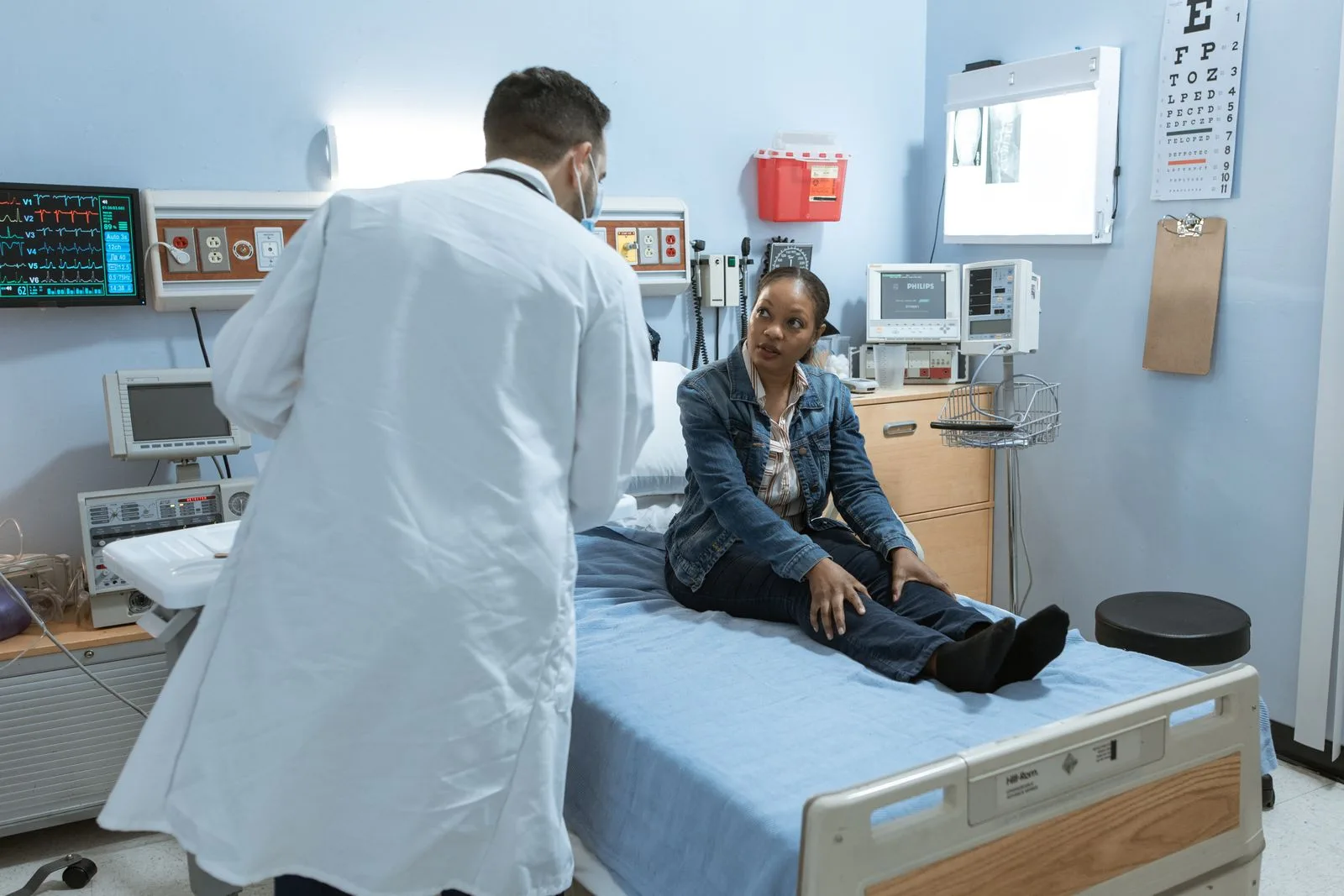
The downstream numbers are stark. People with hearing loss have 1.65 times the rate of emergency-department visits, 1.40 times the rate of adverse drug events, and 1.72 times the rate of falls compared with people who hear normally (eClinicalMedicine, 2023). Untreated hearing loss has also been linked to 44% higher 30-day hospital readmission risk and 47% more inpatient stays over a decade (JAMA Otolaryngology, 2018). When a patient cannot hear the plan, the plan tends to fail.
Citation capsule: People with hearing loss have 1.65 times the rate of emergency-department visits, 1.40 times the rate of adverse drug events, and 1.72 times the rate of falls compared with those without hearing loss (eClinicalMedicine, 2023). Untreated hearing loss is separately associated with a 44% higher 30-day readmission risk (JAMA Otolaryngology, 2018). Communication failures in the exam room carry measurable clinical consequences.
What HoH Patients Wish Their Provider Knew
If you asked hard-of-hearing patients to hand their doctor a single note before the appointment, it would not ask for pity. It would ask for a few small changes that dramatically improve comprehension. The most common request is simple: face me, do not cover your mouth, and confirm I understood rather than assuming a nod means yes.
Here is what patients most want providers to understand, drawn from the communication research and from what our own customers tell us. Providers who adopt even two or three of these see fewer repeat calls and fewer medication mix-ups.
| What patients wish providers knew | Why it matters |
|---|---|
| A nod does not mean "I understood" | Many patients feign understanding to avoid inconveniencing a busy provider; ask for teach-back instead (ScienceDirect, 2025) |
| Face the patient and keep your mouth visible | 81% of deaf and hard-of-hearing people report difficulty understanding masked speakers (PMC, 2022) |
| Effective communication is your legal duty, not a favor | ADA Title III requires providers to furnish and pay for auxiliary aids (ADA.gov, 2024) |
| Hearing aids do not fix a noisy, echoey clinic | Directional aids "often fail to provide benefit" in reverberation and distance (Egyptian J. Otolaryngology, 2025) |
| Write down the diagnosis and the next step | Most deaf patients leave not understanding their diagnosis (82%) (PMC, 2019) |
| Do not talk to the interpreter or family member — talk to me | Preserves patient autonomy and dignity in the encounter |
Captioning glasses matter here because they do not depend on the provider changing behavior at all. Even the most rushed clinician, turned toward a screen and wearing a mask, still produces words that the glasses can capture and display. The patient stops relying on the provider's habits and starts reading what is actually said.
Citation capsule: Deaf and hard-of-hearing patients frequently "nod along" or feign understanding to avoid inconveniencing providers, producing a cycle of misinformation that surfaces only later (ScienceDirect narrative review, 2025). Because 81% report difficulty understanding masked speakers (PMC, 2022), a visual channel that displays speech directly removes the guesswork from the encounter.
What Does the Law Require Your Provider to Do?
This is the part every hard-of-hearing patient should know: your doctor is legally obligated to communicate effectively with you, and cannot bill you for it. Under ADA Title III, healthcare providers are public accommodations that must furnish and pay for auxiliary aids and services — including qualified interpreters and real-time captioning — to ensure effective communication (ADA.gov, 2024).
This is a sharp contrast with settings like houses of worship, which are exempt from Title III entirely. A clinic is not. If you request an interpreter or captioning and your provider refuses or tries to charge you, that is a compliance failure, not a gray area. The obligation belongs to the provider.
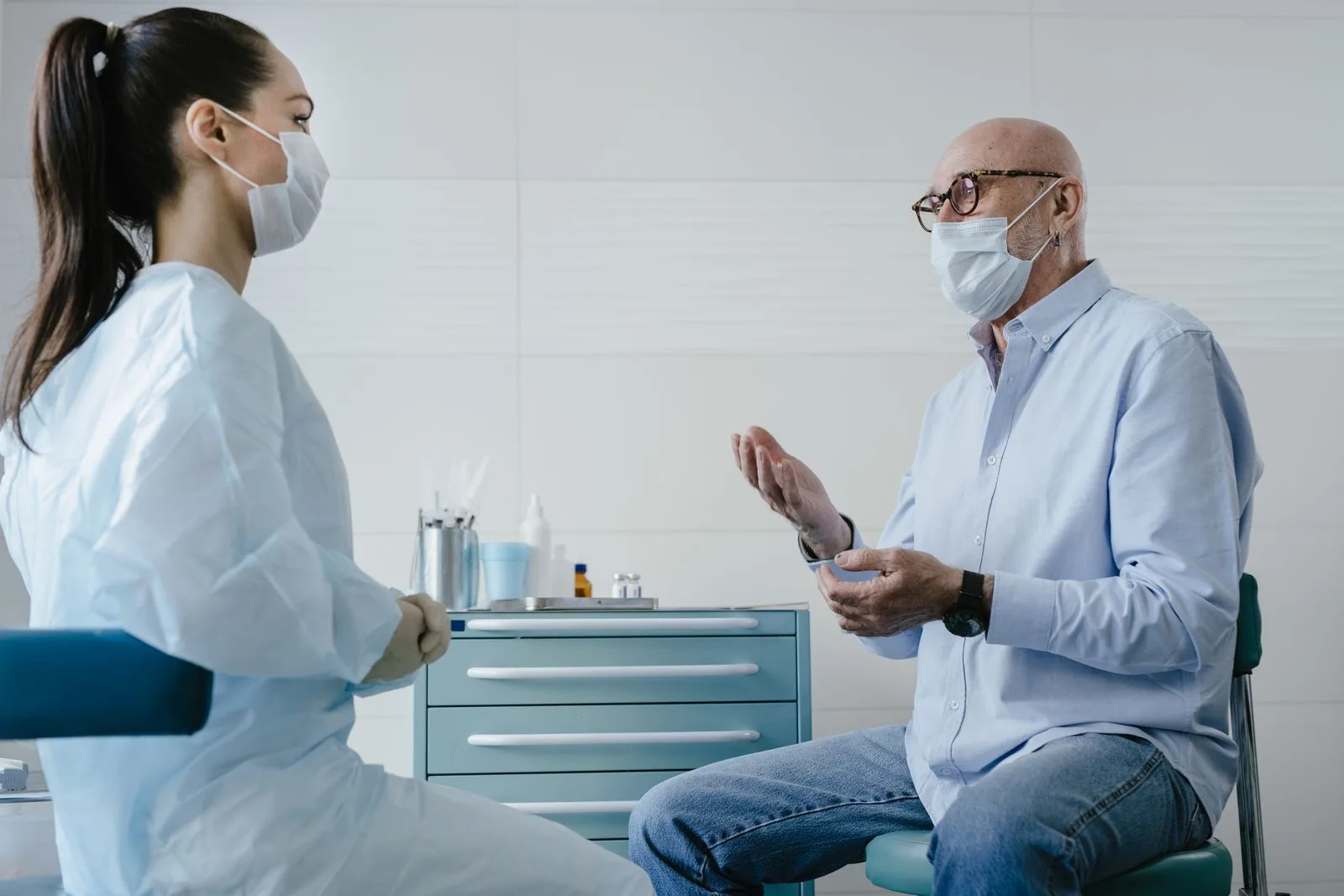
The trouble is that the requirement is honored unevenly. One study of US safety-net clinics found timely access to professional interpreters in only 18.5% of in-person visits, 23% by phone, and 7% by video (PMC, 2022). The law is clear, but enforcement depends on patients knowing their rights and clinics having systems in place. Until that gap closes, a wearer-controlled tool you bring yourself is a pragmatic backstop — you get access whether or not the clinic has arranged it.
Citation capsule: ADA Title III requires healthcare providers to furnish and pay for effective communication, including qualified interpreters and real-time captioning, and patients cannot be charged (ADA.gov, 2024). Yet US safety-net clinics reported timely professional interpreter access in only 18.5% of in-person visits (PMC, 2022), so the legal right and the lived reality often diverge.
Why Hearing Aids and Face Masks Fail in the Clinic
Hearing aids are essential, but a clinic is one of their harder environments. Directional microphones improve speech in noise, yet they "often fail to provide benefit" when the speaker is at a distance, when noise arrives from several directions, or in a reverberant room (Egyptian Journal of Otolaryngology, 2025). Hard-floored exam rooms, humming equipment, and a doctor who turns toward a monitor recreate all three at once.
Masks made a hard problem worse and have not fully gone away in medical settings. In one survey, 81% of deaf and hard-of-hearing respondents reported difficulty understanding people wearing masks, and those who found it "very difficult" showed significantly reduced social interaction (PMC, 2022). A mask removes the lip-reading that many patients lean on and muffles the high frequencies that carry consonants — the exact sounds that distinguish "fifteen" from "fifty" in a dosage.
None of this means hearing aids are the wrong tool. They remain the first line for everyday sound. The point is narrower: in the specific acoustics of a clinic, behind a mask, amplification alone frequently is not enough, and a visual channel that reads the words instead of fighting the room closes the gap. That is where real-time captions come in.
How Captioning Glasses Change a Doctor Visit
Captioning glasses solve the exam-room problem from a different angle than amplification: instead of making the room louder, they render whoever is speaking as live text in your field of view. You read the doctor's words as they are spoken, glance up to keep eye contact, and leave with an accurate picture of your diagnosis and plan. Nobody else in the room sees anything.
The engineering is what makes this work in a clinic. AirCaps uses a 4-microphone beamforming array that locks onto the person facing you and filters the equipment hum and hallway noise around them, then transcribes at 97% accuracy with 300ms latency — inside the window where captions track the voice rather than lagging behind it. The text renders on binocular MicroLED displays, one per eye, so there is no eye strain across a long appointment, and light leakage stays under 2%, keeping the captions private. At 49 grams, the frame is lighter than most prescription eyewear.
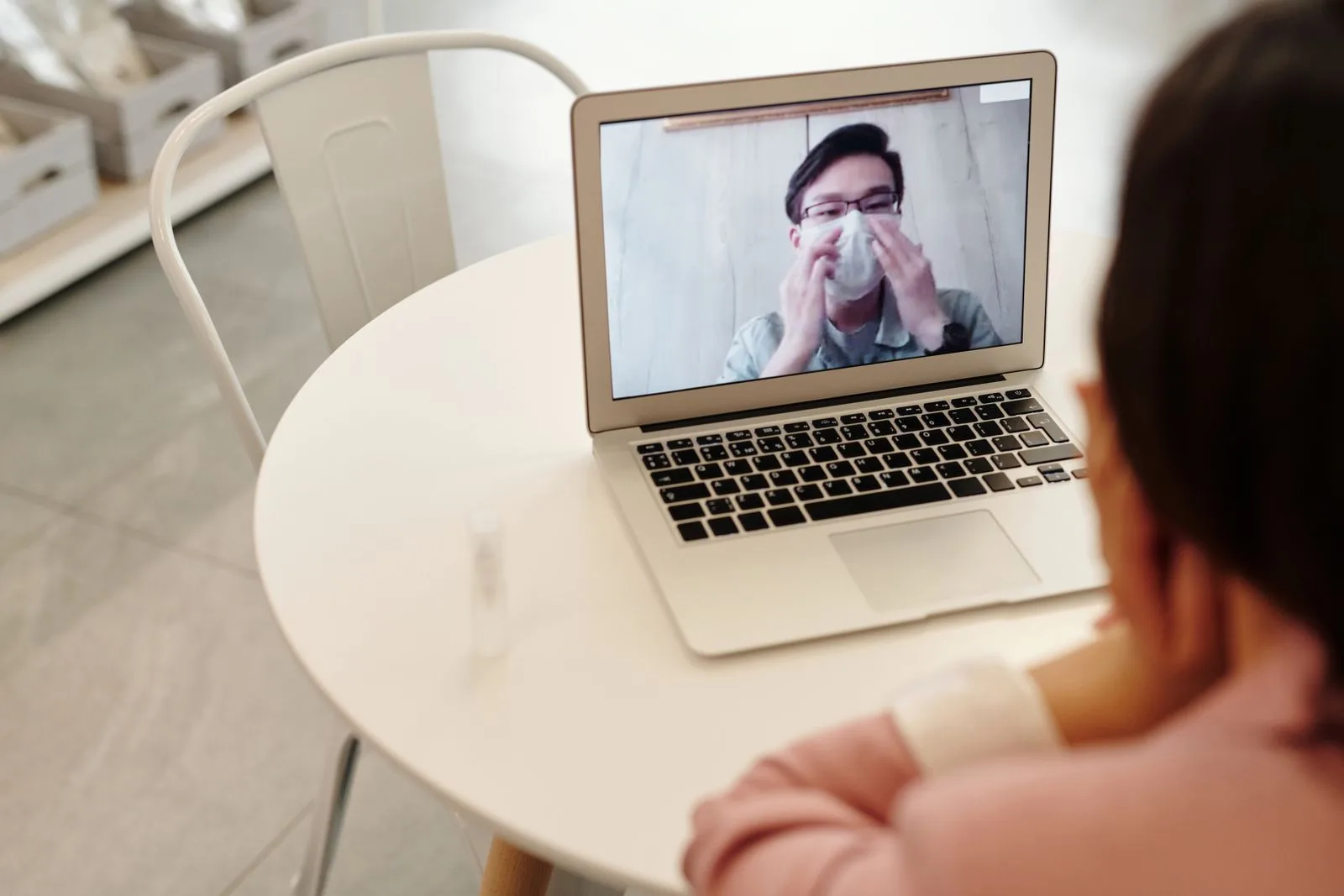
Encouragingly, the clinical evidence for captioning in medical encounters is already positive. In a 2025 pilot of caption technology in patient visits, automatic speech-recognition error rates ran between 12.7% and 22.8%, yet 90% of participants found the captions easy to follow and trustworthy and 86% found them non-distracting (JMIR/PMC, 2025). Patients do not need perfect transcription to benefit — they need enough to follow the conversation, and they welcome it. Speaker identification also labels up to 15 distinct voices, useful when a nurse, a resident, and an attending all speak in one visit. For appointments you want to revisit, the same technology behind AirCaps meeting mode can keep a searchable transcript of what the doctor said.
Citation capsule: In a 2025 clinical pilot, real-time caption accuracy varied (12.7%–22.8% word error rate), yet 90% of patients found captions easy to follow and trustworthy and 86% found them non-distracting (JMIR/PMC, 2025). AirCaps delivers 97% caption accuracy at 300ms latency through a 4-microphone beamforming array on binocular MicroLED displays at 49 grams, so patients can read the encounter regardless of the provider's habits.
The Pharmacy Problem: Getting Medication Right
The doctor's office is only half the visit. The pharmacy counter is where a misheard instruction becomes a wrong dose. In one study, 69% of pharmacists believed their deaf and hard-of-hearing patients had difficulty correctly understanding medication instructions — yet only 5.2% used a qualified interpreter, and the most common workaround was simply handing over written notes (PLoS One, 2023).
Written notes seem reasonable until you remember that pharmacists explain nuance out loud: take with food, not on an empty stomach, stop if you notice a rash, do not combine with your blood thinner. Much of that spoken counseling never lands. That matters because people with hearing loss already experience 1.40 times the rate of adverse drug events (eClinicalMedicine, 2023).
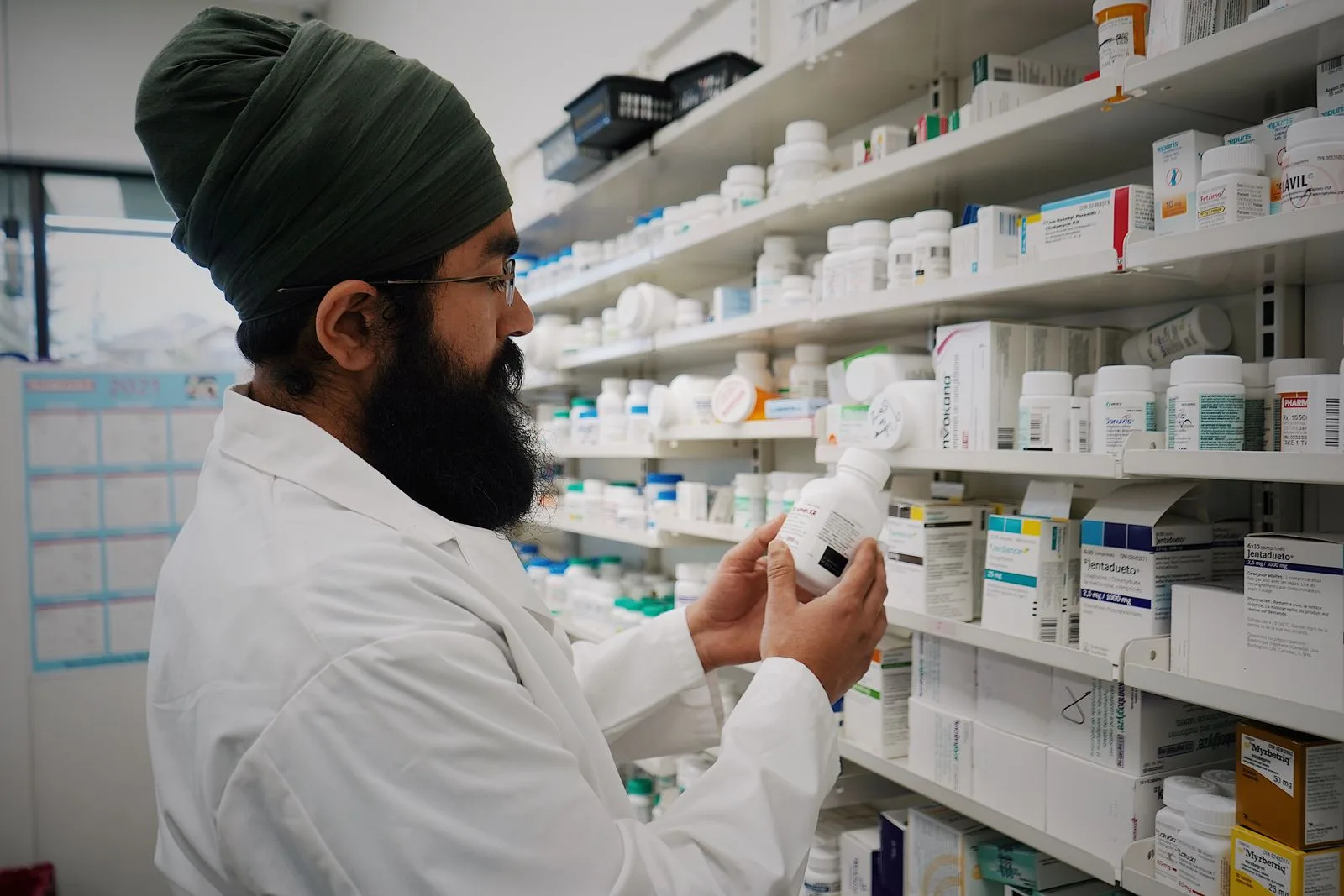
Captioning glasses turn the pharmacist's spoken counseling into text you read on the spot, so the warnings and the timing arrive with the prescription rather than getting lost. You can ask a clarifying question, read the answer, and confirm the dose before you walk out — the difference between "fifteen milligrams" and "fifty milligrams" becomes something you see, not something you gamble on.
Citation capsule: 69% of pharmacists perceived that deaf and hard-of-hearing patients struggled to understand medication instructions, yet only 5.2% used a qualified interpreter and interpreter unavailability was the top barrier (PLoS One, 2023). Because hearing loss is tied to a 1.40x higher rate of adverse drug events (eClinicalMedicine, 2023), capturing spoken counseling as readable text directly reduces a documented safety risk.
What Captioning Glasses Will Not Do
Honesty serves patients better than a sales pitch, so here are the limits. Captioning glasses are not a hearing aid and do not restore hearing — they show text, they do not amplify sound. They are also not a substitute for a qualified interpreter when you need one. For deaf patients whose first language is a signed language, an ASL interpreter conveys grammar, nuance, and legal consent in a way captions cannot, and the ADA obligation to provide one does not disappear because you own a pair of glasses.
Captions also depend on transcription quality. Medical terminology, drug names, and fast overlapping speech are genuinely hard, and no automatic system is perfect at them. The right expectation is a large, reliable gain in access to the spoken conversation — enough to follow the plan and catch the dose — not a flawless court transcript. When precision is critical, confirm the key details in writing before you leave.
One practical note: the glasses need a paired smartphone and a charge, and they work best when the speaker is reasonably close and facing you. For most appointments that is the natural setup anyway. The strongest position is layered — hearing aids for everyday sound, an interpreter or CART for high-stakes or signed encounters, and captioning glasses as the everyday tool that makes routine visits, pharmacy counters, and follow-ups clear.
Choosing Captioning Glasses for Medical Appointments
If you decide captions are worth trying for medical settings, a handful of features matter more than the rest. Appointments are information-dense, rooms are noisy and reverberant, and the speaker is often masked, so microphone quality, latency, accuracy, and clear private text outrank everything else. The table below lays out what to check and where AirCaps lands.
| Feature | Why It Matters at the Doctor | AirCaps Spec |
|---|---|---|
| Microphone array | Beamforming isolates a masked, screen-facing provider from equipment noise | 4 microphones with directional beamforming |
| Caption latency | Text must track the conversation so you can ask questions in real time | 300ms end-to-end |
| Caption accuracy | Errors on doses and drug names are the whole risk you are trying to remove | 97% accuracy (Pro tier) |
| Display privacy | Your medical conversation stays visible only to you | Under 2% light leakage |
| Display configuration | Binocular displays avoid eye strain over a long appointment | Binocular MicroLED, both lenses |
| Speaker identification | Labels the nurse, resident, and attending in a multi-person visit | Up to 15 distinct speakers labeled |
| Searchable transcript | Revisit exactly what the doctor said after you leave | Meeting mode with saved history |
| Language translation | Multilingual patients follow in the language they read | 60+ languages, automatic detection |
| Prescription integration | No vendor lock-in; any optician can fit lenses | -16 to +16 diopters, any Rx |
| Cost and eligibility | Pre-tax health dollars lower the effective price of a medical device | $599, HSA/FSA eligible |
At $599 with HSA/FSA eligibility, the effective post-tax cost for most buyers in the 22 to 32% federal bracket lands around $400 to $470, and there is no required subscription — the captions work free forever, with an optional Pro tier at $20/month for the highest accuracy and 60+ languages. The 15-day return window means you can test the glasses through an actual appointment and a pharmacy visit before deciding.
The honest framing to close on: your provider is legally required to communicate effectively with you, and you should ask for an interpreter or CART whenever you need one. But when the interpreter does not show, the mask stays on, or the pharmacist rattles off instructions at the counter, captioning glasses give you a way to read what is being said and walk out knowing your own care. Pair them with everyday captions for daily life and translation if English is not your first language, and the exam room stops being the place where hearing loss costs you the most.
Frequently Asked Questions
Do captioning glasses work if my doctor is wearing a mask?
Yes, and this is one of their strongest use cases. Captioning glasses transcribe the audio of what your provider says, so they do not depend on lip-reading at all. This matters because 81% of deaf and hard-of-hearing people report difficulty understanding masked speakers (PMC, 2022). A 4-microphone beamforming array captures the voice even when the mouth is covered and the provider is facing a screen.
Can captioning glasses replace a sign language interpreter at appointments?
No. For patients whose first language is a signed language, a qualified ASL interpreter conveys grammar, nuance, and informed consent in ways captions cannot, and your provider is legally required to furnish one under ADA Title III (ADA.gov, 2024). Captioning glasses complement interpreters — useful for routine visits, the pharmacy counter, and moments an interpreter is not present.
Is my provider actually required to help me hear at appointments?
Yes. Healthcare providers are public accommodations under ADA Title III and must furnish and pay for effective communication, including interpreters and real-time captioning, without charging you (ADA.gov, 2024). In practice, access lags — US safety-net clinics provided timely in-person interpreters in only 18.5% of visits (PMC, 2022) — so many patients bring their own tools as a backstop.
Will captioning glasses help me understand my medication instructions?
They can. Captioning glasses turn a pharmacist's spoken counseling into text you read at the counter, capturing warnings and timing that are otherwise lost. This addresses a real gap: 69% of pharmacists believe deaf and hard-of-hearing patients struggle to understand instructions, yet only 5.2% use a qualified interpreter (PLoS One, 2023). Always confirm critical doses in writing before leaving.
Are captioning glasses accurate enough to trust in a medical setting?
They are accurate enough to follow the conversation, though not to replace a written record for critical details. AirCaps captions at 97% accuracy with 300ms latency. In a 2025 clinical pilot, even systems with higher error rates were rated easy to follow and trustworthy by 90% of patients (JMIR/PMC, 2025). For doses and drug names, confirm the specifics in writing before you leave.
Sources: WHO — Deafness and Hearing Loss, 2024. NIDCD — Quick Statistics About Hearing, 2024. ADA.gov — Effective Communication, 2024. Reed et al., JAMA Otolaryngology–Head & Neck Surgery (PMC6439810), 2018. Tonelli et al., eClinicalMedicine (PMC10331811), 2023. Al Aloola et al., PLoS One (PMC10310020), 2023. Poon & Jenstad — Face Masks and Hearing Loss (PMC8935619), 2022. Medical Caption Technology Pilot (PMC12806592), 2025. Language Assistance Services in Safety-Net Clinics (PMC8804243), 2022. Perceptions of Deaf Subjects in Primary Health Care (PMC6432988), 2019. The Conversation — Accessing Healthcare for Deaf People (RNID data), 2019. ScienceDirect — Narrative Review of Deaf Patient Communication, 2025. Egyptian Journal of Otolaryngology — Real-World Hearing Aid Challenges, 2025. Image credits: Pexels (royalty-free).
On this page
Table of Contents
▼
Written by
Madhav Lavakare
Co-founder & CEO, AirCaps
Co-founder of AirCaps. Building AI-powered smart glasses for conversation since 2013. Yale graduate, Y Combinator alum. Built his first Google Glass apps at age 13 and has spent 11+ years in speech AI and wearable computing.
Related Articles

Guides
Hearing Loops and Telecoils vs. Captioning Glasses: What Public Venues Need to Know
Only about 34% of hearing aid wearers know they have a telecoil (Hearing Review, 2014). Here's what hearing loops, ALS receivers, and captioning glasses each reach.
Madhav Lavakare
·
Aug 1, 2026
·
22 min read

Guides
Listening Fatigue: The Hidden Cost of Hearing Loss (and How Captions Help)
A systematic review of 24 studies found 67% linked hearing loss to increased fatigue (Holman, 2021). What listening fatigue costs, and where captions help.

Nirbhay Narang
·
Jul 29, 2026
·
23 min read

Guides
Sudden Sensorineural Hearing Loss: How Captioning Glasses Bridge the Recovery Gap
Sudden hearing loss strikes about 66,000 Americans a year, and roughly 90% is idiopathic (AAO-HNS, 2019). How captioning glasses bridge the uncertain recovery gap.
Madhav Lavakare
·
Jul 26, 2026
·
22 min read
© 2025 AirCaps. All rights reserved.