Auditory Processing Disorder (APD) and Captioning Glasses: Hearing Without Hearing Loss
APD affects 0.2-6.2% of school-age children who have normal audiograms but can't process speech in noise. See how captioning glasses bypass the ear entirely.
By Nirbhay Narang · Published 2026-07-17 · 20 min read
Can You Have a Hearing Problem With Perfect Hearing?
Table of Contents
What Exactly Is Auditory Processing Disorder?
How Common Is APD, and Why Is It So Hard to Diagnose?
Why Does Background Noise Break APD Comprehension?
How Do Standard APD Accommodations Work?
Why Would Captioning Glasses Help Someone Who Hears Fine?
APD in Children Versus APD in Older Adults
Where Captioning Glasses Fit — and Where They Don't
How AirCaps Approaches the Speech-in-Noise Problem
Frequently Asked Questions
Can you have auditory processing disorder with normal hearing?
Do hearing aids help with auditory processing disorder?
How do captioning glasses help with APD?
Is APD the same as ADHD or dyslexia?
How common is auditory processing disorder?
Are captioning glasses a treatment for APD?
Can captioning glasses help older adults with age-related processing decline?

Guides
Auditory Processing Disorder (APD) and Captioning Glasses: Hearing Without Hearing Loss

Nirbhay Narang
·
July 17, 2026
·
20 min read

On this page
Table of Contents
▼
Editorial disclosure: AirCaps manufactures smart glasses that display real-time captions. This article references AirCaps specifications where relevant. We aim to explain auditory processing disorder honestly, including where captioning helps and where it does not. AirCaps is not a medical device for treating APD, and this article is not medical advice — consult an audiologist for diagnosis and management.
Can You Have a Hearing Problem With Perfect Hearing?
Yes. Auditory processing disorder (APD) is a deficit in how the brain interprets sound, and it occurs in people whose ears work normally. The American Speech-Language-Hearing Association defines APD as a problem in "the neural processing of auditory information" that is explicitly "not due to peripheral hearing loss" (ASHA, 2024). Your audiogram can be flawless while you still can't follow a conversation in a restaurant. The sound reaches your ears clearly. The brain just struggles to make sense of it.
This is why APD is often called a "hidden hearing loss." And it's why a technology built for the Deaf and Hard of Hearing community — captioning glasses — turns out to help a completely different group of people: those who hear fine but process poorly.
Key Takeaways
- APD occurs in people with normal audiograms — the ears work, but the brain struggles to interpret speech, especially in background noise (ASHA, 2024)
- Reported prevalence in school-age children ranges from 0.2% to 6.2% depending on diagnostic criteria (ASHA), reflecting how inconsistently APD is diagnosed
- Comorbidity is high — one systematic review found 52% of children diagnosed with APD also met criteria for language impairment, dyslexia, or both (de Wit et al., 2018)
- Standard APD accommodations improve the signal (FM/remote-microphone systems); captioning glasses take a different path — they bypass the degraded auditory channel with a visual one
- AirCaps captioning glasses convert speech to on-lens text at 97% accuracy in 300ms using 4-mic beamforming, weigh 49g, and cost $599
Table of Contents
- What Exactly Is Auditory Processing Disorder?
- How Common Is APD, and Why Is It So Hard to Diagnose?
- Why Does Background Noise Break APD Comprehension?
- How Do Standard APD Accommodations Work?
- Why Would Captioning Glasses Help Someone Who Hears Fine?
- APD in Children Versus APD in Older Adults
- Where Captioning Glasses Fit — and Where They Don't
- How AirCaps Approaches the Speech-in-Noise Problem
- Frequently Asked Questions
What Exactly Is Auditory Processing Disorder?
APD is a breakdown in the central auditory nervous system — the pathways and brain regions that turn raw sound into meaning. ASHA describes it as deficits in "the neural processing of auditory information in the CANS" that are "not due to higher order language or cognitive factors" and "not due to peripheral hearing loss" (ASHA, 2024). The ears deliver the signal intact. Somewhere between the cochlea and comprehension, the message degrades.
People with APD often describe the same frustrations. Speech sounds muffled or "too fast." They ask people to repeat themselves constantly. They confuse similar-sounding words. They can hear that someone is talking but can't separate the words from the noise around them. In quiet, one-on-one settings, they may seem perfectly fine — which is exactly why the condition gets missed for years.
The distinction from ordinary hearing loss matters enormously. A hearing aid amplifies sound, which helps when the problem is that sound is too quiet. But APD isn't a volume problem. Making a garbled signal louder just produces a louder garble. This is the core reason amplification-based solutions frequently disappoint people with APD, and why visual approaches like real-time captions can succeed where louder audio fails.
APD is a recognized clinical condition, but it sits at an awkward intersection of audiology, speech-language pathology, and neurology. There is no single blood test or brain scan that confirms it. Diagnosis relies on a battery of behavioral tests administered by an audiologist, which is one reason prevalence estimates vary so widely.
How Common Is APD, and Why Is It So Hard to Diagnose?
Prevalence estimates for APD in school-age children range from 0.2% to 6.2%, depending entirely on which diagnostic criteria a study uses (ASHA, 2024). That spread — a 30-fold difference — tells you more about the state of diagnosis than about the condition itself. One conservative school-population study found APD in just 1.94 per 1,000 children, roughly 0.2% (Nagao et al., 2016). Other studies using looser thresholds report far higher numbers.
Why the inconsistency? There's no universally agreed-upon test battery, no single cutoff score, and enormous overlap with other conditions. ASHA notes that depending on the protocol used, anywhere from 7.3% to 96% of children referred for evaluation end up meeting diagnostic criteria. When the same referred child could be called "APD" or "not APD" depending on which clinic they walk into, prevalence figures become slippery.
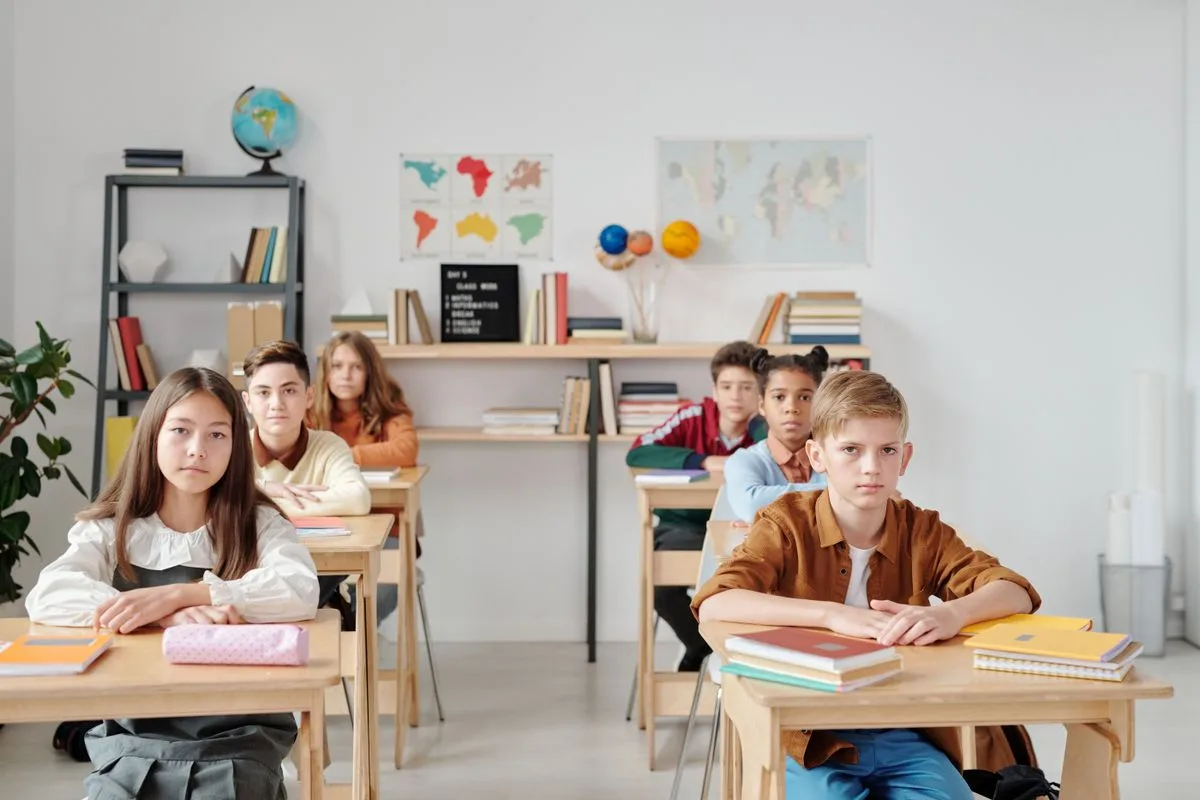
The diagnostic difficulty has real consequences. Children with APD are frequently mislabeled as inattentive, disruptive, or slow, when the actual issue is that they can't reliably decode what the teacher is saying over classroom noise. Adults often go undiagnosed entirely, chalking up their struggles to "bad hearing" or "not being a listener." Many never get tested because the standard hearing test — the audiogram — comes back normal, and the investigation stops there.
Why Does Background Noise Break APD Comprehension?
Difficulty understanding speech in noise is the hallmark of APD — the single most reported symptom and the one that most reliably separates it from other conditions. ASHA's literature identifies APD as the most likely source of trouble understanding speech in noise despite a normal audiogram (ASHA Leader, 2018). In a quiet room, the brain has time and clean input to work with. Add competing voices, clattering dishes, and background music, and the processing system that was already working overtime simply falls behind.
Consider what a healthy auditory system does automatically in a restaurant. It locates the speaker, suppresses everything coming from other directions, fills in words it partially missed using context, and tracks the conversation as it moves. In APD, one or more of these processes runs poorly. The result is that noise doesn't just make things harder — it can make speech comprehension collapse entirely.
The environments that trigger this are ordinary. Restaurants average around 78 dBA and bars around 81 dBA (NIDCD, 2025), while safe listening levels sit at or below 70 dBA (CDC, 2024). A classroom, an open-plan office, a family holiday dinner, a coffee shop — these are the settings where APD does the most damage to daily life, precisely because they're the settings where participation matters most.
For someone with APD, the noise floor of everyday life sits well above where their processing holds up. That's the gap a good accommodation has to close.
How Do Standard APD Accommodations Work?
The most established clinical accommodation for APD is the remote-microphone (or FM) system, which improves the signal-to-noise ratio by roughly 15-20 dB by placing a microphone near the speaker and streaming clean audio directly to the listener. A randomized controlled trial found that remote-microphone hearing aids significantly improved self-reported classroom listening in children with APD over three and six months (Brice et al., 2020). The principle is simple: get a clean signal past the noise before the brain has to process it.
Beyond assistive devices, APD management typically layers several strategies:
-
Environmental modifications — preferential seating near the speaker, reducing background noise, adding acoustic treatment to classrooms.
-
Remote-microphone / FM systems — a teacher or conversation partner wears a mic that transmits directly to the listener, raising the signal above the room noise.
-
Auditory training — targeted exercises intended to strengthen specific processing skills over time.
-
Compensatory strategies — teaching the listener to use context, lip-reading, note-taking, and clarification requests.
-
Visual supports — written instructions, captioned media, and text-based backup for spoken information.
Notice the through-line: nearly every strategy either improves the acoustic signal or provides a visual alternative to it. Remote microphones do the former. And the RCT data carries an important caveat — while children reported better listening with remote mics, their unaided speech-in-noise scores didn't significantly improve over six months (Brice et al., 2020). The device helps in the moment; it doesn't cure the underlying processing deficit. That distinction shapes how we should think about any tool, including captioning glasses.
Why Would Captioning Glasses Help Someone Who Hears Fine?
Captioning glasses help people with APD by sidestepping the auditory channel entirely — instead of improving the sound, they convert speech to text the wearer reads. This matters because APD isn't a volume problem, so amplifying audio often fails while a visual channel doesn't touch the broken pathway at all. For a condition defined by degraded auditory processing despite normal ears, replacing "listen harder" with "read it" is a fundamentally different bet.
Here's the mechanism. FM systems and hearing aids both work on the audio: they try to hand the brain a cleaner or louder signal, then rely on that same brain to decode it. Captioning glasses skip decoding. The speech becomes text on the lenses, and reading uses a separate, typically intact pathway. Someone whose auditory processing collapses at 78 dBA can still read at 78 dBA — the noise is irrelevant to text on a screen.
This is the same reason captioning glasses work for the Deaf and Hard of Hearing community, but the APD case is subtly different and, in some ways, cleaner. A person with APD usually has excellent vision-based literacy and no trouble with the reading itself. They're not compensating for a sensory input they lack — they're routing around a processing bottleneck. The captions become a reliable backup for the exact moments when the auditory system drops the thread.
Consider a concrete scenario. An adult with undiagnosed APD dreads work meetings in the large conference room, where three people talk over each other and the HVAC hums in the background. Hearing aids wouldn't help — the volume was never the issue. But glasses that display who said what, as they say it, mean the conversation stops outrunning them. They read the last sentence they missed and stay in the discussion. That's not treating APD. It's making the environments that defeat APD survivable.

APD in Children Versus APD in Older Adults
APD is most associated with children, but it also emerges and worsens with age — and the two populations need different things. In children, APD frequently overlaps with learning and language conditions: one systematic review found 52% of children diagnosed with APD also met criteria for specific language impairment, dyslexia, or both, and in one cohort 94% had a comorbid language or reading impairment (de Wit et al., 2018). That overlap complicates both diagnosis and support planning.
For children, the priority is usually education. A child who can't reliably process the teacher's instructions over classroom noise falls behind not because of intelligence but because the input is unreliable. Accommodations focus on the learning environment — seating, FM systems, written backup, and increasingly captioning technology in the classroom. The reading demand of captions can be a real consideration for younger children still building literacy, which is where age and reading level matter.
In older adults, the picture shifts toward age-related central decline. Researchers describe an "age-related central auditory processing disorder" — sometimes called "the cognitive ear" — as a distinct and often underestimated impairment that increases with age and is linked to broader cognitive change (Sardone et al., 2019). Crucially, this can coexist with ordinary age-related hearing loss, meaning an older adult may have both a peripheral problem (quiet sound) and a central one (garbled processing).
That combination is where captioning glasses become especially compelling for older adults. When someone has both hearing loss and central processing decline, amplification addresses only half the problem. Text addresses both. It's also why so many AirCaps customers who bought the glasses for straightforward hearing loss report benefits that sound a lot like relief from a processing burden — they stop straining to reconstruct sentences and simply read them.
Where Captioning Glasses Fit — and Where They Don't
Captioning glasses are a compensatory accommodation for APD, not a treatment, and honesty about that boundary matters. They excel at making noisy, multi-speaker environments navigable in real time. They do not retrain the auditory system, and the RCT evidence on remote mics is a useful reminder that in-the-moment tools help participation without changing the underlying deficit (Brice et al., 2020). If you want the clearest possible read on the value, treat glasses as a way to reclaim the situations APD steals — not as therapy.
Where captioning glasses fit well:
| Scenario | Why captioning helps with APD |
|---|---|
| Restaurants and group dinners | Noise defeats processing; text is immune to background noise |
| Classrooms and lectures | Reliable visual backup when the auditory signal drops out |
| Work meetings with multiple speakers | Speaker labels and captions show who said what, as it happens |
| Fast talkers or unfamiliar accents | Reading removes the "too fast" problem — text waits for you |
| Fatigue late in the day | Reduces listening effort when processing capacity is drained |
Where they have limits:
| Limitation | What to keep in mind |
|---|---|
| Requires reading fluency | Young children or those with severe dyslexia may find text harder |
| Not a cure | Glasses compensate in the moment; they don't retrain processing |
| Extreme noise above 90 dBA | Even strong microphone arrays face accuracy limits in very loud venues |
| Not a clinical device | APD should be diagnosed and managed by an audiologist |
| Rapid multi-party overlap | Heavily overlapping speech is hard for any captioning system |
The right framing is additive. For many people with APD, the best setup combines a professional diagnosis, environmental strategies, and a real-time visual backup for the situations that still defeat them. Captioning glasses fill that last slot — the moment-to-moment reliability that lets someone stop rehearsing "sorry, could you repeat that?" and simply stay in the conversation.

How AirCaps Approaches the Speech-in-Noise Problem
AirCaps captioning glasses convert speech to on-lens text at 97% accuracy with 300ms latency, using a 4-microphone beamforming array to isolate the speaker you're facing from surrounding noise. For a condition defined by speech-in-noise failure, the noise-handling matters as much as the captions themselves. The beamforming array focuses on the person in front of you and suppresses sound from other directions, so the speech recognition engine receives a cleaner signal to transcribe — even in the 78 dBA restaurant that would otherwise overwhelm both ears and processing.
The specifications that matter most for an APD use case are the ones tied to real-time conversation. At 300ms latency, captions keep pace with natural speech instead of lagging a sentence behind. The binocular MicroLED display shows text on both lenses, which reduces the eye strain that a single-eye display can cause during all-day wear. And speaker identification labels up to 15 different voices, so in a group setting the captions show not just what was said but who said it — directly addressing the "who's talking now?" problem that noise creates.
| Specification | AirCaps | Why it matters for APD |
|---|---|---|
| Caption accuracy | 97% (even in noise) | Reliable text is only useful if it's correct |
| Latency | 300ms | Captions keep pace with live conversation |
| Microphones | 4 with beamforming | Isolates the speaker from background noise |
| Display | Binocular MicroLED | Both-eye text reduces strain for all-day use |
| Speaker ID | Up to 15 voices | Shows who said what in group settings |
| Weight | 49g | Lighter than most eyeglasses; wearable all day |
| Price | $599 (HSA/FSA eligible) | Pre-tax health funds may apply |
A practical note on cost: because AirCaps is HSA/FSA eligible, some people can use pre-tax health savings toward the $599 price. There's no subscription requirement for core captioning — the glasses caption in 9 languages free, with 60+ languages and speaker labels available on the Pro tier. For families weighing an APD accommodation against clinical devices that can run far higher, that combination is worth factoring in. The glasses also work alongside professional care rather than replacing it — think of them as the wearable equivalent of the visual supports that audiologists already recommend.

If APD has quietly shaped which rooms you avoid and which dinners you skip, a visual backup for speech can change the calculation. It won't fix how your brain processes sound. But it can hand you the words, reliably, in the exact moments the sound stops making sense — and for a lot of people, that's the difference between opting out and staying in.
Frequently Asked Questions
Can you have auditory processing disorder with normal hearing?
Yes. APD is defined by normal peripheral hearing with impaired central processing — the ears deliver sound correctly, but the brain struggles to interpret it. ASHA explicitly defines APD as deficits "not due to peripheral hearing loss" (ASHA, 2024). This is why a standard audiogram comes back normal even when someone can't follow speech in a noisy restaurant, which is the condition's most common symptom.
Do hearing aids help with auditory processing disorder?
Often not much on their own. Hearing aids amplify sound, but APD isn't a volume problem — making a garbled signal louder produces a louder garble. Remote-microphone systems help more by improving the signal-to-noise ratio before the brain processes it, and one RCT found they improved self-reported classroom listening in children with APD (Brice et al., 2020). Visual approaches like captioning bypass the auditory channel entirely.
How do captioning glasses help with APD?
Captioning glasses convert speech to text displayed on the lenses, so the wearer reads what's said instead of decoding it by ear. Because APD is a processing deficit rather than a volume deficit, a visual channel sidesteps the broken pathway. AirCaps glasses caption at 97% accuracy in 300ms using 4-mic beamforming, so text stays reliable even in the noisy environments where APD comprehension typically collapses.
Is APD the same as ADHD or dyslexia?
No, but they overlap heavily. A systematic review found 52% of children diagnosed with APD also met criteria for language impairment, dyslexia, or both (de Wit et al., 2018). The conditions share symptoms like inattention and difficulty following instructions, which makes accurate diagnosis hard. Only an audiologist can confirm APD through a specialized test battery, distinct from attention or reading assessments.
How common is auditory processing disorder?
Reported prevalence in school-age children ranges from 0.2% to 6.2% depending on the diagnostic criteria used (ASHA, 2024). The wide range reflects the lack of a single standardized test rather than genuine uncertainty about how many people are affected. APD also emerges and worsens with age, and age-related central auditory decline is a distinct, often-underestimated impairment (Sardone et al., 2019).
Are captioning glasses a treatment for APD?
No. Captioning glasses are a compensatory accommodation, not a treatment. They make noisy, multi-speaker environments navigable in real time, but they don't retrain the auditory system or resolve the underlying deficit. APD should be diagnosed and managed by an audiologist. Think of glasses as a wearable visual backup that complements professional care and environmental strategies, not a replacement for them.
Can captioning glasses help older adults with age-related processing decline?
Often yes, and sometimes more than hearing aids alone. Older adults frequently have both peripheral hearing loss (quiet sound) and central processing decline (Sardone et al., 2019). Amplification addresses only the first; text addresses both. Captioning glasses convert speech to readable text regardless of how well the auditory system processes it, which is why many older AirCaps users describe relief from the constant effort of reconstructing sentences.
Sources: ASHA — Central Auditory Processing Disorder, 2024. Nagao et al. — Prevalence of APD in School-Aged Children (PMC), 2016. The ASHA Leader — CAPD: The Most Common Hidden Hearing Loss, 2018. de Wit et al. — APD Overlap Systematic Review, Ear & Hearing (PMC), 2018. Brice et al. — Remote-Microphone Hearing Aids in Children with APD, RCT (PMC), 2020. Sardone et al. — Age-Related Central Auditory Processing Disorder (PMC), 2019. NIDCD Noisy Planet — Noise Levels in Restaurants, 2025. CDC NIOSH — Noise and Hearing Loss, 2024. WHO — Deafness and Hearing Loss, 2021.
On this page
Table of Contents
▼
Written by
Nirbhay Narang
Co-founder & CTO, AirCaps
Co-founder of AirCaps. Cornell-trained engineer with 11+ years building audio AI and smart glasses hardware. Y Combinator alum. Leads the engineering behind AirCaps' 4-microphone beamforming array and real-time speech recognition pipeline.
Related Articles

Guides
Caption Glasses vs. Hearing Aids: What's the Difference?
Hearing aids amplify sound; caption glasses show real-time text. Learn how they differ, where each excels, and whether you might benefit from both.
AirCaps Team
·
Sep 17, 2026
·
9 min read

Guides
Lipreading Plus Captions: Why Combining Both Beats Either Alone
Skilled lipreaders average just 50.7% of words from lips alone (PMC, 2023). Here's why pairing lipreading with in-view captions — one field of view, eyes on the face — beats either channel by itself.

Madhav Lavakare
·
Jul 23, 2026
·
18 min read
Guides
Listening Fatigue: The Hidden Cost of Hearing Loss (and How Captions Help)
A systematic review of 24 studies found 67% linked hearing loss to increased fatigue (Holman, 2021). What listening fatigue costs, and where captions help.
Nirbhay Narang
·
Jul 29, 2026
·
23 min read
© 2025 AirCaps. All rights reserved.